
Hi study abroad friends, below are a few stories from my first study abroad experience in South Korea at Yonsei University in 2009 that I used in some scholarship essays. Enjoy!
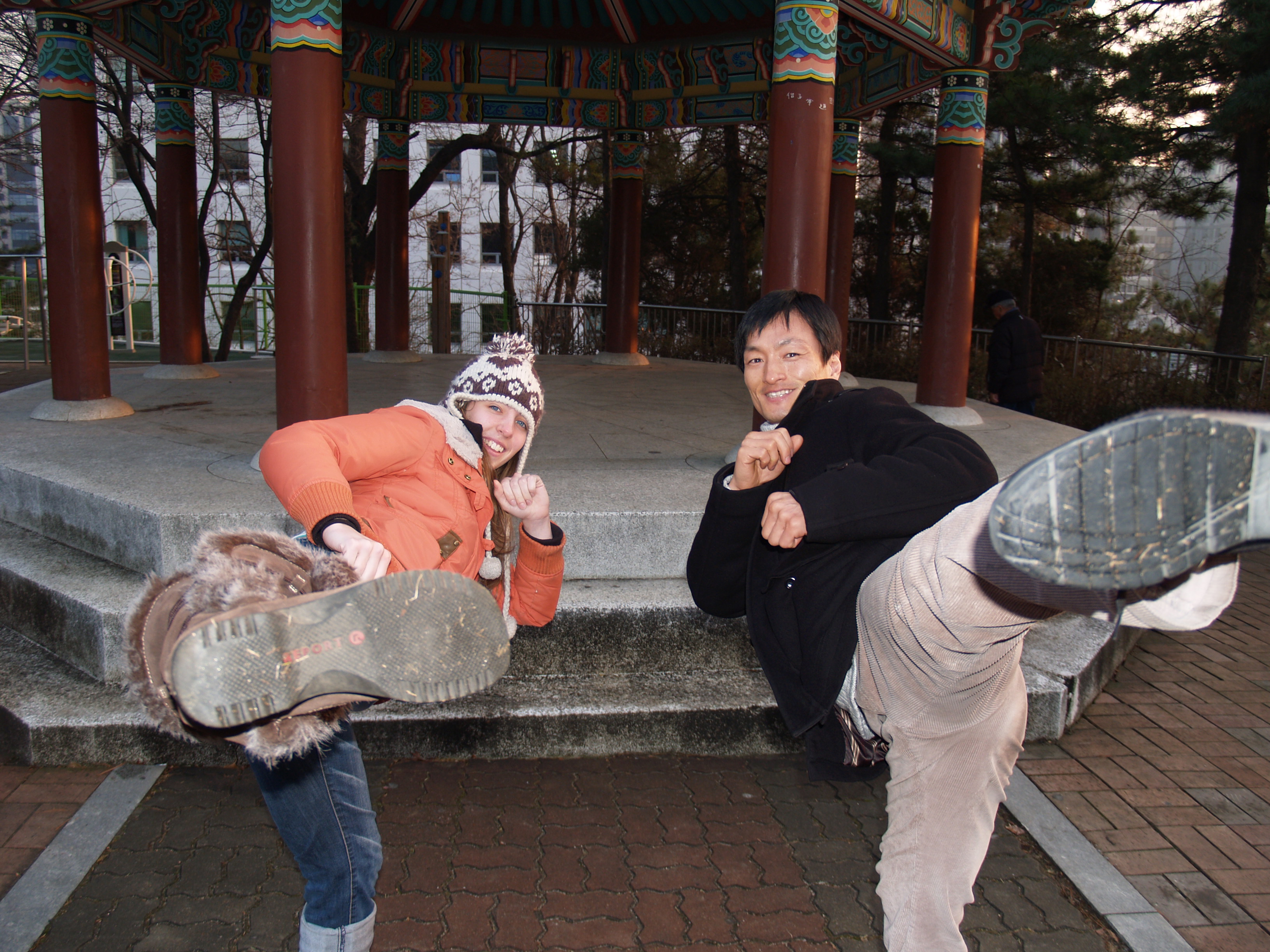
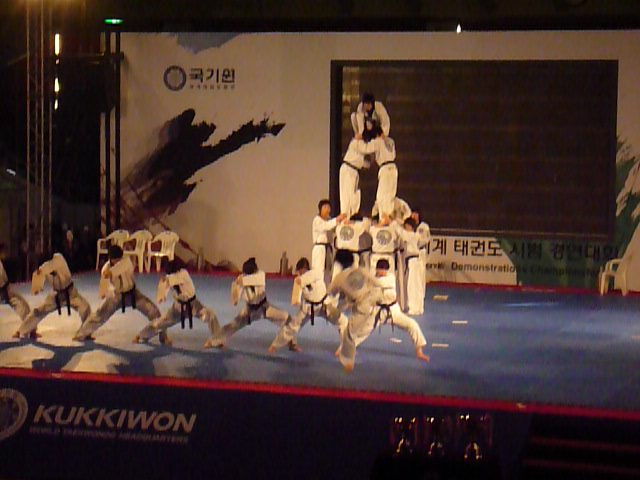
“So what do you think?” Master Jang asks. I pause unsure of how to respond, “It’s not what I expected.” Then Master Jang gave me the best advice I had yet to receive since beginning my study abroad program in South Korea, “Keep an open mind.” Master Jang, the first seventh-degree black belt in Taekwondo I had ever met, was leading the International Yonsei Tae Kwon Do Club’s practice. After watching them for two hours shivering on a wooden bench in the gym, it was clear this was not what I had envisioned.
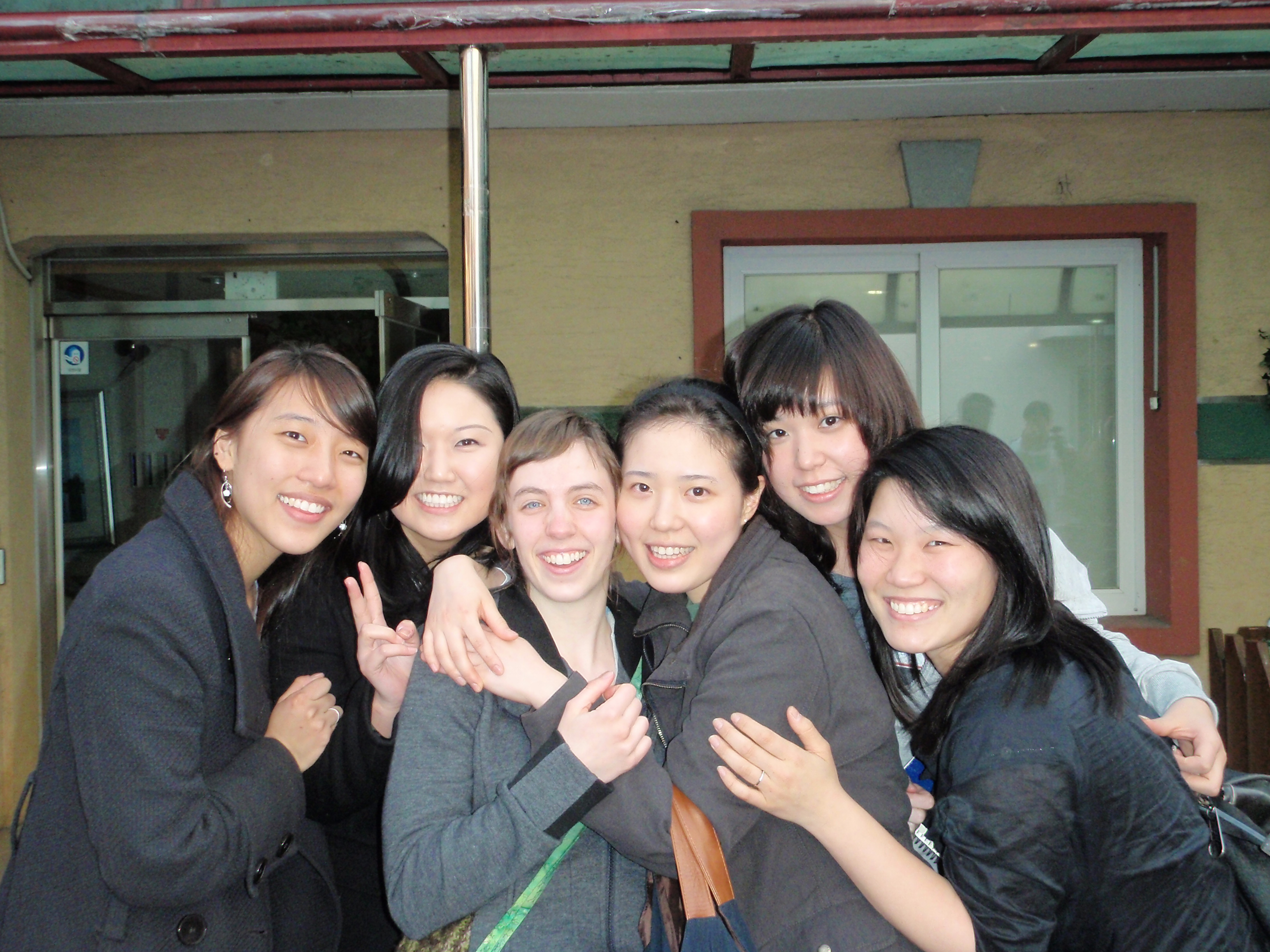
That was Monday March 2, 2009—the first day of school; it is now one month into spring semester at Yonsei University where I am an exchange student. A year and a half ago I was a freshman eating cafeteria food with international students Yumi, Mi Seon, and Ning. Now I am the exchange student eating cafeteria food with other Korean and international students. Yumi, from Seoul, gave me a wonderful reception upon arrival to South Korea.
“Emilie!!” Someone is screaming my name, but I can’t see who it is in the crowd of people. “Ahhh!” another person screams. I stop in my sleepless stupor to locate where all the commotion is coming from. Finally Yumi and Mi Seon break through the crowd running in high heels (as much as heels would allow them) to greet me. Considering the two half-crying girls surrounding me in the airport an observer might think I was a long awaited traveler who had finally come home. But that was my first day in a foreign country, and the beginning of two semesters of studying abroad at Yonsei University.
Yumi introduced me to Yonsei University during my freshman year. I was having difficulties finding a suitable place to study abroad. None of the programs matched my requirements: an East Asian country—preferably South Korea, a university that offered classes taught in English, and a wide range of classes to ensure two semesters of productive study that would allow me to graduate on time.
Yonsei was the perfect fit: it was in South Korea, it had numerous classes taught in English ranging from engineering to economics, it had a home-stay program, and the Korean Language Institute was top ranked in the world. I chose Yonsei, and by doing so I was creating my first alma mater. I had to transfer to a Yonsei partner-school in order to be eligible to study abroad there. The extra work it took to go to South Korea instead of a well-traveled destination has proven to be completely worthwhile. One example is a demonstration of the Korean martial art Tae Kwon Do I participated in.
Don’t flinch. I am sitting on the shoulders of a man I met an hour ago. There is a board in my hands, my eyes are squeezed shut, and a seventh-degree black belt standing below the board I’m holding—preparing to smash it to pieces. Smack—the board breaks right before my (closed) eyes. Studying abroad forces students into many interesting and challenging situations that give us a chance to grow, learn, and build our character. This year I know I will go through many unforeseen challenges—like when I unexpectedly found myself a part of demonstrating how to break Tae Kwon Do precision boards for a large visiting class of Japanese high school students.