
Missing Pets While Abroad- Missing my cat, missing my dog, and discovering missing barking

An easy thing that comes to mind when people ask me if I miss home is my pets.  Missing them is just as applicable when I’m here in Denver studying, as it was when I was in Seoul studying abroad. I miss playing in the deep Minnesota snow with my dogs, making snowmonsters that Monte attacks and destroys—tearing down what took 10-15 minutes to make in less than 10 seconds.  I miss our cats that climb up into my lap to be petted.  And I miss discovering baby kittens on our farm.

I learned that in South Korea, most Koreans prefer dogs to cats and see cats as a dirtier animal.  Do people prefer cats or dogs in the country you visited?

One of the highlights of my time in Korea was spending a few weekends at my friend’s home, with her super cute small white terrier.
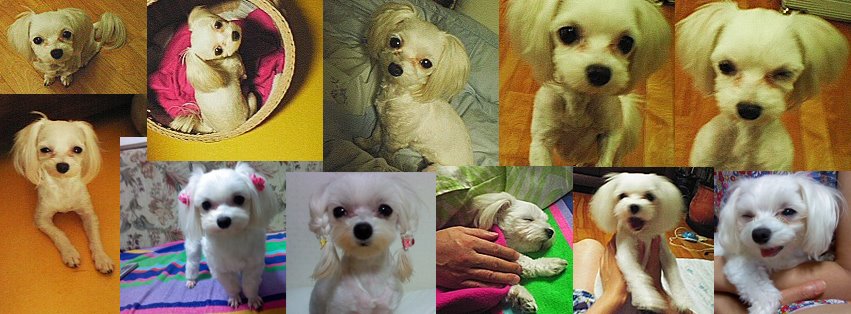
This is Nana. She looks cuter with hair.

That is when I learned that it is common for owners in Korea to de-bark their dogs.  I was shocked. I didn’t know the procedure even existed. Well, it does. And people in the United States practice it too; it’s just not widely advertised by veterinarians who practice debarking.

If you want to learn more, check out the 2010 New York Times article by Sam Dolnick titled Heel. Sit. Whisper. Good Dog.

Colorado appears to be full of dog-lovers, and I expect most Coloradans who read this will instantly object. But after looking into the procedure of de-vocalization, it doesn’t bother me very much.  It is a procedure done for humans’ convenience; it seems comparable to de-clawing cats.  Additionally, dogs recover quickly, and it doesn’t turn them into unhappy pets.

The procedure has been has been done for decades and animals can generally still make wheezing or squeaking noises.  There isn’t data available to tell us how many dogs have been devocalized, but experts say that it is most common in private homes, dogs who compete in show circuits, and in drug dealers’ attack dogs.

On the other hand, I doubt I’d ever do that to my own pet in my lifetime.  Devocalization is banned in New Jersey except for medical reasons, in Ohio it can only be done on nonviolent dogs, and is banned in European countries as well (Dolnick, 2010).

What do you think? Would you ever de-bark your dog, like they do in other parts of the world? Have you ever de-clawed your cat? Have you met a de-barked dog? Was it happy?

-Emilie, Peer Advisor


I Thought I Wasn’t Prejudiced

After living and working in another country I felt I had learned about a different culture. Especially after being abroad for the entirety of my junior year, I thought I identified with certain parts of the Chinese culture. Obviously, I am not Chinese and am by no means an expert on Chinese culture. Still, I had studied the language pretty intensively, had lived with a host family, traveled on my own and consumed copious amounts of Chinese food. Only after two months of being back did I begin to realize how being exposed and immersed in Chinese culture affected me.

Apart from thinking silverware was heavy and clunky compared to chopsticks, I also subconsciously thought I could identify various kinds of Asian ethnicities (Chinese, Japanese, Vietnamese, etc.). Let me explain.

You know how animals seem to have a sixth sense and can detect when there is danger? It may sound strange, but I swear there are people who have a sixth sense and can tell the difference between different nationalities (much like people here pick up on what regional area a person is from based on his/her characteristics). While in China I interacted with people from Japan, Singapore, and other southeastern Asian countries. After awhile I began to subconsciously identify the people I interacted with as belonging to certain nationalities. The funny thing was I had no idea about this until two months after I returned to the United States.


One day, while waiting for an appointment, my friend was looking up different doctors on her phone. She handed me her phone and asked me if the doctor she was looking at was possibly Chinese. I looked at the person and at the name, and it was definitely not a Chinese name. I shook my head, saying I did not think he was Chinese. Still, I continued looking at the doctor’s photo, my eyes going back between the name and the face. And then it clicked.

“He’s probably Vietnamese.” I told my friend. “He looks just like my friend so-and-so from Vietnam.”

“Oh, I was judging based on the name.” My friend responded, quickly taking her phone back. A few minutes later she said, “I looked up the name and it’s Vietnamese.”

Once we were back in her car, she told me the receptionist had given me a harsh look when I brazenly said the doctor looked Vietnamese. I was completely taken aback—I had just spent nine months living in a country where it was almost second nature to classify people based on their appearance. After hearing about the reaction my comment had gotten, I was immediately self-conscious. On one hand, I could see people of certain ethnic identities not appreciating me judging others based on looks. On the other hand, it was normal to me because I had just come from a country where that was normal—people would call me Russian or ask where in Germany I was from. Some people told me I was obviously American. I learned to roll with it. Once back in the States, however, I felt obligated to consciously realign my thinking. It was weird at first, but I have gradually shifted back to certain attitudes and behaviors that are more accepted in the United States.

When I think about this experience, it is almost embarrassing to think that people thought I was prejudiced. I considered myself operating as I had been trained to do abroad, in a different country and in a different culture. It became natural to begin to identify the people I saw with certain Asian countries. The interaction at the doctor’s office made me immediately conscious of how habits developed in other countries may not be very appropriate when I am in the US. Hopefully this awareness transfers to further travels and interactions with various people.


-Michelle Yeager, Peer Adviser.