

Oh boy. You’re a returnee. You’ve just gotten home from abroad. Now, you’re responsible for validating your existence and entire experience in a 30-second-or-less recap where you attempt to explain a roller coaster of emotions, a sense of self-actualization, loneliness, elation, and tangible experiences. Good. Luck.
If you’re anything like me, you’ve learned the greatest deflecting tactic on the planet:
Acquaintance A: “How was your trip?”
Me: “It was amazing!!!”
For most people, that interaction will suffice. They’ve engaged you to a surface-level point where they’ve shown enough interest to maintain your relationship, but still remain depth-free, and while you’re stricken with guilt knowing you’re telling a minuscule portion of your experience, you are more than happy to avoid talking about your trip’s pit falls and focus on the amazing parts. Win-win.

Acquaintance A: “What made it so amazing? What did you do? Were there any difficult parts? ”
Once the second probe happens, you buckle down. They’re really interested. You’re not getting away scot free. Winter is coming.
You have to understand, I’m extroverted and still hate this part. I like to think of myself as articulate, but have an extremely difficult time encapsulating the holistic nature of a trip abroad. The peaks feed into the troughs, which then feed into the peaks, in an endless cycle that still affects me well after my return.
For example, during my study abroad program, I directly enrolled in the University of Salamanca, meaning I set up my own classes, lived with a host-family, and didn’t have an immediate support group of Americans I saw every day. I loved the freedom of this lifestyle, where I didn’t have to answer to anyone but myself, but simultaneously was driven crazy by the amount of time I spent alone. Working through the loneliness, on the flip side, remains a great point of pride for me, as I found my own inner strength and moral compass, but doesn’t take away from the fact that I was really lonely at times. In short, my experience was a double-edged sword, which was not always easy to explain. Returnee-ism reared its ugly head.
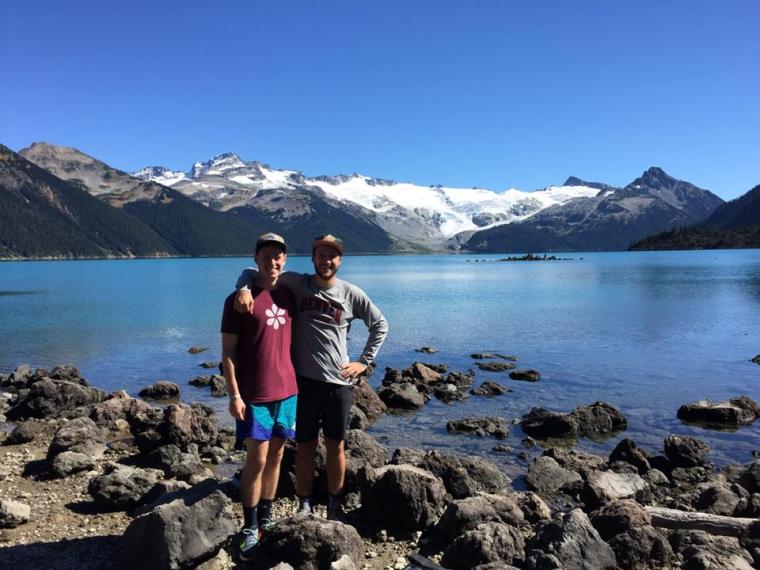
So, here’s my advice for dealing with returnee-ism:
- First, accept the fact that these interactions are going to happen, and are going to happen whenever you come home from an exciting place. I just got home from attending two of my best friend’s wedding in Japan a month ago, and I dealt with the exact same questions I faced coming home from Spain.
- Second, if the trip didn’t have a frustrating aspect, then you’re either remembering incorrectly or lying to yourself. Overall, my trip to Japan was one of the best of my life, but that doesn’t mean there weren’t low points. The longer you live somewhere, the more this is magnified. Even if you can’t explain the complete nature of a trip to someone else, be as truthful as possible. Gilding or demonizing your trips can discount what you learned from them.
- Third, debrief. I went to Israel during December of 2014 and had an interesting experience, but one that was really frustrating as well. I wrote a blog on it, which really helped me put my trip in perspective. I’m in the process of writing one for Japan, and always travel with a journal. Find whatever mechanism is best for you to debrief, it’ll do you a lot of good.
- Finally, internalize everything, and go out again. Each time I’ve traveled after my study abroad experience, either domestically or internationally, I applied what I learned before and gained new skills to boot.
-Max Spiro, Graduate Study Abroad Assistant

 DU Abroad