
Your study abroad preparation check list probably includes things like brushing up on the local language, deciding what to pack, where you will be staying when you arrive etc. One thing it probably does not include is what crossing the road might be like. In the U.S. we are used to a very (well..sometimes) organized system. It is so ingrained in us that we have an automatic reaction to green lights, cross-walk signals and blinkers. Often times when you step foot (get it?) in another country it’s the simple daily tasks that can really push us into culture shock!
My preconceived notions of crossing the street around the world were similar to this: How to Cross the street in Sweden.
In the spring of 2012, I was on Semester at Sea’s ship sailing to 11 different countries in 3.5 months. The opportunity to compare cultures, food and languages was incredible but even the occasion to discuss differences in crossing the road in each country was fascinating! The following countries were some of the most memorable:
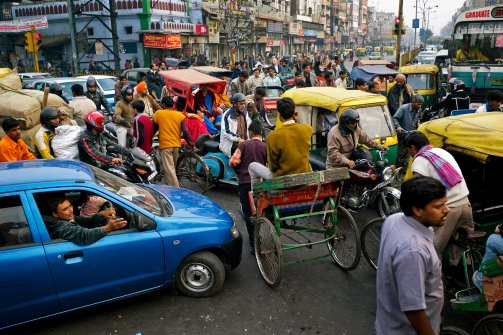
- India, was a constant cluster of cars incessantly honking because bumper stickers on every vehicle told them to do so! Literally every car said ‘HORN PLEASE’. No one could ever sleep on a bus in India with the high pierced (imagine a cat screaming) car horn that they use. While on a tour bus headed to a temple with our group we got stuck in the middle of an intersection because of construction and confusion among drivers. While getting stuck, we “supposedly” hit another van that had stopped as well. I don’t recall hitting anyone but my opinion did not matter at this point. Our bus driver and the other driver started to yell at each other and we all sat silently, watching, waiting…and then out of nowhere the other driver ran around to our driver’s window and stole the keys right out of the ignition! Suddenly we were not only not moving but now our engine was off and the air conditioning ceased. What happened after that is a blur but I think our driver had to pay the other driver to get our keys back. We never made it to the temple that day but we did experience an interesting local altercation. Tip: It’s best not to get involved in arguments when you’re in a new culture, what might seem appropriate or polite to you may not be in the local culture.
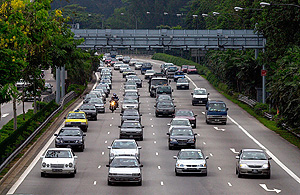
- Singapore was very pleasant, while somewhat chaotic because of the amount of cars, it all felt under control because, of course, it was. The police have even created an English language website for assistance with crossing the street in Singapore.
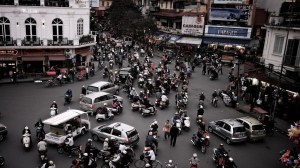
- Viet Nam is a whole other story. Crossing the road in Viet Nam is like trying to cross a 4 lane high way in heavy traffic going 60 mph. The only trick to crossing the road in Viet Nam is to decide to go and walk at a slow and consistent pace so that the motorcycles and cars know how to maneuver around you. When you get to the curb you look at your friends and say ‘see ya on the other side!’ There’s also NO backing out once you commit to crossing the street, you have to go! I made that mistake once and almost got hit by a bus. My friend was smart and ran back, but it took me until I was in the middle of the intersection to realize I needed to NOT be there. Usually if a local was at the curb I’d stand beside them and follow their lead. Also, there are so many motorcycles in Viet Nam that it’s terrifying whether you are walking, in a bus or cab maneuvering through traffic. Everyone seems to think they have the right of way, yet somehow everyone moves around each other and makes it work…for the most part. I mostly just closed my eyes and prayed.
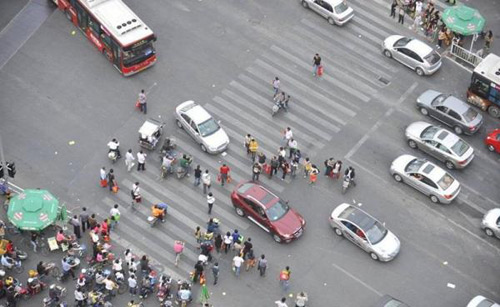
- So, when we were preparing for China we were told that crossing the street is similar to Viet Nam but the traffic will not go around you, they will hit you. That was comforting. Some people make it their goal never to cross the road when they go to China. I understand why now. In Shanghai there were a lot of traffic lights and cross walks with the green or red person telling you when it was safe, however the taxis did not obey those rules. Turns out red is just a suggestion.
So, keep in mind that something as simple as crossing the street can become quite the adventure if you’re not careful! Learn the rules of the roads, what’s considered ‘normal’ like walking out into moving traffic in Viet Nam and use common sense!
– Kathleen Horn, Program Coordinator, Office of International Education at DU

 DU Abroad