
3 Things I Learned My First Week Abroad

2013-09-17 19.25.04
A Croatian Sunset, no Instagram needed

The first few days in a new place are really exciting. No matter how blandly something is painted or regular to the locals, for you, it seems everything you see is new and shiny. These feelings get magnified when abroad. Being immersed in culture for the first time, and for me on an entirely different continent, EVERYTHING WAS SO COOL. Here are a few of the lessons I learned in those first few days I was abroad.

1. You’re Not As Fluent As You Think You Are

I’ve been speaking Spanish since I was 5 years old, a total of 15 years. I attended bilingual Elementary and Middle Schools, finished AP Spanish in High School, spent a summer living in rural Nicaragua, and one of my majors is Spanish; needless to say, I thought I was super prepared to go abroad and speak entirely in Spanish.

Wrong. WRONG.

Melodrama aside, it was the little things that fell through the cracks. For example, what do you call shower gel in Spanish? I spent roughly 15 minutes in the soap and shower section of a Carrefour grocery store in Spain desperately trying to figure out if Crema de ducha, which literally translates to “shower cream”, was indeed shower gel and not a lotion you applied post-shower.

Crema de ducha is indeed shower gel, I luckily discovered, however hovering stupidly in the aisle for WAY too long taught me that no question is ever too silly, and having a sense of humor and embracing your idiosyncrasies is key to not getting too overwhelmed.

2. Change Matters

How many of you out there carry around spare change? What’s that? None of you do because it’s totally not worth it and is a waste of valuable pocket space? Fancy that, I thought the same thing!

Here in the States, I leave anything less than a dollar at home. Change is reserved for saving in a piggy bank, then exchanging for an Amazon Gift Card when you think you have enough. In the UK and the Eurozone, however, I found this to be far from the norm. Most restaurants and local shops deal exclusively in cash, and coins are worth up to 2 Euros or Pounds. Be prepared to have some heavy pants and purses, ladies and gentlemen.

What I was left with was, ironically, the small changes to your life always seem to be the most impactful.

3. Umbrellas are a real thing

Growing up and going to school in Colorado has many advantages: we are the fittest and most active State, host the smartest city in the U.S. (Boulder), and get 300 days of sun a year. There are mountains to climb, fields to frolic in, and most importantly NO RAIN. We vacillate between snow and sunshine, and as the saying goes, if you don’t like the weather in Colorado, wait 5 minutes.

Then I discovered how the real world worked.

An umbrella’s only role used to be taking up valuable space in the closet. Abroad, umbrellas are not the relics from when you lived “back on the East Coast” and it “rained” frequently. This became blatantly apparent when I was walking around Salamanca one afternoon with some friends and it started to drizzle. Like any good Coloradan, I said, “this will blow over.”

It didn’t.

One torrential downpour later, miserable and soaked from the waist down, thankfully I had the foresight to bring my raincoat along, I returned home, only to leave as soon as the rain subsided to buy myself a fancy new umbrella.

Well I guess these things are useful. Neat.

The moral of the story here is to be prepared for the small things in your life to change: you never noticed how much time you had at a supermarket checkout line in the States until you have a gruff German woman frustratingly urging you to hurry up packing your produce into your backpack.

Get ready for the time of your life.

2013-10-25 08.06.49

Max Spiro

Peer Advisor, Office of Internationalization

Internships Ahoy

My program with CIEE actually offered many internship options, although most were oriented towards political science majors. None looked interesting to me, so here comes Lesson Number One: Ask for help. I talked to two of my Art History professors, and both offered internships practically by the end of the week. If nothing quite suits you and you have something in mind- fix it! Ask for help! People love to help, and love free labor, so if you are just looking for experience this is a great way to go.

So after asking for help and receiving, I accepted the first job that came my way. At first working at the Hungarian National Archives for Art History sounded kind of boring, and even after the first few days it really felt boring. But Lesson Number Two: you can make any job fun just with your own outlook. My job was scanning documents into a digital system, which, as it happens, can be done at the same time as watching the first season of Friends on my laptop. So I still got the same amount of work done, but I did it while listening to a show, or sometimes Pimseleur language help for my Hungarian. I had friends who did similar things with their jobs (since not all problems can be solved with TV shows- especially since I was alone in a room with headphones I wasn’t distracting anyone and this is definitely not always true), just by being in a more positive state of mind and applying yourself, you can still have fun. Plus the documents I was scanning were from the late 1800s related to national art shows for up-in-coming painters of the day. Super cool!

Lesson Number Three, before I tell you about my second internship, is an important one: Don’t expect to get paid. These internships can be for credit or simply experience, but if you ask a professor to find you a paid job it will be less fun for everyone. But on the other hand, if you walk up to a professor saying “Look, I absolutely love art history and really want experience in the field be it volunteer work or an internship, would you be willing to help me,” I don’t think there is a single person who wouldn’t try to help you out. Professors love passion, and if you care and show that you care, they will help you.

I worked in that giant building on the hill! Aah!

This leads to the second internship that I got- the Hungarian National Gallery– aka Magyar Nemzeti Galeria. Just by asking a professor, I got to work in one of the most prestigious museums in Hungary, in a CASTLE so cool guys so cool. In any case, this leads to another point: Sometimes people accept interns without having any idea of what they want you to do. I loved this internship, but when I first got there they had no idea what to do with me. I edited and read through their website probably 10 times just looking for grammar mistakes on three different days until I suggested other ways I could help. So Lesson Number Four: Sometimes you have to make your own work. Ultimately I ended up writing a new section for their website and giving tours to English speaking tourists on Saturdays, but it took a while and some suggestions before these were my assigned jobs.

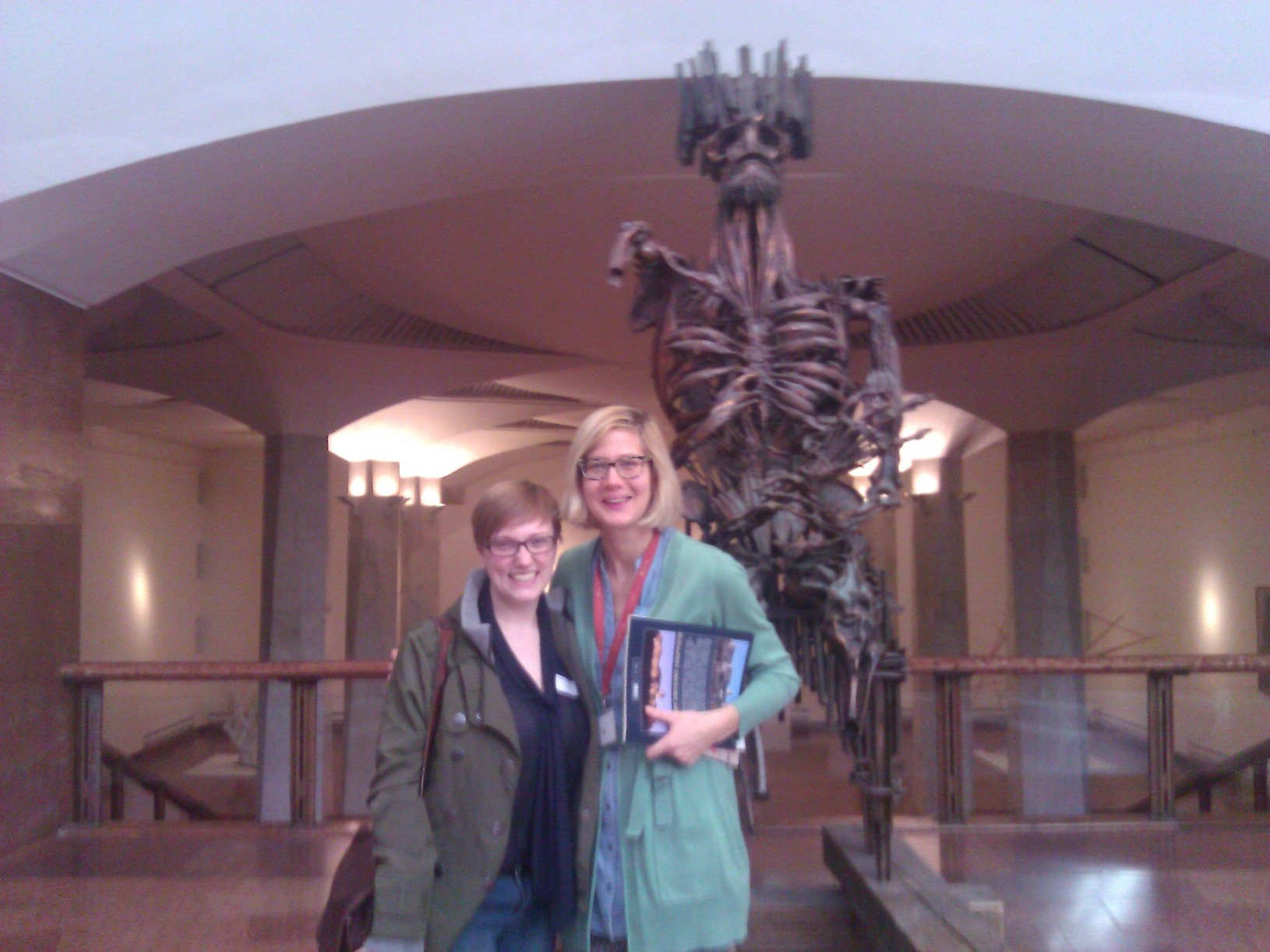
Me and my boss Fatima in the top floor of the Gallery in front of a statue of György Dózsa-- super creepy story you should look it up on wiki.
Me and my boss Fatima in the top floor of the Gallery in front of a statue of György Dózsa– super creepy story you should look it up on wiki.

But finally, the most important lesson I drew from having these internships is this, Lesson Number Five:

→ Do what you love.

Internships can be all kinds of fun – like that idiom says about “never work a day in your life,” right? So when you do find an internship, just make sure it meshes with your interests. Then every day will feel like learning and new experiences, and not like a real job. You should look forward to your internship and not dread it. I looked forward to both of mine because I still learned a lot and it was in an area I care about- I hope that if you choose to intern abroad it is so you can have some fun, too, and isn’t just for resume boosting.