
Keeping in Touch

The beauty of modern technology is that it is advancing by the minute. By the time you read this, there may be an even more convenient, cooler invention for keeping up with friends and family around the world. However, for the time being, here are some great programs and apps to keep in mind while you’re abroad, or for keeping in contact with friends that you make while you’re abroad once you get home.

For iPhone users:  

  • Viber:  If you’re an iPhone user and you want to talk with another iPhone user anywhere in the world, you can use Viber to make calls and send texts for free. It uses your data or Wi-Fi, so you don’t have to worry about expensive roaming charges.
  • FaceTime:  Even better than Viber, FaceTime allows you to video chat for free! It only works when both parties are on Wi-Fi, so make sure that you’re connected before dialing.

For BlackBerry users:

  • Blackberry Messenger:  Though Blackberries are becoming slightly less common in the United States, they are still fairly popular in many other parts of the world. If you are a Blackberry user, be sure to collect Blackberry PINs from friends and family that are Blackberry users as well. You can then Blackberry Message (BBM) friends from anywhere, and to anywhere in the world!

For smartphone users: 
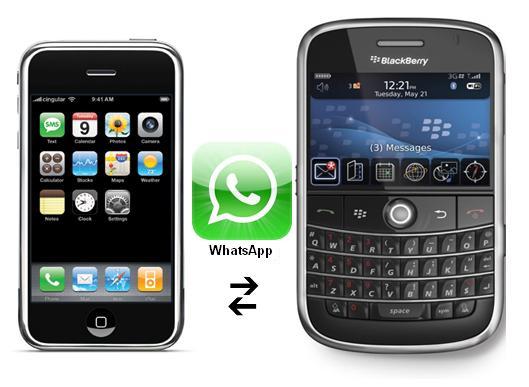
  • WhatsApp:  If you own any kind of smartphone (iPhone, Blackberry, Droid, etc.), WhatsApp is a definite must. It costs $1 on iPhones, and is free on all other smartphones. It allows you to text message over your data and/or Wi-Fi to anywhere in the world, totally free. You can even picture message!

For computers:

  • Skype:  I’m sure most of you have heard of Skype, but if you haven’t you definitely need to check it out! It can be used on Smartphones and computers, allowing for easy video or voice calling around the world. Also, you can load money on your Skype account to call international phones directly. Prices can be found at: http://skype.com/intl/en-us/prices/payg-rates/
  • Google Chat:  Whether you use Google for your email provider or not, Google Chat is definitely something to invest some time in. You can instant message, video chat, and also load money onto your account to call landlines and mobile phones directly. Prices can be found at: https://www.google.com/voice/rates

Of course, don’t forget to disconnect from technology and enjoy your local surroundings while you’re abroad!!!!  But keeping in contact with family and friends is important, so be sure to utilize the many options that are available to you! Find the one (or two, or three) that work best for you… and be sure to keep in touch!
The “studying abroad” in study abroad

“Am I going to fail my classes abroad?”  “Are my grades from abroad going to transfer back?”  “How could I possibly take a history class in a foreign language?”  It’s normal to have a fair amount of anxiety about being a student in another country.  Here are some tips and things to keep in mind!  

Expect a different academic environment and experience.  Don’t make assumptions that things will be like your college courses at home.  When in doubt, ask questions!  Reach out for tutoring, if needed.  While you can’t control the new academic environment, you can control how hard you try.  Typically (and generally), good students at home make good students abroad.

Don’t fall for the “my-classes-are-so-easy-because-I-don’t-have-homework” syndrome.  In many other countries, courses do not include such a plethora of opportunities to earn your grade like in the US; such as quizes, homework assignments, papers, and group projects.  Instead, your grade may be determined by only one final exam and/or one paper.  So just because you don’t have a homework assignment each week, you should be doing your readings and learning the content as you go, on your own.  Many a study abroad student has learned this the hard way when final exam time comes around!  And hey, it’s kinda like practice for graduate school….

Grading may be different.  You’ve heard of “grade inflation, ” right?  It turns out that compared to many other countries, the US of A really does have a severe case of it.  In many other countries, most students are “average,” by definition.  Often, the perception in the U.S. is that you start out the class with an “A,” and you lose points if you don’t fulfill requirements of the course.  In many other countries, the philosophy is more that you start out with an “F,” and have to earn your way up from there.  Top grades are truly only given to students who go far above and beyond the norm.  And in some countries, the grading is entirely on a curve, meaning that you’ll be graded solely on how you compare with your classmates.

Figure out who your classmates will be.

  • If you’re studying in a foreign language, but taking classes only with other international students like yourself, keep in mind that the professor (and the course) is very aware that you are learning the language.  Don’t be intimidated to take classes in a foreign language — they will be targeted for students are your particular language level.
  • If you’re taking classes with local students, you will be subject to the local way of teaching and learning.  Be sure to reach out to your classmates to get suggestions on how they study and prepare for exams.

But even keeping all of those things in mind, don’t over-generalize.  You may get some suggestions and generalizations from students who have gone on your program before, but it’s also important to consider two things:

  1. Every student is different.  Your perception of your academic experience will vary from the other students in the exact same class.
  2.  Every professor is different.  Just like at home,  the person teaching your course will profoundly affect the course content, structure, and difficulty.

So try NOT to fall into the trap of believing or making broad general statements about studying in your host country.

What classroom experiences did you have studying abroad?  What did you gain from learning in a new academic environment?  Did you find yourself making broad generalizations about academics in your country when you came home?