
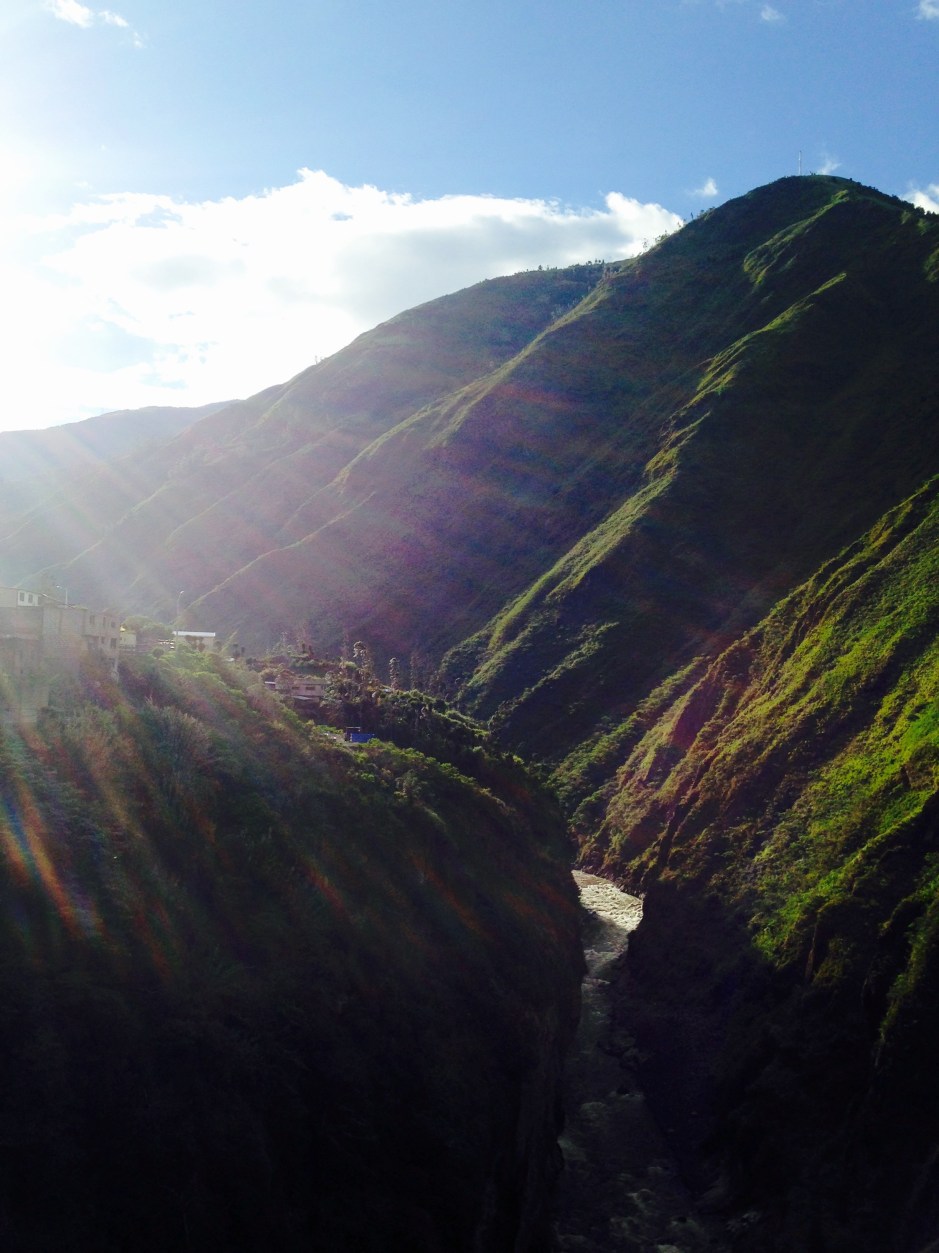
Of course post-abroad adjustment can be broken down into pre-determined stages! As you head out on the next great adventure, keep these 5 stages in mind to make re-adjustment smooth sailing:
1. Dazed and Confused
Why is it light out at midnight? Shouldn’t we be eating breakfast right now? No? It’s 4 pm? What? I slept for 14 hours? You don’t say…
So you’ve probably experienced jetlag. You have never experienced the post-abroad apocalypse that will herald your return. Not only are you coming off of 5 months of adventure and mischief, but you just traveled umpteen hours, probably said emotional good-byes and hellos to your families in their respective countries, and – oh, yeah – changed time zones. Even if it’s just one or two time zones, you won’t be operating at full power for at least 2 days or 18 hours of sleep, whichever comes first. Prepare to be a little kooky. There is no better remedy than sleep. And probably whatever food you’ve been massively missing while abroad (For me, it was cheese. Clearly I didn’t go to Europe). You’ve just got to ride it out. Or sleep it out, I guess.
2. Articulation
Did I mention I just spent 5 months in Ecuador? Oh I did. Well did I tell you I climbed a volcano? Oh I did. Well did I show you my slideshow of 436 photos? Oh you already sat through it. Well did you get the highlight commentary? Oh you did. Well when I was in Ecuador…
So I studied abroad in Ecuador.
When you come off of the adventure high, you naturally want to share that with everyone you come in contact with. That’s fine. Your life was pretty cool for a few months and you just experienced something once-in-a-lifetime. Also fine. BUT YOU CANNOT TWIST EVERY CONVERSATION TO MENTION YOUR STUDY ABROAD. THE PEOPLE GET A LITTLE CRANKY.
Sorry to be so emphatic. Of course, it’s going to be a topic of conversation as most people you know want to hear about your trip. You will get really good at the highlight-reel speech. But post-abroad, you will certainly run across one of these chatterbox people, and you will most certainly be aware of every minute detail of their time abroad. You will be talking about Abstract Algebra or the new shampoo you just purchased and SOMEHOW it will connect to an experience in Spain, or traveling in Paris, or hiking the Great Wall in China, etc.
Don’t be that person.
3. Cultural Sensitivity
“Sheesh. Gustavo is, like, so culturally insensitive. I mean, he’s telling me about how he didn’t have running water the whole time he was abroad. Can you believe it? I’m just like; Dude, what can you even be complaining about? I didn’t even have water.”
Shockingly, your experiences make you a more enlightened person to various degrees. Who would have thought. Seeing how non-Americans live will be eye-opening for most people, and this can never be a bad thing, however, upon your return it is tantamount to remember that not everyone – even your friends who have also studied abroad – will have seen, felt, and experienced what you have. Their context is entirely different. Don’t write them off as culturally insensitive jerkwads, realize you too have blind spots. The hardships you experienced abroad are nothing to brag about – use them to inform what actions you take post-abroad.
4. Relativity
What is even the point of this homework stuff? Why do grades even matter? It’s just one person’s subjective viewpoint that is largely not representative of the “real world” anyway!
This stage is crucial, heartbreaking, and almost universal.
There will be thrown books. There will be late assignments. There will be tears. The only solace is that as you are contemplating just giving up on the 50% of your homework you actually complete, every other study abroad returnee is right there with ya. After learning so much – largely outside of a classroom – 16 credit hours worth of class time just seems rather superfluous. Winter quarter can be a dark time.
Remember this as you sit in your café registering for classes while abroad – don’t overload. Simply getting to class on-time, and not Latin American “on-time” (ie: 10 minutes late) will be a struggle.
5. Wanderlust
You’ve gotten a taste and now you’re addicted. To the getting lost and crowded buses. To the daily rain and astounding lack of edible cheese. To the street food out of tiny bags and terrifying traffic. To the solitude. To the language. To the adventure.
This stage doesn’t just end – you get to keep it the rest of your life. From here on out you will be questing for new travels and leaping at every opportunity to dash across the globe. You may have only studied abroad for months, but the effects last years.
To all those leaving in a matter of weeks or months – best of luck! All of the returnees – those of us in “stage 5” – would love to go with you.
– Maddie Doering, MSID Ecuador 2014







 DU Abroad