Staying Connected Abroad

Taking a smart phone overseas and using local Wi-Fi on campus or in coffee shops can often be the most effective way of keeping in touch with friends and family back home. Make sure to keep your phone on airplane mode to avoid any additional charges from overseas use.

Here are some apps to help ease communication:

  • Skype enables you to video call or instant message from computer to computer or from your smart phone for free. You can also use Skype to make reduced rate phone calls to a phone back in the U.S.
  • Viber allows you to call mobile to mobile for free, as long as each phone has internet access, either through Wi-Fi or 3G. You can also send free international text messages. The app integrates your address book, showing you which of your contacts already has Viber.
  • WhatsApp – An instant messaging app that is free for the first year of use and 99 cents per year after. It allows you to text message people anywhere in the world for free, and allows you to share photos rapidly. WhatsApp uses the phone numbers in your address book to show friends and family with WhatsApp automatically. It also has a neat group chat feature too.
  • iMessage – the default texting on iPhones works through Wi-Fi just like other apps. Text your contacts in the same way as you do back in the U.S. As with iMessage, Facetime will also enable you to video chat internationally as long as you have Wi-Fi access. However, be forewarned that iPhones are not as popular overseas as they are here in the U.S. Make sure you download a separate app!
  • Touchnote – Allows you to create postcards on your phone, combining a photo and text, before printing it and sending it to any address in the world for $1.99 per postcard.

Finally, if you’re in a Wi-Fi spot and looking for other places for using Wi-Fi, the app Free Wi-Fi Finder works around the world to keep you connected for free. It maps free Wi-Fi access close to you.

-Callum Forster, Peer Advisor

Becoming a flexible person through Study Abroad

People spend a lot of time talking about how study abroad will open your worldview and help you appreciate other cultures—this is ABSOLUTELY true and something we at the OIE hope you all get from this experience.  People also talk a great deal about how study abroad can strengthen your resume and make you a stronger candidate for jobs—something I know this blog will be discussing in the coming weeks as well.

However, I want to also bring some attention to the fact that study abroad can help with something else—it can be one more exercise in becoming a more flexible person and help you to adjust to any new scenario that comes your way.

I studied abroad twice as an undergrad—once in the UK and once in Chile—and both experiences certainly helped me with that process.  While I come from an immigrant Latino family and have spent a lot of time in Latin America visiting family, Chile was a new experience for me, as was the UK.  The fact that I had to figure out how to adjust to life in a completely new environment—and do it on my own—helped me develop my ability to be flexible as a human being.

Stephanie picture 1
Me on Easter Island June 2007

Figuring out where to go for goods or information; learning to observe what is going on around me to get a better sense of the big picture; paying careful attention to make sure the person I’m talking to is actually understanding what I am trying to communicate; learning to live without daily luxuries I couldn’t bring with me or couldn’t justify buying for such a short period of time: these are all skills that have served me incredibly well, both in my personal and professional life.

Personally, being open to big moves to new places and taking advantage of international opportunities that have come my way is something I definitely came to appreciate through study abroad.  I have moved around the US several times to start new jobs and in each case have been able to look at the move as an adventure, and have been able to design a mini-strategy for myself to help make each new city home, much like I did in the UK and Chile.

Professionally, my ability to observe what is going on around me has also come in handy.  Starting a new job is always an exercise in coming in to a new “culture” and using the same skills I developed when adjusting to a new community abroad has helped make my transitions into each new job as seamless as possible and helped me manage the unavoidable confusion and stress that comes with being the new person and being unsure of what you’re doing.

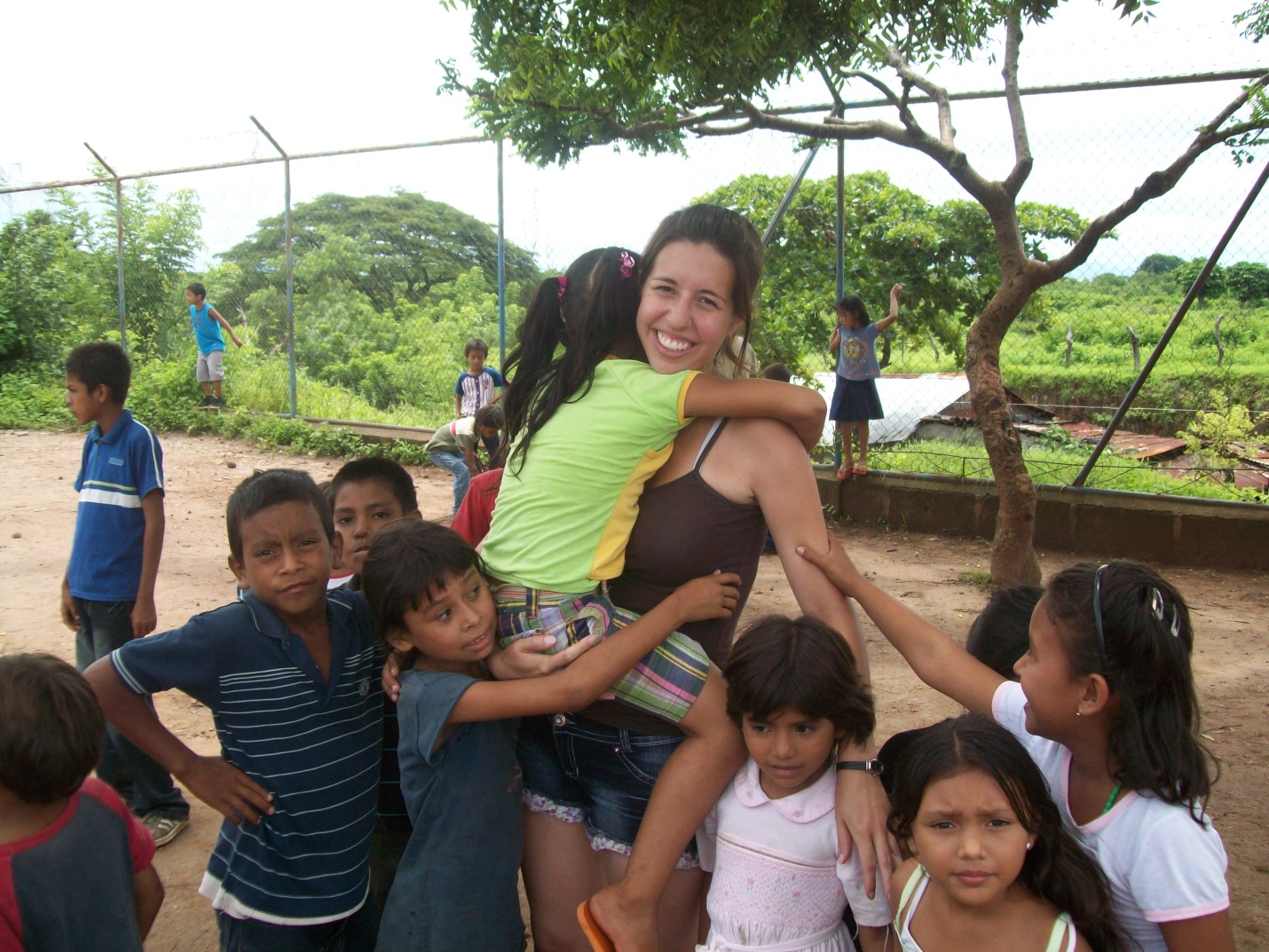
My internship placement in Nicaragua summer 2011

In both of these scenarios the main skill set is the same—being FLEXIBLE and comfortable with not knowing everything that is going on.  While study abroad won’t be solely responsible for helping you develop these, it is one more experience to help hone these skills—skills you’ll be able to take in every new opportunity or situation that comes into your life.

Me ending my last job, which had me touring the US raising awareness of international human rights. Out last big even in Washington DC 2013

-Stephanie Roberts, OIE Advisor