
You’ve packed your whole life and multiple seasons of clothes into a suitcase, bid farewell to your parents and once again to your childhood bedroom, stuffed your body in an airplane for an inhumanly long flight and finally you‘ve landed in a faraway place ready to begin what you’ll call for the rest of your life “my study abroad experience.” You’re confronted with a sea of differences; new culture, new friends, perhaps a new language and most likely a new set of laws concerning alcohol. While the rules don’t change when it comes to the risks of drinking, in order to get the most out of your time abroad, there are some things you should be weary of if you do choose to drink. If you do choose to drink while in your new “favorite country” that “you’re never ever leaving” be sure to keep the following tips on hand.
- Some people will drink but not drinking is a viable option.
It’s never a problem to opt out, whether it’s because drinking isn’t for you, or because you’re just not feeling it that night. This is really just a general rule of thumb when you’re abroad but certainly applies to drinking: While it’s important to have new experiences while you’re abroad, to try new things, and to have fun, it is just as important to use your best judgement, and to make decisions that are right and fitting for YOU (you know yourself best!).
- Just because the bar never stops serving doesn’t mean you shouldn’t stop drinking.
You may find that other countries don’t stop serving alcohol at 2 a.m. as they do in the U.S. The longer you stay out drinking, the more dangerous drinking becomes. Be your own boss and decide what time is too late for you to keep drinking. Also, keep in mind that while the nightlife may be vibrant and alive, life also exists during the day. You don’t want to miss out on day adventures because you’re trying to catch up on sleep.

- Just like the language and culture, the alcohol is different too.
Drinking is always risky business, but in other countries you should know that alcohol can be regulated in different ways and sometimes is more dangerous. For example, liquors like absinthe (a liquor more than two times as strong as average hard liquors in the U.S.), while illegal in the U.S., is legal and popular internationally. Don’t accept strange drinks and read labels if possible. Even beers can be deceiving in many foreign countries, some containing three times as much alcohol percentage than the average 4-5% American beer. If you are eager to try new things, chances are you will have the opportunity another time and can research and ask questions about this strange new alcohol the next day before you decide to try it.
- Know what drinking past responsible limits means for your own body.
This may mean for you having no more than one drink but just because for your new cool friend from Chile or Italy, it means having less than five, by no means do you have to try and assimilate to this part of their culture. There’s no such thing as a language barrier when it comes to saying no to another drink that will put you over the edge. Simply shake your head and use hand motions or just learn how to say no, it can’t be that hard! If you don’t already know what responsible limit works for you, only have one drink and see how you feel. You may find drinking is not a responsible or comfortable choice for you at all.
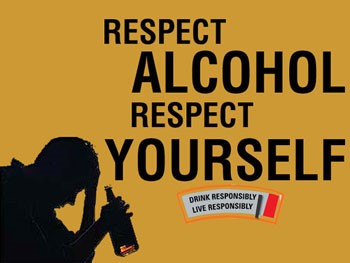
- Plan Ahead.
Drinking without a plan is never a good idea but doing so in an unfamiliar setting can make for a disaster. Before taking a sip of alcohol, know where you plan to go, how you plan to get there, how much you want to drink of what, and most importantly HOW and WHEN you want to go home and then make a back-up plan! Write the details down if you need to (bus lines and times, cab service phone numbers, etc). If you take a bus to one place, by the time you are ready to leave the same bus may have stopped running until the morning and you may need enough money for a taxi.
- Stay in control.
College students studying abroad across the world end up in hospitals all the time due to their decisions to drink irresponsibly and put themselves in situations where they don’t have fair judgement. Never drink so much that you are unable to make decisions you are uncomfortable or incapable of safely making while under the influence. Remember this: You can never blame the outcomes of your actions on the fact that you were drinking, you can only blame the outcomes on the fact that you chose to drink. That said, keep in mind whether or not choosing to push the limits of responsible drinking will put you out of control and if you’ll end up having to wonder if the outcomes of your actions would’ve been more favorable had you not been drinking.
- Laws change but the rules don’t!
You may be able to drink if you’re not 21 or not get kicked out of the bar at 2:01am but the rules about staying safe when drinking don’t change when you cross the border. Here are a few fundamentals to remember when drinking in any location:
- Eat! Eat a real full meal before drinking!
- Drink! Drink WATER before you start drinking alcohol.
- Water-Alcohol-Water! Drink water in between alcoholic beverages.
- Pace yourself! The night is young but so are you and you’ll have plenty more time in life to drink in the future so take at least 30 minutes to 1 hour between each beverage.
- Stick together! Friends who stick together, stay safe together! Don’t let your friends leave your sight or be afraid to suggest they stop drinking if you’re worried about their safety. Getting a friend water could never do harm, chances are you need some too.
- Never take drinks from strangers! Only accept drinks you saw being made and never leave your drink unattended. Having your drink drugged while outside of the U.S. is even greater of a reality, don’t trust anyone with your drink and if you’re unsure it’s safe, don’t be afraid to pour it out!
- The fun stops when you put yourself or others in danger.
Drinking past responsible limits or without taking proper precautions can turn a night of fun into a nightmare. Educate yourself on responsible drinking through these tips and be sure to put them into practice in real life. Stay away from situations where you’re more susceptible to crime and other risks. Keep in mind the stereotypes others may have of you because of your nationality, it unfortunately may be that you are an easy target for pickpocketing or other crimes. Never forget to be proactive and cautious of your surroundings when drinking. Always watch your back, and keep your belongings in front pockets and backpacks and purses close to your body. There’s one thing you can prevent from ruining even a day of your studies abroad and it’s an unfavorable experience with alcohol. Enjoy your time to the fullest while away from DU but enjoy it with your safety and wellbeing in mind!
- Know how the culture treats alcohol.
Some cultures will add pressure to drink, even sometimes to drink in excess. However, always be culturally sensitive. While you may observe people appreciating and enjoying one or two glasses of wine, drinking in excess is not acceptable at all. You may even be in a country where alcohol is illegal or socially unaccepted. Do your research, ask locals, teachers and your host family if you have one about the norms surrounding alcohol if you do choose to drink. Remember you are an ambassador of not only the United States but also DU.
- Learn to say cheers in the language!
Ask a local for proper pronunciation:
| Spanish – Salud! |
Arabic- فى صحتك (fa sahatek) |
| French – Santé! |
Thai – Chok dee |
| German – Prost! |
Swedish – Skal (said like skawl) |
| Chinese – 干杯!Gan1Bei1! |
Japanese -乾杯 (kan pie) |







 DU Abroad