
Culture Shock may be the most blandly defined word ever. The Merriam-Webster Dictionary calls it “a feeling of confusion, doubt, or nervousness caused by being in a place (such as a foreign country) that is very different from what you are used to.”
Blah blah blah, bored bored bored. Enough already.
It is truly astounding that a definition can fall so short. True culture shock is elation and terror, excitement and frustration, adventure and nostalgia. While these pairs seem to be in conflict with each other, in reality, they act in perfect harmony, albeit one might be acting a bit more strongly than the other. Let me explain.

Truly being in a new culture, for me, comes down to an internal battle between adventure and nostalgia, as I mentioned before. While traveling, carpe diem (YOLO for all you hooligans out there) seems to rule my psyche. I want to see everything, do everything, and experience every little facet that will imbue the place to me. For example, when I was in London this past September, my travel partner and I decided to walk from our hostel near King’s Cross to London’s Natural History Museum (our route).
Had we walked straight there, it would have been 7 miles. All of our detouring and site-seeing probably brought us up to 9. We talked in British accents, took pictures, ate lunch in St. James Park, and tried to grasp the fact that we were thousands of miles away from home. We turned our excitement up to 11, culture shock was staring me straight in the face, and life couldn’t have been sweeter.
That’s the upside to culture shock: it can be riveting and awesome, new and shiny.
Then there’s the flipside: the nostalgia of everything you left behind. Whether it’s friends, a significant other, a physical location, or your family, you made sacrifices to “live the dream”, so to speak. At first, you’re too caught up in the moment to realize this; while every cloud has a silver lining, every warm, sunny day gives you a higher chance of contracting melanoma. Wow that was incredibly insensitive. I’m going to rephrase, hyperbole and melodrama aside.
The point I’m (so offensively) trying to make is that culture shock is a double-edged sword. Going abroad is a fantastic journey that can come at personal sacrifice. That being said, I believe the benefits outweigh the shortcomings tenfold. No, everything will not be just as you left it, but that can be a blessing in disguise and the relationships that really matter will deepen.

Now, the greatest graphic ever. You will forget just about everything the Study Abroad Office tells you before you go abroad. We do our best, but the reality of the situation is that a lot of information falls through the cracks. The one piece that will remain with you when you come home from your grand adventure is the graphic below:
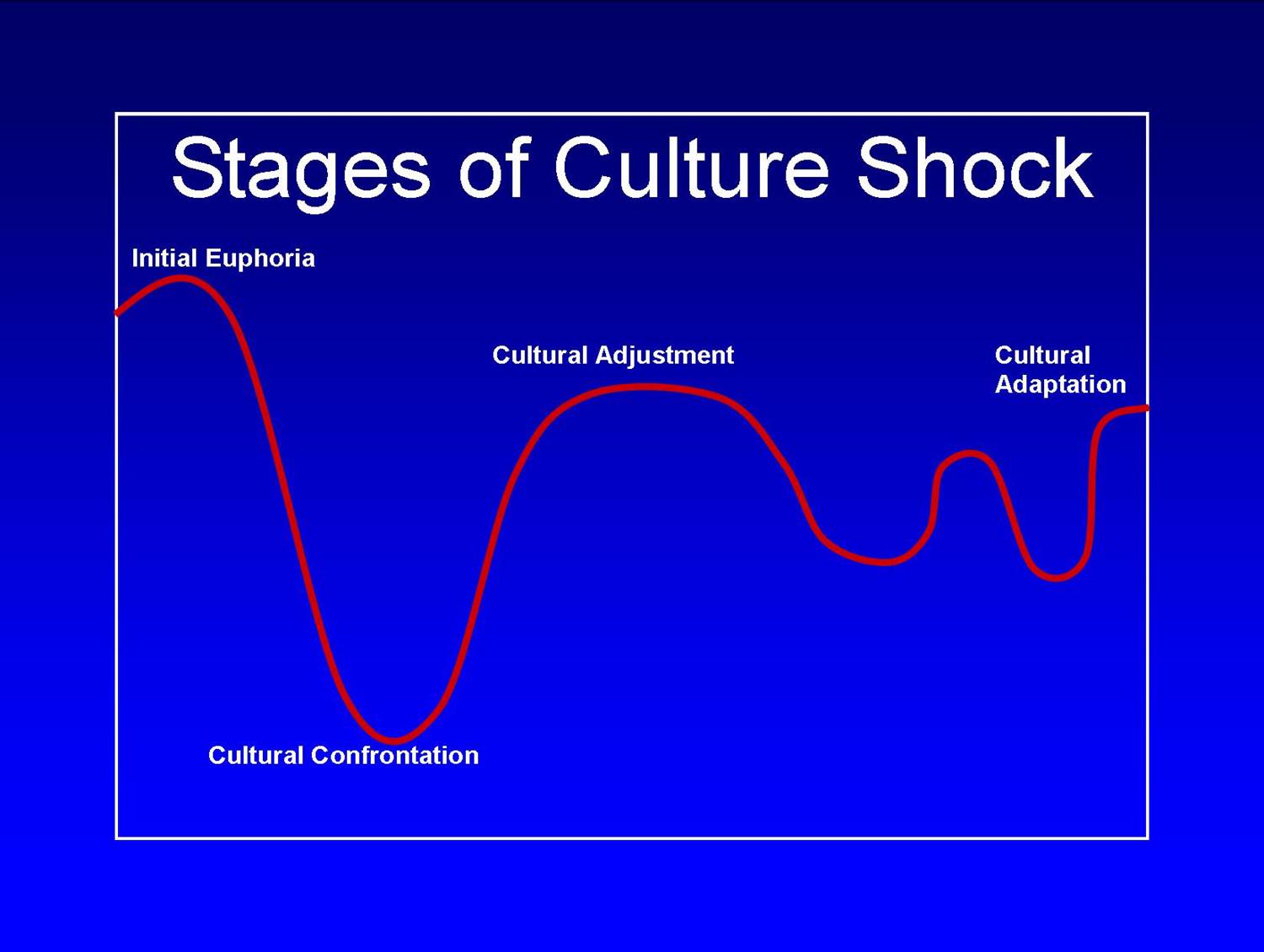
This is you over time. As you slowly assimilate into your host-country’s culture, there will be ups and downs. Always remember, though, that no matter how low you go, if you keep working hard, the next euphoric moment is right around the corner.
Max Spiro, Peer Advisor

 DU Abroad