
My name is Joe Aumuller. I am 20 years old, enjoy candle lit dinners, long walks on the beach, and just living the dream. I hail from the North Suburbs of Chicago, but I could easily fabricate a story about growing up with wolves in Scandinavia or being raised as a professional skydiver in Peru and include as many buzzwords as you would like. I’ll eat just about anything as long as it cannot look back at me, move, kill me upon ingestion, or happen to be organs (you could probably lie to me if you wanted me to eat these, but you’d have to be a better lier than Bill Clinton). In other news, I am studying abroad for the Fall 2015 semester in Brussels, Belgium at Vesalius College. If you want to know why I shipped myself here on a luxurious Irish airline with some suit cases, here are some words that I have written. If you like the way I put words together, read away, I’m going to keep writing them.
When people talk about study abroad it can have so many different connotations. For some, study abroad is a way to take a vacation for a few weeks that they may never be able to take again; for others, a life-changing semester or year completely immersed in another culture. This ultimately depends on a couple of factors: your school, your financial situation, your major, and what you are looking to receive from your experience. At the University of Denver, your study abroad is most commonly completed as a fall semester (this is due to the fact that a semester in the fall only conflicts with one academic quarter whereas in the spring it would conflict with two), however there are options to complete shorter periods during class interims and longer periods by petition. I chose to study abroad for the upcoming fall semester of 2015 because for me, it was logistically more sound than a yearlong study and I be immersed more than an interim period study.
Choosing a program was certainly difficult, as I had an idea of where I was thinking of going, but not how. From my previous travels and “study-abroad” experience in high school in France, I really wanted to return to a Francophone region where I could experience the culture through the local language (French). I was looking at both France, Switzerland, and Belgium as well as Francophone Africa. Needless to say after Ebola, the list shrank to France and Belgium. I decided I wanted to perfect my French in a professional environment, a challenge I had never experienced before, while enjoying the luxuries of convenient travel. While I applied to four programs, Paris and Brussels were my most desired options. Both programs provided traditional studies at a foreign university as well as the opportunity to complete an internship. I am aspiring to pursue a career in foreign relations, and the ability to work in a foreign country would be a valuable tool moving forward. I am thrilled to be headed to Belgium, but I would caution students: you may not receive your top choice or are nervous about finding the perfect program, study abroad is very similar to choosing a college at home. The choice you make is completely determined by what you are willing to put into your program, and almost always, the program you are least expecting can be the most rewarding. So as your friends apply to programs and hear back on acceptances be excited for them, but most importantly, be excited for yourself. Do not base your happiness off of that of another.
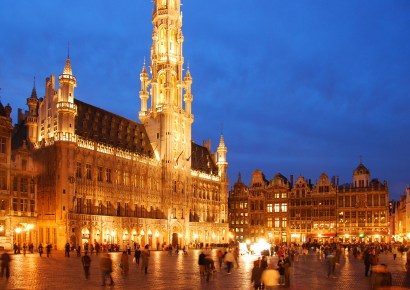
I have a lot on my mind before I travel to Belgium, but I think it is excitement rather than fear. I grew up moving and traveling internationally and no stranger to suit cases, planes, and the occasional cup of coffee in the morning. Every traveler is different, but I really love the thrill of going new places. What I’m most excited for is to use my French in Belgium, it will be my first time in a French-speaking country other than France. I find the language to be so fluid and dynamic, and the challenge of trying to blend in is always entertaining. I think my second most anticipated part of the program will be living on my own in an apartment in Brussels. Being independent in a city is the best way to immerse yourself.
As far as nerves go, I have not used my French actively in quite some time, but if it were perfect already, why would I be going in the first place? I have to believe that there will be some Zen-questioning moments (stolen items, lost items, getting lost, navigating foreign healthcare, etc.), but I’ll just deal with that when it happens. My final challenge, which to be honest I’m very excited to take on, is laundry at a foreign laundromat. If any European is dumb enough to steal my clothes I will be forced to buy more stylish clothes in Brussels (what a shame…). I’m sure the people-watching will prove equally entertaining.
A lot of people are asking me how I prepared for studying abroad, I will be blunt: I did not. I have completed all of the necessary steps to go to Brussels: visa application, the credit card, apartment lease, class registration, and internship applications. However, I did not do anything to really “prepare” myself to go to Brussels. This is for two reasons: one, I was unmotivated to do anything during this summer, and two, aside from the necessary packing, there’s no need to overthink. The greatest disservice you can do to yourself is planning out every detail of study abroad like it’s a vacation. The whole point, in my humble opinion, is to challenge your status quo and to add spontaneity to your life. Studying abroad should be an adventure to anyone whether you’re in a tropical jungle or a concrete one. This being said, flexible and lethargic are different words. Packing, having the proper documentation, and researching how to travel safely are key parts to being a smart traveler. Ultimately, study abroad is going to be one wild ride, and to quote the great philosopher Ferris Bueller, “the question isn’t what are we going to do. The question is what aren’t we going to do.”
Like what you see? Follow the DU Study Abroad blog at duabroad.com or Joe Aumuller’s personal blog at jaumuller.wordpress.com


 DU Abroad