
When I travel, I spare no expense when it comes to food. I’m a huge food geek, and am one of those people that believes that you can learn an incredible amount about a culture by trying all of their food. I’m like a younger, female version of Anthony Bourdain. I’m willing to try anything once and usually twice if I don’t become violently ill afterwards. So, during my first study abroad experience in Dijon, France, I went with an empty stomach and a full wallet, prepared to become one with pâté, baguettes and champagne.
One day at lunch, my classmates and I decided to go to a restaurant with actual napkins and water glasses. Typically, we’d go to the cafeteria at Monoprix, or the crepes stand down the street, but the month was winding down, and we wanted to go out with a bang. Our professor had recommended this place to us, so away we went.
Now typically, French restaurants don’t give you a menu with a huge list of options that you can order. They have two or three things written on a chalk board, and that’s what you can choose from. Obviously, if you’re in a tourist trap, it’ll be more Americanized, but Dijon was still very much a French city. So our options that day were steak-frites and something called boeuf roubignoles. Steak-frites is a standard component of all American classroom French lessons on restaurants. It’s a steak, with fries; very appealing to Americans, and a fairly safe choice. Of the 12 of us, 11 ordered steak-frites. Guess who was the one who didn’t? Yup, yours truly. I knew what steak-frites was. I had eaten steak and fries growing up, so why would I order it while I was in the Mecca of food? I knew that ‘boeuf’ meant beef, and I loved beef, so I figured whatever ‘roubignoles’ meant would be delicious.
They brought out pâté and bread for an appetizer (wild boar pâté …amazing) and we happily chowed down. I was looking around the restaurant at what other people were eating, hoping to get a glance of my roubignoles. The plates that didn’t have steak-frites were covered in a stew-like substance, with brown broth and veggies, and these very strange looking little round balls of meat. It didn’t look like any part of a cow that I had ever seen, but whatever. I was here to experience France.
Our meals came, and everyone dug in. I tentatively tried my meal, and was not pleased. The texture was very strange and the flavor was not reminiscent of beef. I had a few more bites to see if it got better, and it didn’t, so I resigned myself to pâté and baguette for the rest of the meal (I know…tough break). I was disappointed, because I saw fellow diners digging into the same meal and seeming to love it. I guess it just wasn’t something my American taste buds were on board with.
It wasn’t until two years later, as I was writing an essay for another study abroad application, that I finally looked up what ‘roubignoles’ meant. Let’s just say that they are the reproductive organs of male calves. It had been years, but I still felt a little nauseated (though comforted by the fact that I hadn’t enjoyed them).
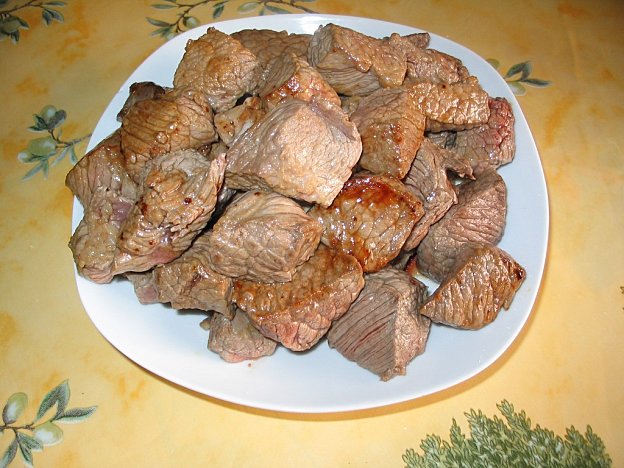 Do I regret it? No. Do I wish that I had gone with the pack and ordered steak-frites that day? No, I do not. While it was an error in translation that got me to try it (highly unlikely I would’ve ordered it if I had known what it meant), it was an experience that made my study abroad experience that much more unique. So while you may not seek out roubignoles if you find yourself in France, it’s really important that you take advantage of all possible opportunities. Seeking out McDonalds or KFC in whatever country you’re in is going to limit your understanding of the culture and the community that you’re living in. Don’t order what you know is ‘safe’ on the menu; try something new. Just maybe remember to carry a pocket dictionary.
– Kat Cosgrove, DUSA Peer Advisor

 DU Abroad