
Food is Comfort

 However, being abroad is about being “outside of your comfort zone.”

 New experiences tend to be intimidating and people are often hesitant to engage in the unknown, especially when it comes to food. During my time abroad in Spain, I always felt guilty when a friend would turn up their nose and make an unpleasant face when they were presented with a new dish. I kept thinking, if the Spanish are anything like my family, they would be offended to see somebody make faces without even trying the food. The cooks in my family are very proud of the dishes they create but they also understand that not everybody will be as fond of them as they are. Everybody has a very distinct palette and they prefer different tastes. Most of us prefer to eat what we grew up eating. When we are away from home we seek out the flavors we are used to. For me, a handmade tortilla will make me feel as warm as receiving hug from my grandma. A nice cup of Mexican hot chocolate will make me feel right at home. Food is comforting and when you are away from those you love, it provides a tiny moment in which you connect with them all over again.
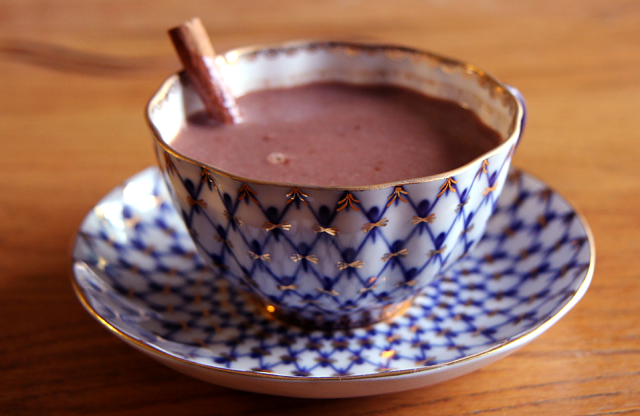
Source: hilahcooking.com

I consider myself one of the pickiest people when it comes to food. The list of food that I don’t like is probably longer than the list of the things I will eat. However, I must remind myself to always try a dish once. Sometimes, this is harder to do because new dishes appear too different than what I am accustomed to. When I prepared to leave for Spain I already knew that I was going to have a hard time adjusting to the food. I could have traveled to Mexico and still had a difficult time. I simply had to get used to the fact that I was going somewhere new to have new adventures. After returning from Spain I can assure you that I most certainly did not love all the food I ate, but I did fall in love with new dishes.
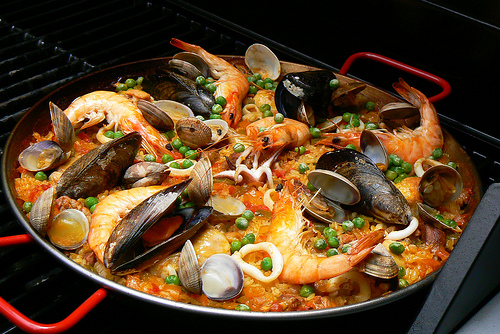
Source: caminoways.com

I am very proud to say that I put on a brave face and tried what was set before me. I left my host family sure that I had no offended my host mom in any way, especially in her cooking and I let her know how much I appreciated that she would cook for us every single day. Being away from home is hard, and having your comfort food once in a while is normal but when abroad, remembers to embrace the new, the different, and even the slightly weird.

-Adrianna

DUAbroad Peer Advisor

Food Allergies Overseas

Many people worry about the kind of food that they will be expected to eat when they live abroad from stinky cheese to unusual types of seafood. Food was definitely one of my main concerns about living in another country, but not just because of cultural differences in food, but because I am gluten intolerant.

In Colorado, I have been spoiled by all the gluten free options: varieties of gluten free breads, cookies, pastas and more, and not only at health food stores anymore, but literally any grocery store. I knew that being abroad would not be the same and that I would not have nearly the same number of food options as I do in Colorado, but I didn’t let that determine where I was going to study abroad. Instead I figured out where I was going abroad, and then worried about the food as a sort of afterthought. I always assumed that if things got really bad I could just do some weird raw diet or cook all of my meals for myself—I mean I must be able to find rice and maybe some kind of meat in most other countries!

The program that I ended up going to was The Danish Institute for Study Abroad (DIS) in Copenhagen, Denmark. Despite my initial worries about how I was going to avoid eating gluten abroad, it actually worked out quite well. Here is my advice on how to follow your dietary restrictions during study abroad:

Here is one of my favorite items from Schär.

1. If you are going to a non English speaking country, go to http://selectwisely.com/ to get a card that explains your allergy in the language spoken in the country that you are going to. Although I did not end up using mine very often due to not eating out very much and the fact that most Danish people speak a fair amount of English, it made me feel better that I at least had it with me in case I needed to explain my allergy to a food provider.

2. Tell your school about your dietary restrictions. I wrote in my application that I couldn’t eat gluten, and DIS provided a lot of gluten free food for me from asking my Folkehøjskole (the place where I lived there) give me gluten free meals to helping me find gluten free meals in hostels and at restaurants on trips that I went on all over Europe.

3. Explore different grocery stores if you are in a country that has a few different kinds. It took me a while to figure out which grocery stores were the best, but finally I figured out stores that were roughly the Danish equivalent of Whole Foods or similar.

4. Be as open minded as possible with other types of food because it’s hard to be a picky eater when you are unable to eat certain types of food.

Almost a month into my time abroad I discovered a really awesome Europe-based gluten free foods company called Schär, which to my delight, can also be purchased at many stores around Denver. So if you are gluten intolerant and end up living in a European country, keep your eyes peeled for the yellow Schär packaging.

–         Rosa Calabrese, DUSA Peer Advisor