Home

Ignorance and Knowledge

You know how it is preached in the Study Abroad 101s to not be ignorant of your home country’s politics, current events, and whatnot? During my fall semester abroad, I was the person whose knowledge about U.S. current events was really not that extensive. You may be thinking what an ignorant, lazy study abroad student. Wrong! Culturally immersed study abroad student.

You see, my first semester abroad was intensive Chinese language immersion. The way I saw it, stopping my intake of everything U.S.-related would not do much harm (with the exception of the Presidential Debate). Granted, I stayed in contact with people back home, but other than whatever was on my Facebook news feed when I uploaded photos, not a lot of American news reached my ears. 

Why? I listened to Chinese music. I tried to read (with much difficulty) Chinese news sources. I listened to Chinese podcasts and spent 11 hours of my day in classrooms studying the language. I lived with a host family that spoke no English and had a Chinese news source as my browser homepage.

the voice of China

First semester my goal was to be immersed in the language. To me, the tradeoff of knowing less about U.S. happenings was worth the gains I made in my Chinese language and cultural knowledge. My second semester abroad I took a Chinese Media Studies class, during which I read an equal amount of Chinese and American news sources to compare the reporting styles and contents of the articles. 

Every student in my program was immersed on different levels. One student only hung out with Chinese students and watched Chinese dramas with them. Another student always spoke English after class, breaking the language pledge all students had signed at the start of the semester. Each student had his or her own level of cultural immersion. Like I said earlier, my knowledge on American art or business was not as vast as when I was in the U.S., but on the up side I was up to date on Chinese events and surrounding myself with Chinese helped me achieve a level of speaking confidence I was proud of.

Just as students can be not culturally immersed when they go abroad, it is entirely possible for students to be completely culturally immersed. Hopefully you are more immersed than not; learning about cultural norms and the vernacular of your host country is one of the best ways to become familiar with the history and pop culture of where you are studying. Of course, there will always be different levels of immersion; how much you engage is up to you. Just don’t be afraid to give up some things you would normally rely on in the States. Who knows, you may even bring some cooler traditions back home with you.

– Michelle Yeager, DUSA Peer Advisor

Internships Ahoy

My program with CIEE actually offered many internship options, although most were oriented towards political science majors. None looked interesting to me, so here comes Lesson Number One: Ask for help. I talked to two of my Art History professors, and both offered internships practically by the end of the week. If nothing quite suits you and you have something in mind- fix it! Ask for help! People love to help, and love free labor, so if you are just looking for experience this is a great way to go.

So after asking for help and receiving, I accepted the first job that came my way. At first working at the Hungarian National Archives for Art History sounded kind of boring, and even after the first few days it really felt boring. But Lesson Number Two: you can make any job fun just with your own outlook. My job was scanning documents into a digital system, which, as it happens, can be done at the same time as watching the first season of Friends on my laptop. So I still got the same amount of work done, but I did it while listening to a show, or sometimes Pimseleur language help for my Hungarian. I had friends who did similar things with their jobs (since not all problems can be solved with TV shows- especially since I was alone in a room with headphones I wasn’t distracting anyone and this is definitely not always true), just by being in a more positive state of mind and applying yourself, you can still have fun. Plus the documents I was scanning were from the late 1800s related to national art shows for up-in-coming painters of the day. Super cool!

Lesson Number Three, before I tell you about my second internship, is an important one: Don’t expect to get paid. These internships can be for credit or simply experience, but if you ask a professor to find you a paid job it will be less fun for everyone. But on the other hand, if you walk up to a professor saying “Look, I absolutely love art history and really want experience in the field be it volunteer work or an internship, would you be willing to help me,” I don’t think there is a single person who wouldn’t try to help you out. Professors love passion, and if you care and show that you care, they will help you.

I worked in that giant building on the hill! Aah!

This leads to the second internship that I got- the Hungarian National Gallery– aka Magyar Nemzeti Galeria. Just by asking a professor, I got to work in one of the most prestigious museums in Hungary, in a CASTLE so cool guys so cool. In any case, this leads to another point: Sometimes people accept interns without having any idea of what they want you to do. I loved this internship, but when I first got there they had no idea what to do with me. I edited and read through their website probably 10 times just looking for grammar mistakes on three different days until I suggested other ways I could help. So Lesson Number Four: Sometimes you have to make your own work. Ultimately I ended up writing a new section for their website and giving tours to English speaking tourists on Saturdays, but it took a while and some suggestions before these were my assigned jobs.

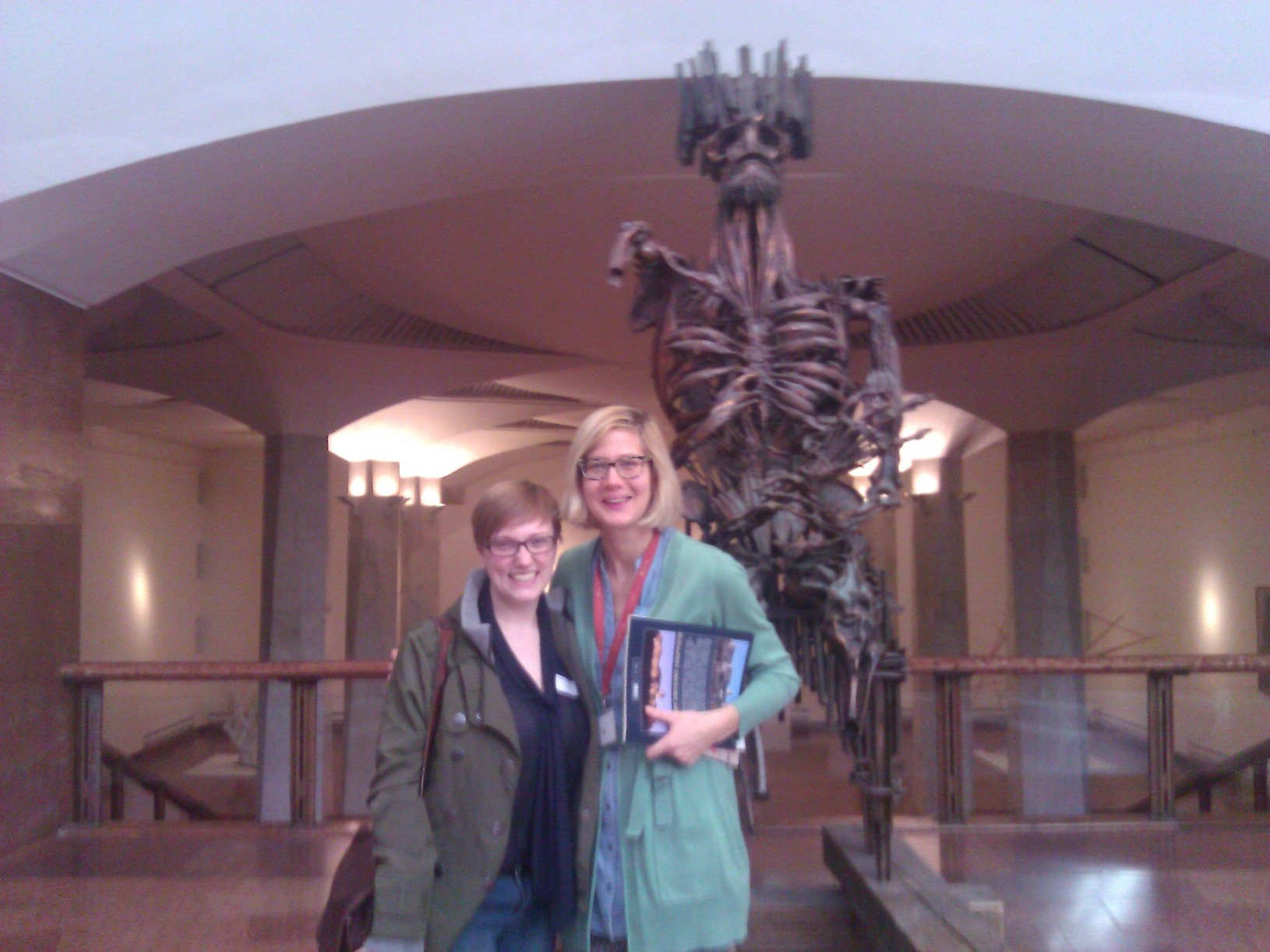
Me and my boss Fatima in the top floor of the Gallery in front of a statue of György Dózsa-- super creepy story you should look it up on wiki.
Me and my boss Fatima in the top floor of the Gallery in front of a statue of György Dózsa– super creepy story you should look it up on wiki.

But finally, the most important lesson I drew from having these internships is this, Lesson Number Five:

→ Do what you love.

Internships can be all kinds of fun – like that idiom says about “never work a day in your life,” right? So when you do find an internship, just make sure it meshes with your interests. Then every day will feel like learning and new experiences, and not like a real job. You should look forward to your internship and not dread it. I looked forward to both of mine because I still learned a lot and it was in an area I care about- I hope that if you choose to intern abroad it is so you can have some fun, too, and isn’t just for resume boosting.