
Intercambios Saved My Spanish

After more than a month in Spain, I have a new level of respect for anyone who decides to move to a country where they will have to speak a different language. Even the simplest sentiments can be difficult to translate. Oftentimes, it takes me about twice as long to say the same sentence in Spanish as it would take to say it in English. Sometimes I hold up my hand, say “espera,” and take a minute to search for the word I need. And every once in a while, after staring into space for far too long, I sigh and say, “no importa.”

Though I try to practice as much as possible, it hasn’t been as easy as I expected. Originally, I imagined myself speaking Spanish all the time once I got off the plane in Madrid but it soon became clear that our program coordinators were going to communicate with us almost exclusively in English. Whenever I was hanging out with other people in my program they spoke English too. After a couple weeks I felt myself comfortably slipping into speaking English whenever I could, which was often, considering all my friends were Americans from our program.

Wait, I would think every so often. This isn’t what I came here to do. It felt wrong to only ever be speaking in Spanish when I was with my host mom or in class. Wasn’t I supposed to be trying to immerse myself in this new language? At the same time, I didn’t want to ask my friends to try to have Spanish-only conversations with me, and I really did not want to attempt to ask a native speaker if they ever wanted to chat. I’ve played out the scenario in my head, and the only way it ever ends is badly. So badly. And awkwardly.

The perfect solution to my problem came a few weeks after we started classes: an intercambio. In Spanish, the word intercambio means “exchange,” and in this instance the exchange is vocal. Our university matches us up with a native Spanish-speaking university student who wants to practice speaking English and, once we’re given their contact information, it’s up to us to set up a meeting and start practicing.

Intercambios are the best thing to happen to my Spanish conversational skills since the Spanishdict app. I’ve met with many of my friends’ intercambios as well as my own, and they are all extremely friendly and speak near-flawless English too boot. They help you with your grammar mistakes and teach you slang that varies from the useful to the, well, less-than-appropriate.

One of the sights I saw while exploring Sevilla with my intercambio - Plaza de España
One of the sights I saw while exploring Sevilla with my intercambio – Plaza de España

The other night I had my first dinner out where it was just me with my intercambio and her Spanish-speaking friends. To say the least, it was intimidating. Not a word of English was spoken. Many times I ended up grimacing because I wasn’t sure if I was supposed to react with surprise, disgust, or happiness. The pace of conversation was so fast that whole minutes passed with stories flying over my head as constantly nibbled on my food to make it look like I had a reason for my silence. Every once in a while, my intercambio would turn to me and translate a story that had just passed, rapid-fire and full of slang I don’t know, between her two friends.

Though the experience may have been a little bewildering, it was fulfilling in a way that spending a night speaking in English wouldn’t have been. I felt like, though I struggled, I was accomplished in some way.

And the things worth accomplishing, the ones that leave us with a sense of pride after we’ve achieved them, are the ones that present the hardest struggle along the way.

Intercambio night! Spaniards, Americans, Brits, Germans, and more.

To help with navigating the struggle that is overcoming the language barrier, I’ve compiled some facts/ tips that I’ve picked up in the last month and a half:

  • You will be scared. Don’t be. Nervousness may keep you from saying something wrong, but it will never allow you the chance to learn how to say it right.
  • (Most) people appreciate your efforts. Speaking in a country’s native language shows an appreciation for the people and their culture, and you are more likely to run into people who will help you through a conversation than people who will judge you for your mistakes.
  • Learning a language takes time; progress may seem slow, but as long as you keep practicing it will happen. Everyday phrases will become easier when you actually start using them everyday.
  • Sometimes the only reason you understand what people are saying is because of the accompanying hand signals they make.
    • Just today I had an entire conversation with my tapas professor using hand motions and sounds to imitate what food would sound like in the pan. Seriously. (And it was probably the most entertaining conversation I had all day). You can get by even when you don’t have the words to, so don’t get flustered when you can’t figure out what you need to say.

Emily Laurinec-Studer, DUSA blogger

How to Survive Your First Week Abroad

Greetings fellow Pios!

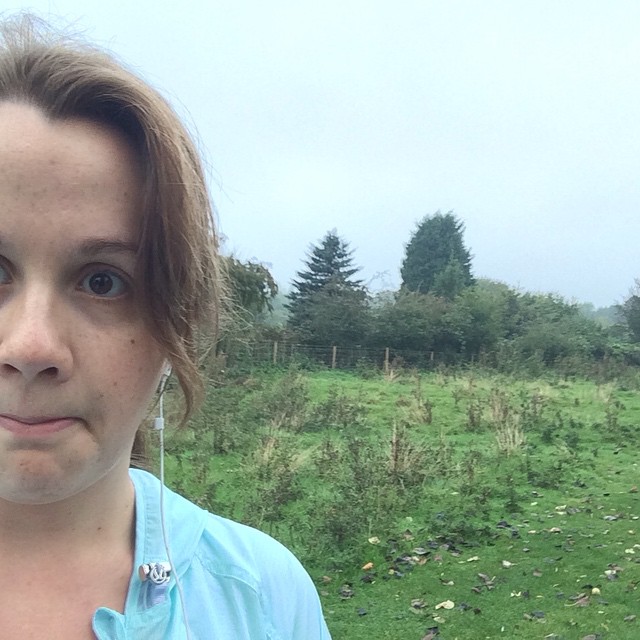
I have successfully completed an entire week of classes at the University of York, which means that I have finished my third week abroad when factoring in my pre-class time here in England. The past three weeks have been eventful, complete with me discovering misty, Charlotte Bronte-esque fields around campus:

Where’s Heathcliff?

And even venturing off campus, out of the city and up to the seaside to find the sun that can be quite elusive sometimes in York:

Seaside sunrises are something else.

As it would seem I am somewhat “settled in” now, I have compiled a list of protips and anecdotes that have aided in the settling process for your reading pleasure.

Faith’s Settling in Protips-or, How to Not Make a Complete Fool of Yourself While Studying Abroad. 

  • In your Study Abroad 101 sessions and regional sessions, the DUSA staff will tell you over and over again that you will need to learn self-advocacy while abroad, even more so than while you are at DU. Take that seriously, because it’s so true. Here at York Uni, they won’t chase you down to make sure you’ve registered your visa or registered for classes or are even in the proper department. They’ll just conclude that you’re not a full-time student if you don’t handle those things yourself, and you will have to deal with immigration services in an unpleasant way. (Now, that’s not to say that the University of York doesn’t have any student support services. They have a very well-developed student welfare system, but it handles personal matters and not academic ones).
  • Fall asleep in your first formal class. Be really embarrassed about it because you were in the front row and your prof totally saw you dozing. Then let it go, because it happens to the best of us, and sometimes the quickest lessons are learned by humiliation.
  • Realize that there are very few contact hours in England (especially in York) universities when compared to the States. Plan out your own study hours carefully so you don’t get screwed over, and then look for a volunteer position or even a part-time job to fill the downtime. It’s a great way to get connected with the community and meet people outside the Uni.
  • See if your school has an International Student’s Association. They may have a very active one like at York that plans day trips nearly every weekend of the term. Go on a few of these, even if you barely know the people there. Connecting with other internationals has been hugely beneficial to me as they are well aware of any difficulties I’m having getting used to English life.
Exploring Cambridge, England with a fellow international student from Germany!
  • Step outside your comfort zone a bit when it comes to socialization. Don’t do things that are contrary to your personality or convictions, but if you’re not a huge late night person, push yourself and try going to a pub night once a week. So far, I’ve found that pubs in York are an excellent way to get to know your new friends and classmates. Typically, they are not very noisy and have a warm, homey atmosphere that facilitates get-to-know-you moments. Trying out different pubs in your area is also a great way to get to know the city.

Every study abroad experience is going to be different and is going to require different levels and forms of personal growth. But I would venture to say that the concepts of learning to stand up for yourself and advocate for yourself, trying new things socially and academically, and making friends in groups you wouldn’t have even considered previously are fairly universal.

-Faith Lierheimer, DUSA Blogger