

I was scheduled to leave for Salamanca, Spain in early September of 2013, but had one foot out the door in June.
Sitting in my parent’s house in Boulder, Colorado, I was itching to rediscover the freedom I so coveted while in college and excited to explore Spain and Western Europe, where I’d never been before. I had worked all summer, leaving all my worldly possessions strewn across the floor of my childhood room, knowing that those 3 months were just a stop gap to where I really wanted to be.
In my sagely, and immensely humble, 20 years on this planet, at that point, I’d learned if you got an itch, you’d better scratch it. And so I did just that, I scratched that study abroad itch and was consumed by the desire to leave. Instant gratification definitely got the best of me.
In all that scratching, though, left me without a few key pieces of information that would have been really valuable before leaving for my trip.

First, improvising will get you a long way, but some structure is both nice and necessary.
I arrived in Spain at around 8:30pm, with the last bus leaving for Salamanca from Madrid around 9:00pm. I thought it would be easy to simply walk off my flight, find the bus station, buy a ticket, and that would be that.
In short, I was profoundly, utterly, and horribly wrong. In Spain, you are supposed to buy your ticket well before you arrive, something I realized as the ticket office was closed and I watched my bus drive away. This, however, is where structure comes in. Knowing I didn’t have a lot of time to make my bus, I researched the departure times of trains leaving for Salamanca from Madrid. The last train left at 9:37 from Chamartín station in southern Madrid, which I decided was my last shot.
I ended up needing it. After realizing I missed my bus, I ran to a taxi. The old man driving the taxi was one of the most kind individuals I had ever met in my life. I explained my predicament to him, he flew to the station, then jumped out of his cab to walk me to the ticket counter and make sure I got on the right train. Having flexibility in a loose structure quickly became my mantra.

Secondly, arrange what you need for your extended trip, get rid of half of it, and bring an extra bag for your flight home.
In packing, especially, I found that I could have packed much more efficiently than I did, and I only brought one suitcase and a carry-on backpack. If you’re studying abroad for a few months, mine was a total of four, often times you’re going to span two seasons. This leaves you with a slight predicament, in the sense that there generally isn’t a one-size-fits wardrobe that you can wear throughout your entire trip. In my case, coming from Colorado, I expect 60-70 degree days to extend through October and the occasional day in November. Moreover, I thought, when the sun is out, it’s always warm, so I’ll need plenty of shorts.Spain is notorious for being hot and I thought I was in the clear.
Not only did I find that wearing shorts was largely looked down upon by Spaniards in autumn, it never was quite warm enough to warrant wearing them anyway. So they sat and took up valuable room in my suitcase. The same principles apply towards toiletries and other non-essentials, particularly in the developed world. No, your host country may not have your preferred body wash or shampoo from home, but they will have an equivalent. Don’t pack it, there are greater things at stake, and often times, you can find higher quality items to augment what you can’t bring, like the sweater, dress shirt, and pea coat that accompanied me home.
This brings me to the last packing point, bring an extra bag for your return. When I was gone, I missed birthdays, holidays, and all sorts of other occasions that require gifts. I had accumulated a few new things myself, and was gifted more, all of which added up, slowly but surely, to take up a lot more room. Having an extra, cloth duffle bag that I folded up into my original suitcase allowed me to fit everything coming home. That being said, this only works if you have one checked bag and one carry-on when you leave home. Most international flights allow for two checked bags, so take advantage of it when you really need it: on your return flight.
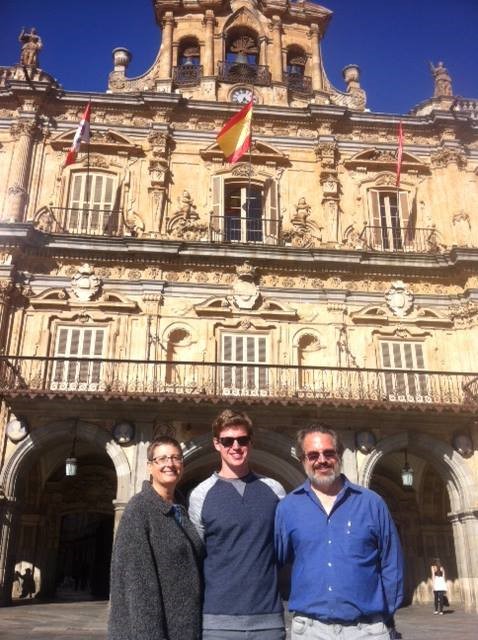
Finally, realize that your accent will forever be tainted by the guttural, Spanish version.
It doesn’t matter how much you resist. It doesn’t matter how much you practice. It doesn’t matter how many classes you take on your return with professors from Latin America. The Spanish accent sticks like a tongue to a flagpole on a blustery winter day.
Give into it. Learn that joder, with that scratchy “j”, is the most descriptive, utilitarian word in the Castilian dialect. Resign yourself to the bizarre existence of vosotros, and forgive yourself for the first time you say zapato as your tongue slithers its way through your front teeth.
And more than just resign yourself to it, practice and immerse yourself in a Spanish dialect that you’re not necessarily familiar with. Websites such as Matador Network have lists of Spanish idioms that are really useful. Watch a soccer match in Spanish, if not only to count the number of seconds the announcer screams “GOL!!!!”. Practice your vosotros. Watch a Spanish movie, there are a plethora of wonderful ones, my favorites being “Mar adentro”, “Hable con ella”, and “El laberinto del fauno”.
Joder tío, obviously, there are many more ways to prepare, but I hope this helps with a few aspects that may have slipped under the radar.
-Max Spiro, Graduate Study Abroad Assistant



 DU Abroad