
Recently, one of our DUSA Bloggers had a quote that really resonated with me. She wrote, “After living here for 5 months, I don’t really see how people can travel places for only two, three weeks at a time. I don’t see how I’ll be able to do it in the future. There’s no time to build a routine, find the fastest way home because you’ve literally walked every possible route, find your ice cream shop where they start only charging you 75 cents instead of the very steep 80 ‘because you’re so sweet.’ Where is the living?”
I found myself in a very similar situation this past break. For the first time since coming home from study abroad, I found myself outside the United States. I was traveling in Israel on a tour bus with 40 young adults aged 21-26 for 10 days. The trip illuminated some fascinating distinctions for me, and I’ll describe those now.

What struck me first were the difficulties in traveling en mass. My entire life, I had never travelled outside of Colorado with more than 10 people. The words “all”, “inclusive”, and “resort” put together sounded like nails on a chalkboard to my family. Going off the beaten path was something we strived to do, so much so that my mother once had a trip agenda to “walk into open courtyards.” That sounded eerily like trespassing to me at the time, but thankfully went off without a hitch and I saw some pretty neat courtyards.
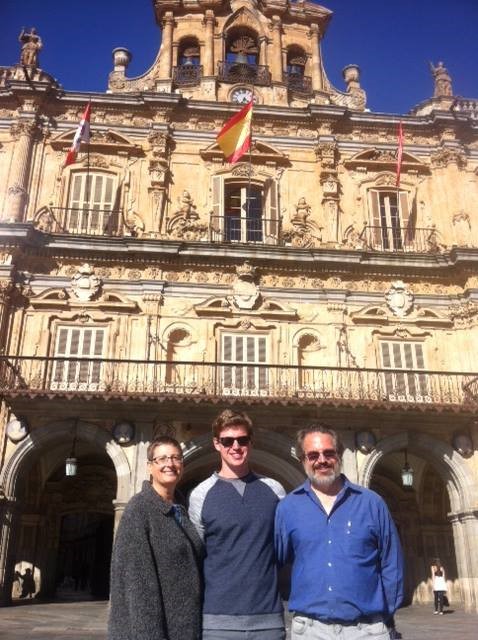
While studying abroad, my desire to explore on foot and without an agenda had a profound impact on my experience. I learned the intricacies of Salamanca, Spain, my host-city, by running aimlessly: a right turn here, a left turn there, until I wandered my way home. Walking in a lemming-like train of 40 people allowed no room for creativity and encouraged a sheltered view of the cities we visited.
What struck me further, however, was my craving for depth. My wanderings in Salamanca led me to my favorite coffee shop, where my friend Ian and I would go to chat and get advice from Beatriz, the shop’s owner. The get-on-the-bus, get-off-the-bus mentality robbed me of my opportunity to find hidden gems, like Beatriz’s coffee shop.

This, I feel is the difference between traveling and living. Traveling is like eating the icing off the top of the cake: it’s briefly tasty, a little too sweet, and doesn’t fully satisfy you. The meat, or cake in this analogy, of the experience is finding the richness and density only living in a place will give you.
More importantly, however, I think the trip taught me the difference between tourism and adventure. To me, tourism is scripted. There are assigned places for you to be at certain times. More than just being scripted, it is an experience catered to you through another person’s eyes. Adventuring, on the other hand, is taking traveling into your own hands, exploring at your own pace, and looking at a new place through your own lens. Going on an adventure is an intense, individual experience.
So, in short, here’s what I would recommend. Try to live while you’re studying abroad, and if you don’t have the time to live, adventure. Always be an adventurer.
-Max Spiro, Study Abroad Assistant


 DU Abroad