
Introducing Kat Hennessy

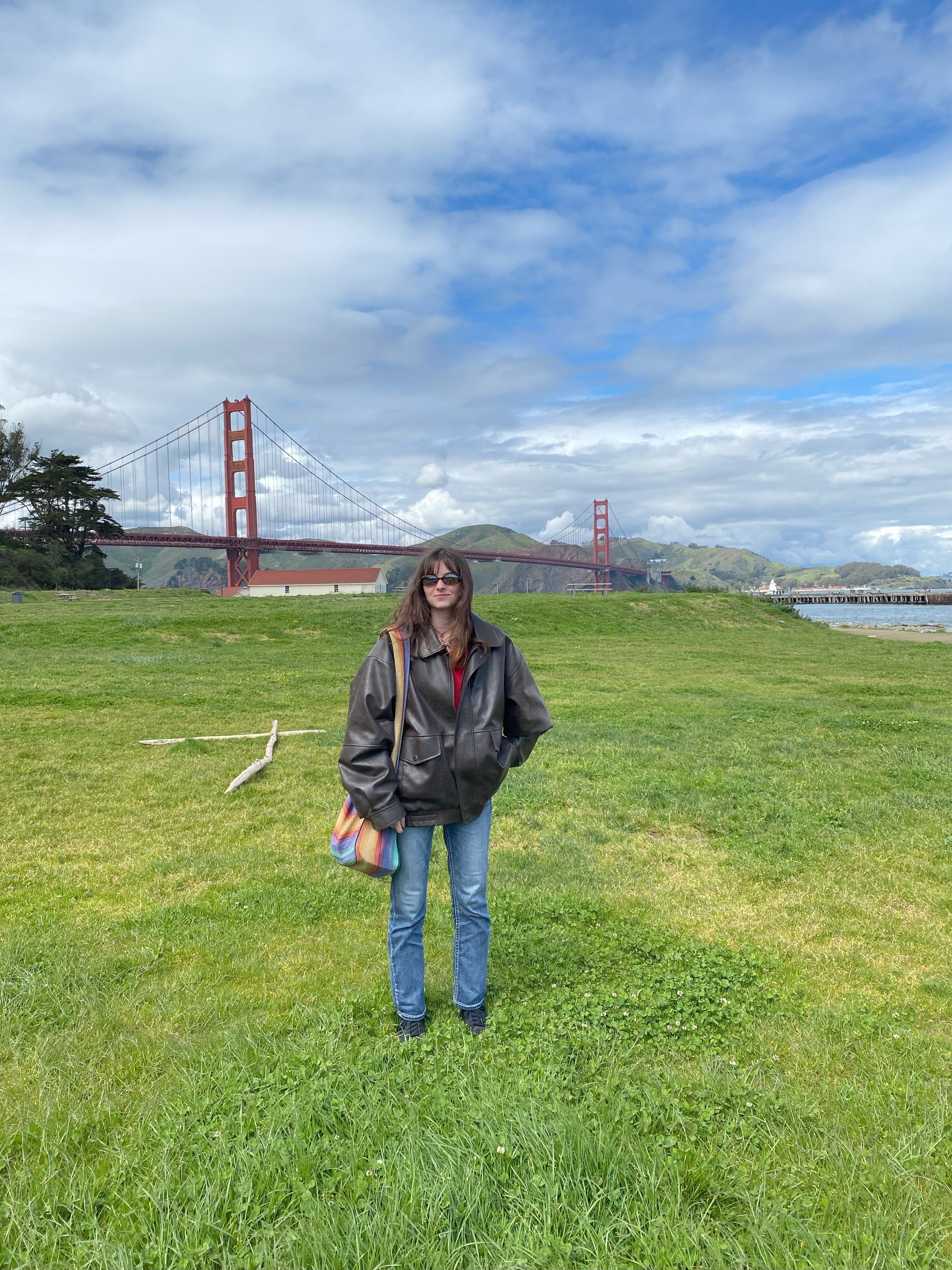
Me seeing the Golden Gate Bridge for the first time.

What is/are your major(s)?

International Studies, Gender and Women’s Studies, Languages, Literatures, and Cultures

What is/are your minor(s)?

English

What is the name of your study abroad program?

Doshisha University – Center for Global Education and Japanese Studies

In what city & country is your study abroad program located?

Kyoto, Japan

What is something you would like the blog readers to know about you that they wouldn’t know by just looking at you?

I would want blog readers to know that my curiosity guides me in my studies, travels, relationships, and understanding of self. I have a desire to become a lifelong learner and my study abroad experience is a monumental step in this process for me, just as my current undergraduate education is. I would want them to know that I am a passionate and resilient woman who wants to see as many places and meet as many people as she can.

What is one thing that you are most anticipating about your study abroad experience?

I am anticipating immersing myself in language practice, hopefully reaching a conversational level, and also traveling to national monuments and historical temples, shrines, and parks. I hope to make Japanese friends. Overall, I am expecting and hoping to have an independent experience where my time alone will allow me to self-reflect and learn more about who I am in this world, no matter where I go.

Why did you decide to study abroad? or What inspired you to study abroad?

I always planned on studying abroad, even in high school, so that is why I picked DU (for its robust study abroad program). I knew I wanted to study abroad in Japan because my family hosted two Japanese exchange students when I was in high school. The girls were named Masako and Ai. I had an experience with Masako that stuck with me; she came up to the futon in the attic I was sleeping on one night with a little translating device. Neither of us spoke very well in each other’s languages, but she handed me to device and we began talking through it, giggling, and learning more about each other. I cherish that memory, and looking back on it, I find it to be indicative of the most important part of a study abroad experience: human connection despite all barriers of culture, language, race, upbringing, and identity–human connection over everything. This moved me greatly and I know it is something I hope to experience in my study abroad experience.

Me with my best friends on my 20th birthday.

Luxury and natural disaster

This weekend I traveled to Mendoza, Argentina. Situated just east of the Andes, it is the capital city of the arid Mendoza Province. It’s world-renowned as the heart of Argentina’s wine country, where much of the nation’s prized Malbec is produced. Flying into Mendoza, the hot sun over the whitecaps reminded me of Colorado, and I was glad to find some respite from my usual city views.

We spent the first morning strolling through town and napping off our fatigue. That afternoon we found ourselves at an overpriced rooftop cafe looking out over the beautiful city and the mountains in the distance. We meandered through the main town plaza, watching the canoers on the lake and stopping to smell the flowers in the perfectly manicured rose garden. We finished the evening with a delicious meal; I ate rabbit ravioli and drank local wine which felt very luxurious. 

The next morning we were up bright and early to hike Cerro Arco, one of the mountain peaks closer to town. Even at 9 am, it was hot, and all of us were puffing as we ascended, pausing to take in the landscape and also to avoid keeling over. On our way down, we began chatting with another hiker. After exchanging pleasantries, she warned us of the Zonda, a local phenomenon in which the wind comes down the Andes hot, dry, and very fast. She said winds could reach 80 km that weekend and advised us to stay inside if possible. We thanked her but shrugged it off; even at the top of our mountain, there was hardly a breeze. 

But throughout the rest of the day, we continued to hear warnings of the Zonda. We dressed up and drove out to the countryside for a wine tasting. We toured the vineyard and the cellars before sitting down to several different wine and cheese pairings. Truth be told, I used to think the whole sommelier thing was hocus pocus (notes of oak and tobacco? Please), but this experience changed my mind. Our guide taught us how to identify what we were tasting such that by the third wine variety I was basically an expert in tannins and mouthfeel. 

At this point, the winds had indeed begun to pick up. As our tour came to a close, all that dry steppe dust was beginning to swirl into the air and fill our lungs and eyes. We went directly home and canceled our plans that night. The streets outside our downtown Airbnb were deserted. On our trek to dinner, we covered our mouths as we were whipped by wind and debris like some kind of sick Western movie. Mid-meal, the lights flickered and a loud crash outside turned out to be an entire tree collapsing into the street.

Needless to say, we stayed in the next day. I was disappointed that we had been forced to abandon our plans, but we made the most of it. We slept in and spent the afternoon reading, watching music videos, and playing cards. Our power went out that evening while we were out grabbing dinner and didn’t come back on until the middle of the night.

It certainly was not the weekend we were expecting, but we left with a bit of a tan and a few essential lessons: 1) Remain flexible. 2) Do not trust the Weather app. It will lie to you. 3) If multiple local residents tell you that the Argentine version of the Dust Bowl is coming, you should probably heed their warnings. In the end, we had a great time and I would definitely recommend visiting Mendoza… weather permitting.