
Back at home I am used to texting all the time, and I am sure many of you understand the feeling. We text about where to meet friends, what people are doing throughout the day and (lord knows) to check facebook. But when you are traveling it is a bit tougher to figure out what to do on a tight budget, so hopefully I can clarify a few things about how to handle cell phones abroad.
First and foremost call your cell phone provider and ask them about their policies. I wouldn’t check their website, because you will get your answers much faster just by talking to a representative. Plus I found that you can find conflicting information on their website if you don’t properly understand it.
For example I use T-Mobile and they told me that with unlimited texts it only costs me 20 cents to send texts and they are still free to receive abroad. Without that plan it would cost me 50 cents to send and 20 to receive. Not great with the unlimited costs, but still reasonable. Even with this system, phone calls are expensive and generally not worth it. Especially if you plan on calling people in the country where you are traveling, it is a good idea to look at other options.
Your other options are to get a prepaid phone, or a SIM card you can put in your phone. Both of these are available at local phone stores, in our case it was T-mobile.
The important thing to note about SIM cards is that your phone MUST be unlocked for you to replace your SIM card with another. Again, when you call your provider they can tell you how to do that- for my phone they gave me an input code that I could use to unlock it once I put in a new SIM card. I believe the system is the same for all providers, but when you call you can ask!
SIM cards are prepaid, so it means you purchase the SIM you can upload more minutes on ATMs around the country. It is incredibly easy, and the option shows up on ATMs automatically.
I found a website that mentions you can use the SIM cards again when you travel, but that has to be to the same country within a year. This might also be depending on the SIM card, but it seems to me that this is a fairly broad rule. I didn’t purchase a SIM card myself, but apparently they are a bit more expensive than just buying the phone, about 17 dollars.
As for burner phones, in Hungary they only cost approximately 10 dollars. This also started me off with 600 Forints on the phone for texts and calls, which is about 3 dollars at 17 cents per text. They are incredibly simple and you should only really use them to text and tell time, but they get the job done. I went with this option mainly for simplicity sake, so I can have my normal phone that my family knows the number of in case they really need to contact me quick.
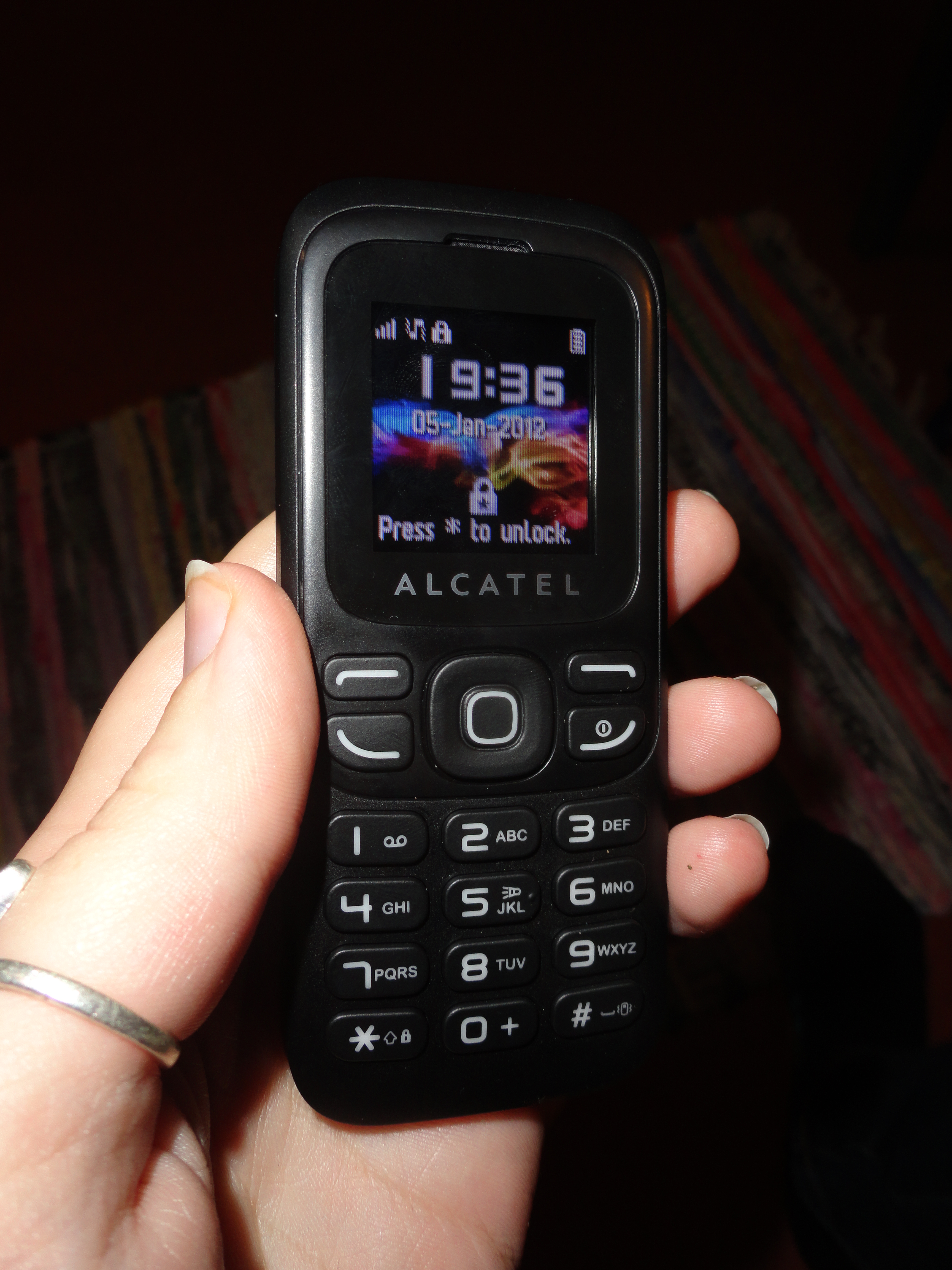
These phones will text you the balance on your phone after you go under a certain amount, and then you can, again, replenish it at an ATM.
Both SIM cards and prepaid phones come with an international number, so if your family wants to call I would save it for skype, or they will have to pay the international fees. The international number you always begin with + and then the country code. In my case it is 36. So for example, my phone number in Hungary would be +(36) (12) 345-6789. A completely made up number, but the area code is 12 in my example. If you don’t add the plus at the beginning of the number (typed in the phone like this: +36123456789 ) then your calls or texts won’t go through and the phone will charge you for every attempt at sending. (I learned this the hard way)
As for Data plans, I would really not recommend it. Especially if you are thinking of getting a prepaid phone just leave your phone off. If you are willing to use wireless then please make sure that your data plan is off so you won’t be charged exorbitant amounts. Most coffee shops have wireless anyway, so it wouldn’t be too difficult to go without a data plan.
Seriously though if you think that a data plan is that necessary while you are studying abroad you have bigger problems. It is such an amazing experience with so many things to do and see, that if you spend all of your time on your cell phone than you are really missing out, folks! You can post pictures when you get home, and tweet about it later. Live in the moment!!
As a final note, cell phones should really be emergency only. Even in Hungary it costs me 17 cents to send a text message, free to receive. It isn’t that much better than the T-mobile plan, (mainly because my prepaid phone is produced by T-mobile) and so it should really be used sparingly, to find your friends or make a call if you get lost. Otherwise use it to tell time when to meet back at a certain place. I have managed just fine so far with no cell phone at all, I mainly have it as a backup for comfort’s sake.
For more information I found that these sites were really helpful, and they have information for other providers as well:
http://edition.cnn.com/2009/TECH/05/27/cell.phones.overseas/
This website also has the different service providers rates listed, so it can be a quick way for you to find out how much you will be charged.
http://www.independenttraveler.com/travel-tips/stay-connected/international-cell-phone-guide
This is the system how the students in my group purchased SIM cards, so you can see the guidelines here:
http://www.t-mobile.hu/english/all_plans/domino_sim/domino_sim_card
Comment if you have any questions or comments, and I will do my best to help!
And for more information about my personal experiences and stories, check out my blog at https://mirandablank.wordpress.com/


 DU Abroad