
In previous blogs, I’ve mentioned how crucial it is to spend time in your host city and to not be traveling every single weekend. However, we all (myself especially) know how difficult it is to resist traveling to new and exciting places when the cost of travel is so incredibly inexpensive, relatively speaking. I flew roundtrip from Geneva to Amsterdam for $70.00. Outrageous. So, assuming that at least most of you will be doing some amount of travel, and assuming that most of you are running on the same kind of budget that I did while I was abroad, I thought it would be logical and appreciated to discuss my home-away-from-home: hostels.
First things first…do NOT reference the movie Hostel. All told, I’ve spent months of my life living in hostels, and I’m still here in one piece with all of my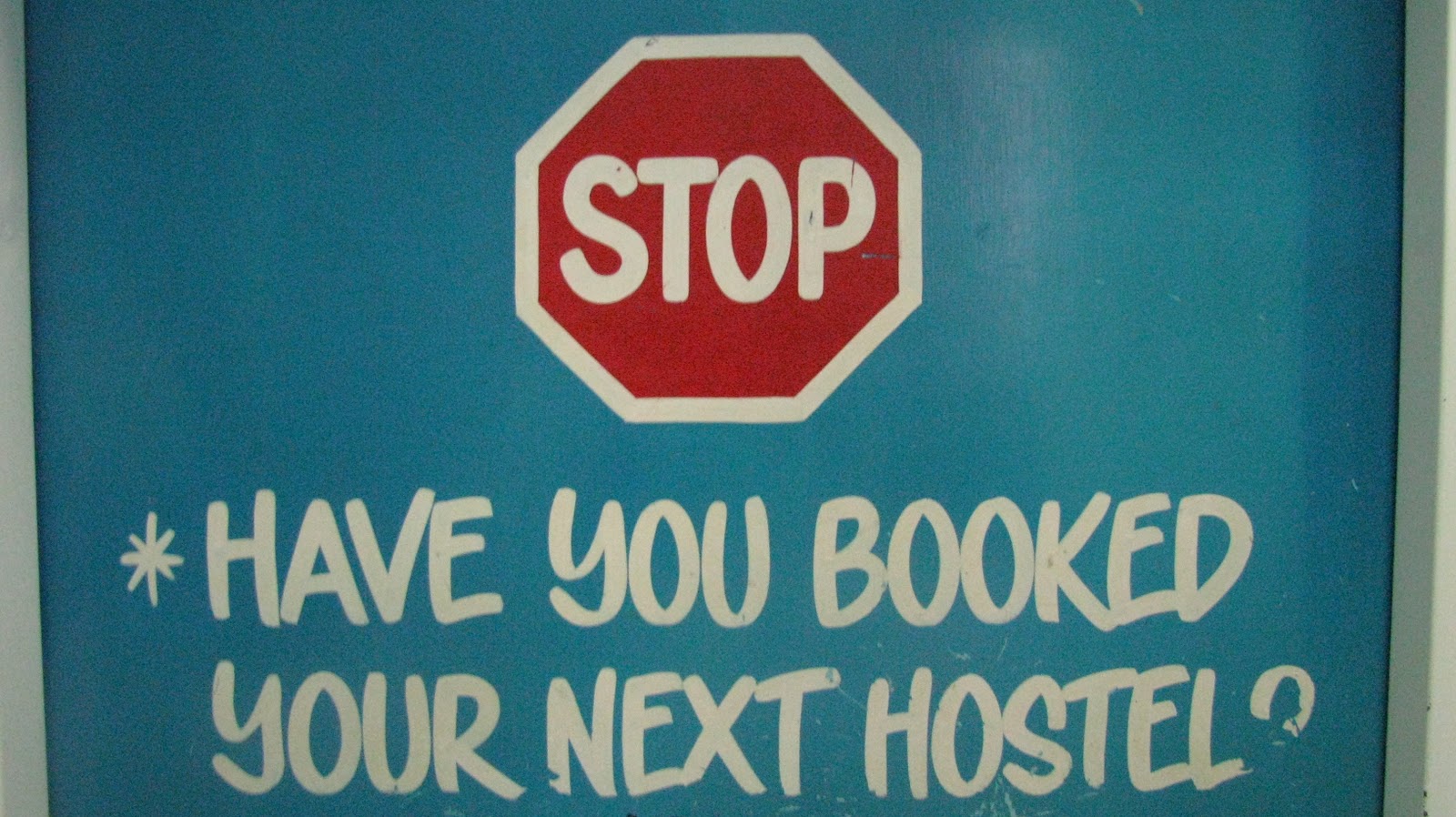 appendages. Of course, you’ve got to use common sense whenever and wherever you travel, but don’t shy away from hostels just because of that movie. They’re really quite wonderful. Depending on where you travel, it may only cost you $10.00 a night to stay in a hostel, as opposed to $50.00 or so for a pretty sketchy hotel room. Yes, it’s true you may have to share a room with strangers, but that’s how they keep their rates so low. And some hostels certainly do it better than others. In my travels, I relied upon http://www.hostelworld.com/. They have reviews of hostels all over the world from student travelers just like you, and they’re pretty legit. Oftentimes I’d plan trips based solely on hostels that I found on this website.
I consider myself somewhat of an authority on hostel life, so there are a few hints and tips that I’d like to pass on to you…things that I certainly didn’t considerbefore venturing out. First things first…try to get as much food included in your hostel as possible. Typically, I’ve found that most of them will include some form of breakfast, but you can also find dinner too (like at the Pink Odyssey Beach Bed and Breakfast: http://www.hostelworld.com/hosteldetails.php/Pink-Odyssey-Beach-Bed-and-Breakfast/Corfu/7669) The cool thing with food being included is that it’s typically locally-grown and produced stuff, all included in the price of your room. Fair warning though…sometimes the meals can be a little sketchy. When I stayed in Barcelona, dinner was included with my hostel, and one night they gave us pieces of boiled potato mixed with canned tuna (at the Kabul Backpacker’s Hostel: http://www.kabul.es/) Technically, it was dinner…but my friends and I still went out for paella and sangria at a restaurant.
Next up…dorm rooms. It can be super tempting to stay in the 30-bed rooms to save on cash, but be ready to not get much sleep. At the same hostel in Barcelona, my friends and I decided on the 30-bed dorm room. The lights never shut off. People were coming in and out at all hours of the night, quite intoxicated, being incredibly loud, and we got up the next morning exhausted. We ended up paying the extra money to switch to a private 3-bed room. I learned that ear plugs are an absolute necessity when staying in a hostel. So when I stayed in a 10-bed room at the Oliver St. John Gogarty in Dublin (http://www.gogartys.ie/), I was prepared with ear plugs and an eye mask and slept wonderfully.
Finally…bathrooms. Keep in mind that the credible hostels will try to keep their public bathrooms as clean as possible, but no one’s perfect…so bring flip flops. Just the cheap rubber ones are fine, but the last thing you want is to come home after a fun weekend and discover some sort of gross growth on your feet. Ick. Another thing to keep in mind is that hostels are running on a budget, and trying to accommodate a lot of people, so their hot water may not always be constant (or available). Also at the Kabul Hostel (yes, I realize I’m not doing this place a service…but trust me, their location was out of control), they had a timer set on their showers, so that they would turn off after 30 seconds unless you kept pressing a button. The water never really got super warm either. However, at the Oasis Hostel in Lisbon (http://www.oasislisboa.com/lisbon-hostel) and at the Villa St. Exupery in Nice, France (http://www.villahostels.com/index-en) we had private en-suite bathrooms with plenty of hot water and no 30-second turn-off. As a side note, I would highly recommend both of those hostels. Especially Oasis. I’d go back tomorrow if I could.
Essentially, the most important thing to keep in mind is that not all hostels are created equally. One may have awesome food, a built-in bar and be right in the middle of downtown, and cost less than one that is a mile outside of town with no food, no hot water and a bed bug problem. It really depends on location and how efficient they are at budgeting. That’s why I seriously stress checking out the hostel review sites like Hostel World. Odds are, there will still be some things about the hostel you choose that aren’t absolutely perfect, but trust me…it is well worth it to have an adventure in a hostel as opposed to spending an arm and a leg on a hotel.
Kat Cosgrove, OIE Graduate Peer Advisor


 DU Abroad