Jamaican Patois

The first time visitor to Kingston, Jamaica is often bewildered, or even frightened by constant yells for attention and the strange language that is spoken. A young man like myself is often referred to as; “rude bwo,y” “brown man,” “soulja,” “my yout,” or even “ugly bwoy.” The reason for this is that in Jamaican tradition physical or imagined attributes are used to pick one out in a crowd or even provide a name. However, for first time visitors this becomes your introduction into the world of Jamaican Patois.

One way to describe Jamaican Patois comes from my aunt, who along with my father were born and raised in the country. She says, “we speak forward, backward, inside out and upside down.” You’ll hear the locals cut letters off words, rearrange sentences, pronounce things differently or use a word unknown to the English language.

 At first you might think you know what is being said, but in reality you have no idea. For instance, what does “if a egg natty inna di red” mean? Or, “young bud nuh know storm.” Or,“one one coco full basket.” These are widely used phrases that sound like English, use English words, but are extremely hard to interpret.

Image

Jamaican Patois is a play on words, combining the Queens English, various West African languages, Spanish, French, Hindi and Chinese. It has a rhythm and texture that can quickly excite, anger or sadden with impunity. One must be quick with the tongue, responding to insults with artfully crafted comebacks and praises with playful flirtatious humor. The average visitor fails to understand these facts, preconceiving Jamaicans to speak English. Which is true, it is the official language. But, Patois is the language widely used between friends, family, acquaintances, at the market, on the street, in music and a whole host of other unique cultural identifiers. Jamaican Patois is the mixture that is Jamaica.

There is no way to formally study Patois and there is no written standardized form. That fact gives it some magic. Metaphors are constantly used, which provides a deeper meaning to what is being said. Imagination is important and visualization helps interpretation. Most importantly, Jamaican Patois is used with humor, helping to alleviate stressful situations, rooted in Jamaican’s violent history.

So, when you make your first trip to the island and explore the market and you hear “hey yardie,” smile and take it as a complement.

Translations:

If a egg natty inna di red – I am centrally involved in anything and everything

Young bud nuh know storm – Experience teaches wisdom

One one coco full basket – Every little bit adds up

Yardie – Refers to someone from Jamaica

-Pablo Hester, DUSA Graduate Peer Advisor
Buying Guide: Host Family Gifts

If you are going abroad and will live with a host family before, you should know that it is nice to bring gifts to whomever you plan to stay with. However, this rule can also be extended to whomever is going to be helping you a lot when you are abroad. For example, I had what is called a Danish Visiting Family, which was a family that
helped me a lot when I was abroad, and I would hang out with them and cook meals with them at least once a week, but I did not live with them. Even if you are just going to live with a roommate or two, it is polite to bring them a gift.
If you are having any trouble figuring out gifts to bring, here are some ideas:

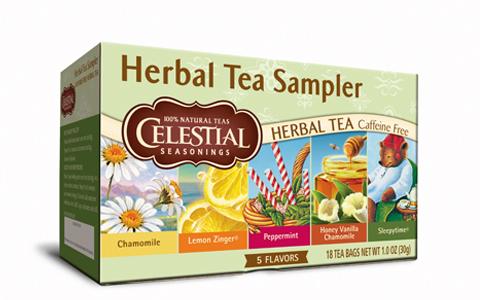
  • Celestial Seasonings tea gift basket (this is what I brought my visiting family, but since Celestial Seasonings is become accessible in so many places, make sure that you are not going somewhere where it is easy to buy. Denver or Boulder tote bags (or tote bags from wherever you live) BBQ sauce (at least in Denmark, everyone seemed to think that BBQ just meant grilling and nobody had any concept of BBQ sauce, so when my parents came to visit I had them bring some BBQ sauce to give to my visiting family)celestial seasonings
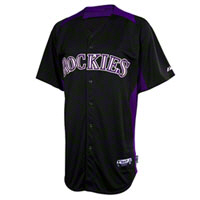
  • Baseball caps or sports jerseys from wherever you are fromrockies jersey
  • Food mixes. For whatever reason a lot of people from other countries seem intrigued by all of our brownie mixes and pancake mixes (or perhaps are just interested in the convenience of it). Other food mixes like mixes for bean soup or anything like that would also make good gifts—especially if they are locally made.
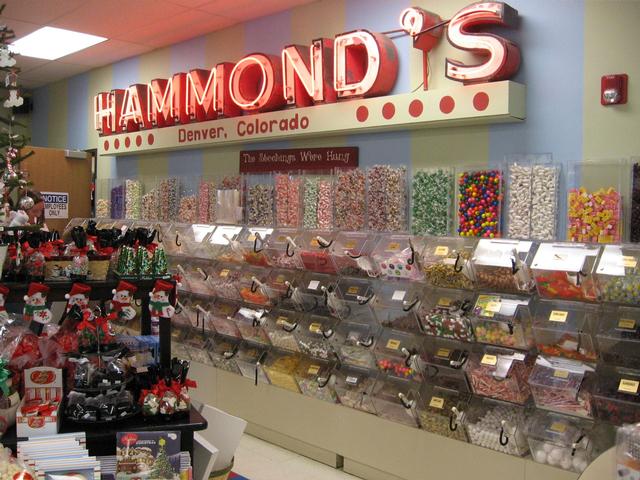
  • Chocolate. Especially if you can get chocolate or candy from a local factory.You can rarely go wrong with getting chocolate, but just make sure that it is wrapped up well so that nothing melts in your suitcase!hammonds candy
  • Locally made soaps or perfumes. This gift is of course better for women.
  • Native American crafts or jewelry.
  • Any other food item that is special to where you live such as salt water taffy if you are from the coast.
  • Any other non food item such as clothing or jewelry or decorations that is somehow representative of where you are from also makes a good gift.

And always bring photos of yourself, your family, your friends, and where you live (including postcards)! It is nice to be able to show your family where you live!

*Blogger’s note: Think ahead- you may be placed with a family with small children, grandparents, extended family members, and people not listed on your housing assignment. Bring a few extra little items just in case. Postcards are easy, cheap, and a great way to share a bit of your home with your host family!

-Rosa Calabrese, DU Study Abroad Peer Advisor