Discovering a New Artist: Hilma af Klint

The other day I decided to spend the morning alone and frolicking about one of the frequently mentioned places in my blogs: the Guggenheim Art Museum. I heard there was a new exhibit up, and what better way to spend a Friday morning?

I had no idea I would discover one of my new favorite artists: Hilma af Klint.

Hilma af Klint was a Swedish artist and self-proclaimed mystic born in the mid-1800s. Her paintings are mostly abstract, geometric, and full of spirals and color. What drew me to Klint’s work at first was how perfectly she was able to execute such symmetry. I was particularly infatuated with one particular painting of hers titled “What a Human Being Is ” (slide 2 in my Instagram post). It’s a split pink heart with a gorgeous spiral through it, leading to a rainbow refraction at the bottom. This particular painting supposedly delves into abstract symbolism that explores the human essence. Most of her work is similar in theme, exploring the dualities of human nature. In much of her works, you can see her depict the feminine with bright, baby-blue colors, while the masculine is depicted with vibrant yellows. She uses much of her work to explore this dichotomy, along with several spiritual themes. I simply couldn’t get over how geometric her work was, how vibrant and feminine, yet so deeply in touch with the spiritual world.

Hilma was ahead of her time, painting abstract pieces even before Kandinsky or Mondrian. If I hadn’t been drawn to her work initially, I certainly was after learning that not only was she queer, but she was a spinster and what some would consider a “witch.” She belonged to a group of four other women, proclaiming themselves “The Five.” The Five would perform ritual seances together. One of those rituals was ultimately successful, one that occurred in 1906, and served as a catalyst for what she considered to be her life’s work: The Paintings for the Temple. These three paintings were among the last of 193 works she created during her life, considering herself to be the sole commissioner for these pieces as a gift to her spirit guides. The Paintings for the Temple also included several sub-series, such as The Ten Largest, Primordial Chaos, and The Swan (which I have a few pictures of below as well).

The Ten Largest was certainly something to behold. Displayed in a massive room inside the Guggenheim, these ten paintings explore the stages of human life from childhood to old age. They include countless floral motifs and bright colors. What I loved most was that I could really see each age within the colors. Childhood was a playful bright blue, young adulthood/adulthood vibrant yellows and oranges, and old age was a softer purple. They were phenomenal, full of spirals, and a sort of dream-like quality I very much enjoyed. I always love to see how artists go about representing the cycle of life in their works, and Klint’s work was especially exceptional.

Hilma was certainly ahead of her time, and she knew it, too. She specifically requested that her work not be shown until at least 20 years after her death. I mean, can you imagine a spinster woman in the 1800s talking about how she regularly spoke to spirits and painted more than 1,200 paintings for them? Unlikely.

Originally, she had wanted her work to be shown in a round building, where visitors could “progress” with her paintings along a spiral path. She wanted the nature of that journey to reflect her own with her spirit guides, and you can see how she draws on various religious imagery from Christianity and Buddhism but also Charles Darwin’s theory of evolution and theology. Many have speculated as to why she wanted to wait for her work to be shown, most coming to the conclusion that the general public just wouldn’t have been ready to receive it since it drew upon such profound and complex ideologies. But it wasn’t until 1986, 40 years after her death, that her work was finally put on display at the Los Angeles County Museum of Art.

I was floored to have gotten the opportunity to experience her work in person. I felt such a kinship with her and her art style. I loved how she incorporated colors and shapes into her paintings, how she was able to depict her spiritual journey, and how deeply those experiences affected her. It was also nice to see another female artist who made such an impact. I find it funny how I’ve gone to so many museums, and each time I am introduced to a female artist who was supposedly “ahead of her time”, yet wasn’t debuted and instead overshadowed by the popular male artist names we know today. I’m glad they are getting the recognition they deserve, even years later.

Wherever you are studying abroad, I strongly encourage you to visit your local art museum and view the exhibits. You never know—you may find a new favorite artist!

Kiswaspanglish?

Hamjambo!

Having been living in Zanzibar for over a month now, I’m starting to really use the language and learn a lot more about the Muslim culture here.  But I still constantly screw up with Kiswahili, hence the title of this post.  I guess I’m sort of tri-lingual now with English, Spanish, and Kiswhaili, so it would make sense that I get the three confused sometimes.  It’s been difficult learning the language, especially since I haven’t been truly introduced to a new language since I was about seven years old.

Capture7

Luckily I don’t need the language to see the fish!

Probably the most fun we’ve had with Kiswahili are the mistakes we’ve made.  In my Kiswahili oral exam, I spoke a full sentence of Spanish to my mwalimu (teacher) before I realized I wasn’t in either English or Kiswahili.  I gasped, covered my mouth, and apologized over and over again.  My mwalimu thought it was absolutely hilarious, and I still passed, so that’s a good thing!  I’ve made many other not-so-great mistakes though, and so have the rest of the wanafunzi.  See below:

Trying to say: I’ve had a good day (responding to a greeting)
Actually said: Banana

Trying to say: I’m drinking coffee
Actually said: I’m taking a poop

Trying to say: Brush your teeth before you go to bed
Actually said: Brush your teeth before sex

Friend trying to say: Hold him back
Friend actually said: Grab his butt

Friend understood: My husband is doing laundry
What was actually said: My husband is dead

Whoops!

I love the strong emphasis on language learning with my program, it really allows so much more to open up to you versus just relying on someone else to speak English, which is completely possible in Stone Town, but I feel so much like a tourist that I want to use Kiswahili whenever I can.  People tend to really open up to you when they see that you’re really trying to learn the language.  Combine that with dressing appropriately (long skirt or pants, loose-fitting, shoulders covered), and conversations will carry on until the sun sets.  That’s definitely a defining part of Zanzibari culture, always taking the time to greet people.  This is what is meant by “pole pole” culture (pronounced pol-ay.  In Kiswahili, all letters are pronounced).  Learning more about culture leads to religion, which has huge influences on the daily lives of the Zanzibaris.  Muslim culture is not as well known in America, so I thought I’d break a bit of it down.

Clothing: 

One of the first cultural differences I noticed getting off the plane in Zanzibar was all the headscarves that women wear.  The only time I saw someone’s hair in public was if she was white (aka not Zanzibari).  Women are generally covered from neckline to ankles in loose-fitting clothing with a headscarf to top it all off.  Depending on how religious the woman is, she will either just wear her headscarf when she leaves the house or she will add a baibui to it, which is the face covering with a slit for her eyes (just don’t call it a buibui, that’s a spider, and side note: the spiders in Zanzibar are MASSIVE OH MY GOD).

When women leave the house, many wear a black overcoat, so walking around outside, you wouldn’t think that these women have much style or care too much about what they wear.  But once you’re inside a home or office, everything changes.  The baibui comes off, the overcoat comes off, and the most beautiful, colorful, fun fabrics are revealed.  Women have such an amazing choice of fabric in Zanzibar – I recently had my first experience at the market which if I were to describe it in one word, that word would be “balaa”.  Go look that one up.  But that’s a story for another day.

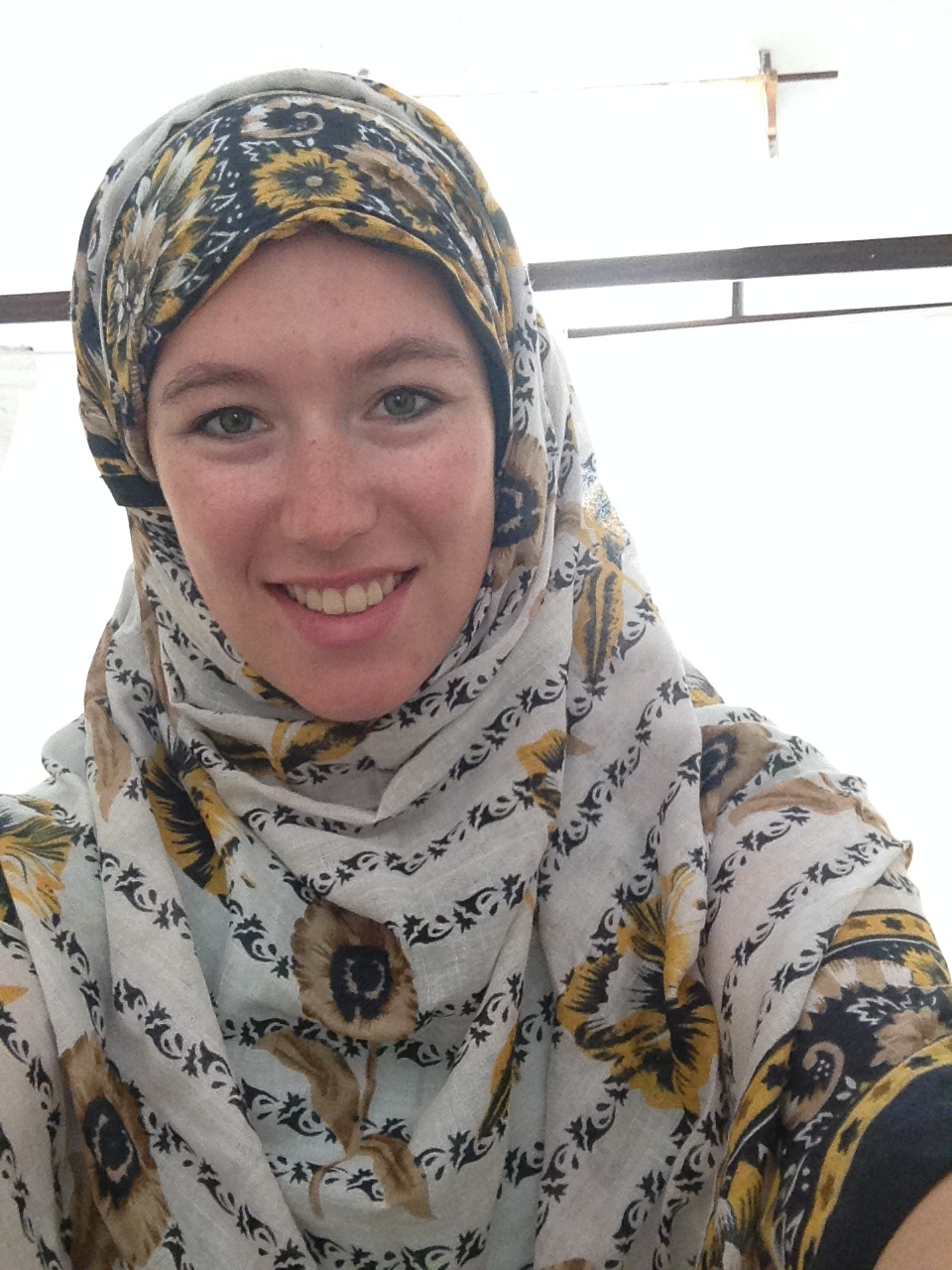
Anyway, I love the fabric choices women can have here – and women are very proud of their clothes (I mean, I would be too).  They’re also very loose-fitting and flowy, one part because women aren’t supposed to show the shape of their bodies, and one part because it’s too effing hot in Africa to wear tight clothes.  Your body is only for your husband, and he’s the only one who needs to see it.  And by covering most of your body, you also protect yourself from the harsh African sun.  Some of the wanafunzi (students) have taken to wearing them in public, and we’ve gotten comments on how beautiful we look, another indicator of how much headscarves are respected here.  And I kind of like the look on me too…

IMG_1609

Prayer: 

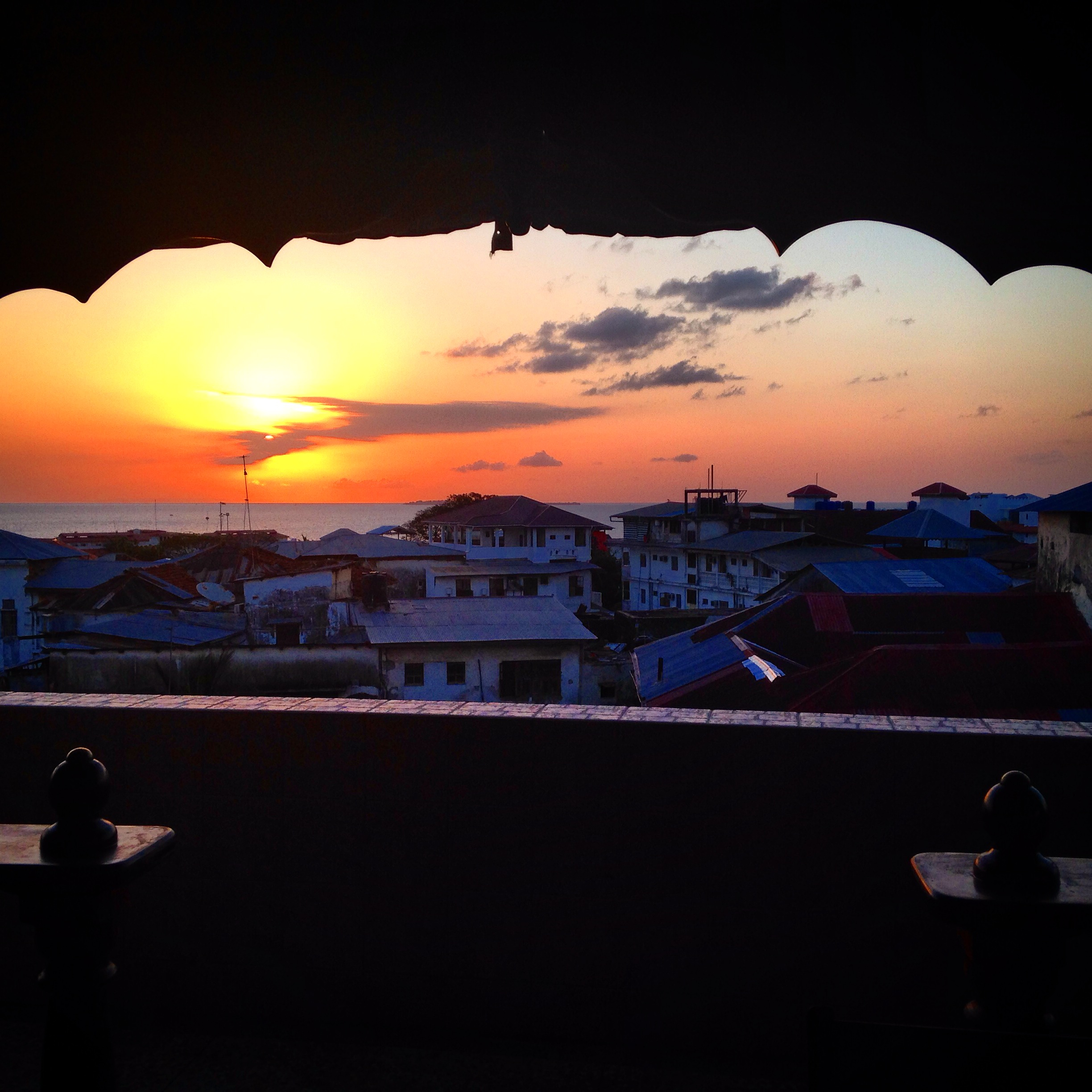
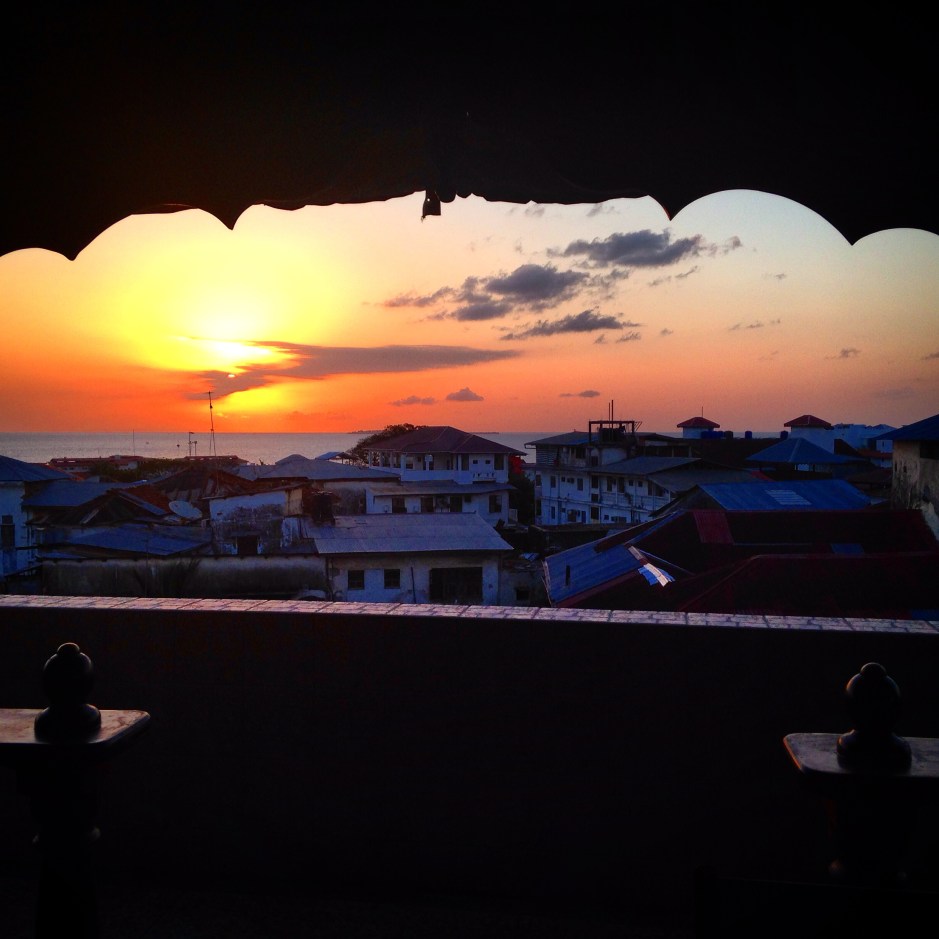
I consider myself lucky that I’m not studying abroad in Saudi Arabia, where the call to prayer is so loud it wakes you up at 5:30 am every day to make sure you don’t miss your morning prayers.  In Stone Town, I usually hear the call to prayer while I’m awake, but it’s not so loud that it would disturb any non-Muslim.  My new favorite study spot is this rooftop bar that overlooks the ocean, and the call to prayer is a bit louder there since the tower is about 200 feet away from the bar.  But the sunset over the ocean is totally worth it.

IMG_1606

Yup.  I win for best study spot, sorry Colorado

Hajj:

Last week I was able to see the beginning of a big part of Islam – making the hajj.  The hajj is something that every Muslim must do if he or she is financially and physically able, and that is to make a pilgrimage to Mecca.  The trip is full of religious understanding  and Muslims are considered very pure when they return.  Our group of wanafunzi visited a director of our program who left for hajj a few days later.  She invited us all to her home and we presented her with a new headscarf she can wear on her journey.  While excited, she knows that there is a small chance she will never come back from hajj.  Every year, with the massive crowds at Mecca, people, especially smaller people, are trampled to death, and it is recommended that before making hajj you get your affairs in order just in case something were to happen.  When she told me this, I thought about how morbid it was and why anyone would want to risk a terrible death in the name of Islam.  Then I caught myself.  This same kind of thing happens at St. Peter’s Square in the Vatican when a new pope is elected.  This same thing happens every year at Walmart during Black Friday, a “holiday” that celebrates the accumulation of material goods.  I later was very upset with myself for mentally criticizing someone’s way of life before thinking about how my culture views similar things.

Food:

The only part of Islam I’m not the biggest fan of is the restriction on eating or drinking things that are considered “dirty”.  This includes consuming alcohol or drugs as well as consuming pork.  And with the population of Zanzibar being more than 99% Muslim, pork is a rarity on the island.  So yes, I sincerely miss pulled pork, pork in the crockpot, pork on the grill, and I definitely miss bacon.

Also, y’all seemed to like my dolphin video, so here’s another video of our group of wanafunzi painting the side wall of one of our accommodations in Mangapwani, Zanzibar.  Enjoy!

http://www.youtube.com/watch?v=bq0BbxG89gA

Asante sana kwa kusoma!

(Thanks for reading!)

Kim, DUSA Blogger