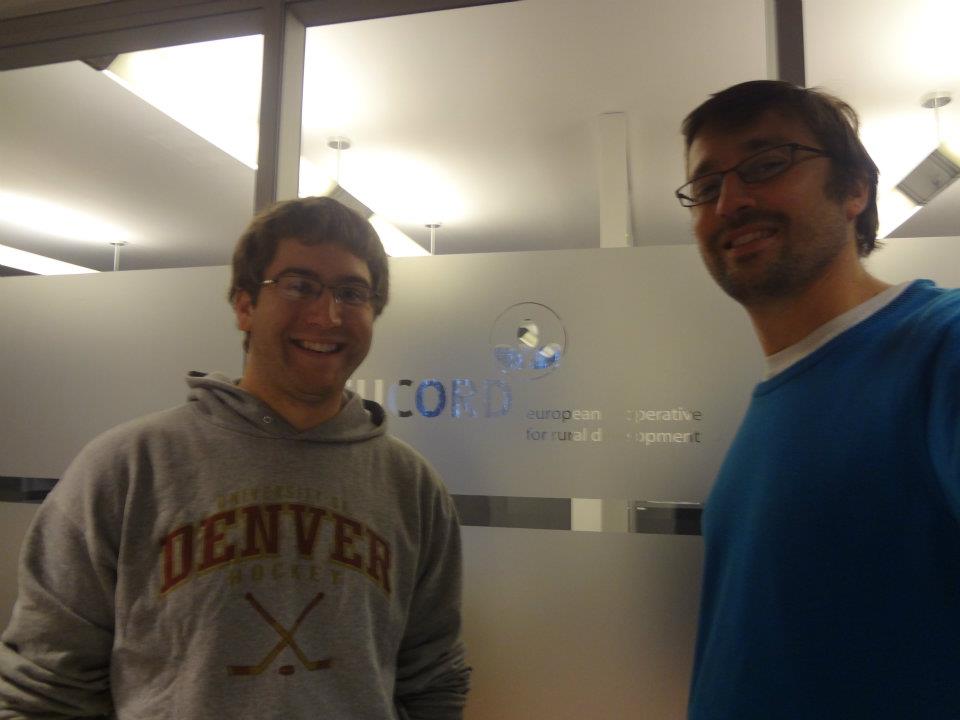
One of the best and most impactful experiences during my study aboard experience was my internship with an agricultural non-profit development organization based in Brussels. During my time in their finance department, I had the opportunity to interact with accountants in Africa (communicating only in French with them via email) and solidified my passion to pursue an internationally-focused career. This experience supplemented my classroom studies while abroad, and gave me a holistic perspective about what it means to be immersed in a foreign culture: I was able to be socially immersed in Belgian culture living with a host family, intellectually immersed in subjects and topics unique to Europe in the classroom, AND culturally immersed in how business and employment in general is conducted in a different society through my internship! I think that my semester with the European Cooperative for Rural Development (EUCORD) was just as valuable as any class I took while in Europe, because more and more employers want to see that applicants have a demonstrated work experience AND global perspective on their resumes. My overseas internship killed two birds with one stone, and in doing so has hopefully jumpstarted my career by giving me a “leg up” on the competition that may be identical to me in all other aspects.
So, considering an internship while you are abroad? I would highly recommend it! While you are doing your research, here are nine DO’s or DON’Ts to keep in mind:
- DO have realistic expectations
I’m not going to lie to you, doing accounting verifications day after day was not the most interesting work, but I made a point to seek out and conceptualize what I could take from my internship and apply it back in the classroom or to future jobs. For example, an understanding of how to communicate politely and respectfully to native French-speakers via email is really important for my future when I hopefully will be interacting with people of different cultures. Also, you may see an internship as grabbing coffee and making copies, but you may be expected to do much more, like drafting a press release for your organization!
- DON’T expect a paycheck
International internships are almost always UNPAID. This could be for various reasons, but most likely it is because you are traveling to that country on a student visa, which entitles you to study in their country and not work. Most universities and study abroad programs get around this by allowing students to earn academic credit for the internship experience (like what I did) which definitely made it worth it to complete the required hours.
- DO use the Office of International Education as a place to start your search
Downstairs in the resource room of the I-House, there are white binders that have information about all of our DU Partner Programs and if there are any internship opportunities as well as a whole bunch of other experiential learning opportunities like volunteering, community service, etc. Also, get in contact with your program advisor to see what your options are with the program you will go on, scope out the program’s website (found at the top of all of our DU partner program fliers) to see if your program offers any internships, and talk to past participants if you can.
- DO understand the workplace atmosphere
Many international internship supervisors are unsure what to do with a 20-year-old from the U.S. and so may have higher expectations of you than an employer would here. They also may not quite understand that young people need more direction (and even fewer excel at providing it) so be prepared to ask questions and clarify their expectations of you right off the bat.
- DO realize the time commitment
As unfortunate as it may sound, you may have to sacrifice a little bit of traveling on the weekends if, for example, you have to work on Fridays (therefore squashing your plans to fly to Dublin for a long weekend with friends). Just remember that the internship is a great way to get to know the local culture by interacting with co-workers in the office, something that your other study abroad friends may never get to experience. Also, this could add 10-15 hours onto your week of school, so be prepared to have less time to explore, travel, do homework, and sleep (aka make sure to manage your time effectively).
- DO check and see if there is a language proficiency requirement
My internship required me to communicate directly with French speakers, so they emphasized that on the internship job description. Make sure you understand if this is an expectation of you, or it may end up being a harder job for you than expected.
- DON’T forget to take into consideration commute times
I was fortunate enough to work only 15 minutes via the tram from my school, but I had friends who had to take an hour bus each way to get to and from work. This could amount to a lot of extra time commuting (and possibly extra cost) that you probably wouldn’t have to deal with here in the states, so plan on using that time wisely like doing homework or catching up on your blog for everyone back home.
- DO see it as a way to bolster a resume
Interning abroad requires us to develop independence, self-assurance, and flexibility; all of these attribute are very attractive to future employers. And, as working overseas while in college may not land you a job directly, it may play a large role in getting you an interview that you may not normally have been offered.
- DO learn more about yourself
Interning abroad taught me so much about wanting to work in international non-profit development when I am older.  Without this experience working in a foreign country—even it was only for four months—I think I would still be unsure of the direction of my career after college.
So get out there and do it! I think you will see it is worth your time to gain that added experience abroad. Happy interning!
Samson Eberhart, OIE Peer Advisor

 school desktop, or your smart phone, signing in is as easy as 1-2-3. However, in many other parts of the world, that isn’t the case. In my residence hall in Pietermaritzburg, South Africa, there wasn’t any internet connection available, much less wireless. To check my emails, Skype with family (forget video chatting ¾ of the time… the internet’s too slow to bring in a solid picture without dropping the call), or to do research for a school assignment, I needed to head to the main campus where I could sign into wireless on my laptop (with great difficulty) or sign onto one of the university’s computer lab desktops. In addition, Mac computers are extremely uncommon in South Africa, so getting the server’s information installed on my laptop was a feat in and of itself. I still remember walking into the computer help office at my university, where the technician stared and prodded at my MacBook Pro with curiosity. He then turned to me and asked, “And what made you decide to buy this unusual machine?” It was pretty funny.
 Though this all may sound like a total pain, I remember it with a sort of fondness. Studying abroad is a completely new experience – things often do not go as planned! When I arrived in South Africa, I was a super type-A student that was used to the instant gratification of quick processing, fast internet connections, and accessibility at my fingertips. As my study abroad experience went on I began to slow down with the slower lifestyle of South Africans, and I realized that there is a kind of beauty in taking things one day at a time. Also, with a slower internet connection, Skype dates were regularly interrupted or put off. At first this was hard; I desperately wanted to be in touch with my family and friends, but over time it became a blessing. The lack of constant communication gave me the freedom and time to immerse myself in my new South African life.
 DU Abroad