
One of the most fantastic things about studying abroad is the opportunity to travel (besides the academics of course, Mom). The year that I spent in Switzerland was by far the most incredible year of my life, and a great deal of that had to do with all of the amazing places I was fortunate enough to see. It seemed like nearly every weekend, I was hopping a plane to Lisbon or Budapest or Cork. Airfare was shockingly inexpensive and the idea that it would only take me an hour to get to Amsterdam was just too good to be true. By the end of my year, I had traveled to a dozen different countries, kissed the Blarney stone, seen the Pope give Easter mass at the Vatican and set foot on the Asian continent for the first time. My head was positively spinning.
However, once I returned to the states, people started asking me about Switzerland. They wanted to know how beautiful the Alps were and whether or not I had found Heidi. They asked me about fondue and watches and chocolate. They asked me what the best things about Geneva were. And yes, after a year, I had spent some time around the city and the countryside, but it became very apparent to me that after having lived there for a year, I knew relatively little about Switzerland. I could tell you all about easyJet and what the best airports in Europe were in terms of efficiency, but I realized that I hadn’t gotten to know Switzerland as well as I should have, and that perhaps I had passed up a great opportunity.
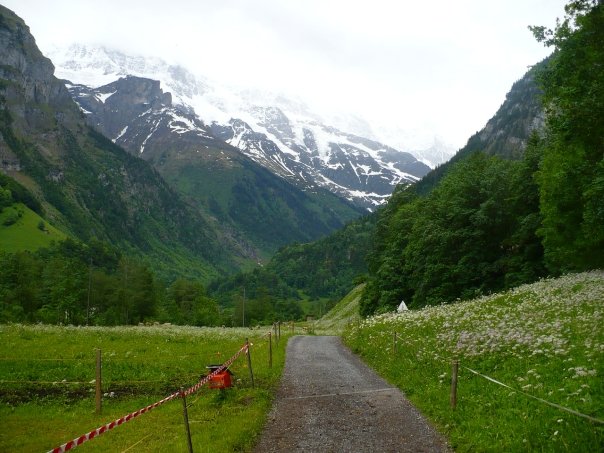 If I could do it all again, while it’s hard for me to say that I would travel less, I would certainly make a more concerted effort to get to know my host country better. The places that I went in Switzerland were absolutely incredible (including the Valley of the 72 Waterfalls in Lauterbrunnen, pictured here) and are places that the average visitor never gets to see. That’s the really wonderful aspect of studying abroad: it’s not about being a tourist. It’s not about being the average visitor. It’s about being a resident of that country and getting to know it on a much more personal level. I had friends who went to tiny Alpine villages for the weekend while I was traveling to Athens, and on some level, I am envious of them. They know Switzerland much better than I do, even though we both studied there for the same amount of time.
Travel is absolutely an important element of studying abroad. However, it’s important to remember that this may be the only chance to actually live in a different country, and get to know it on a native level. So, by all means, adventure off to a different country when the chance arises, but don’t miss out on the chance to become immersed in the host country and city in the name of putting more stamps in your passport.
– Kat Cosgrove, DUSA Graduate Peer Advisor

 DU Abroad