The Post You’ve Been Waiting For: Foodies in Zanzibar

Hamjambo!

So if you know me, you know I love everything about food: the smell, restaurants, cooking, and especially eating.  I know that once I come back from Zanzibar, after friends and family tell me how tan I’m getting (which is pretty tan if I must say so myself), they’ll ask me about what I learned to cook.  Meals in Zanzibar are different than anywhere else I have visited, so I thought it would be cool to, instead of just saying the food I’m eating, to take you all through the steps of a Zanzibari meal.

Firstly, you are invited to a friend’s home for dinner.  Dinner is eaten pretty late here, anywhere between 7 and 10 pm (that’s 1 and 4 usiku in Swahili time), so you show up around seven thirty because Swahili time is never on-time.  The most important thing is that you take your shoes off when you enter – in Islam, shoes are considered dirty and shouldn’t be worn in the house.  Also, if this is a formal occasion, you should dress for it.  That means full headscarf and makeup (and for the mzungus, makeup to make you look Arabic).  For Eid al-Adha, a Muslim holiday celebrating the end of hajj (the pilgrimmage to Mecca), I had my makeup (over)done by my host mom.  See below.

Anyway, back to the meal.  You need to greet your host with a handshake (people use the “limp fish” handshake technique or just a low high-five basically) and you hold on until you’ve finished multiple rounds of greetings.  There’s no appetizers set out, no glass of wine (Muslims don’t drink alcohol), just a floor mat and pillows or if you’re lucky, a couch.  Eventually, you hear “Chakula tayari!” (food’s ready!) and you head for the dining room.  You’d expect a dining room like at home with miscellaneous paintings on the walls and a table and chairs in the middle.  Wrong.  There’s an eating mat spread out on the floor with some plastic on top for food spillage, which will definitely happen.  No chairs, no table; you sit on the floor cross-legged around all your friends and family.
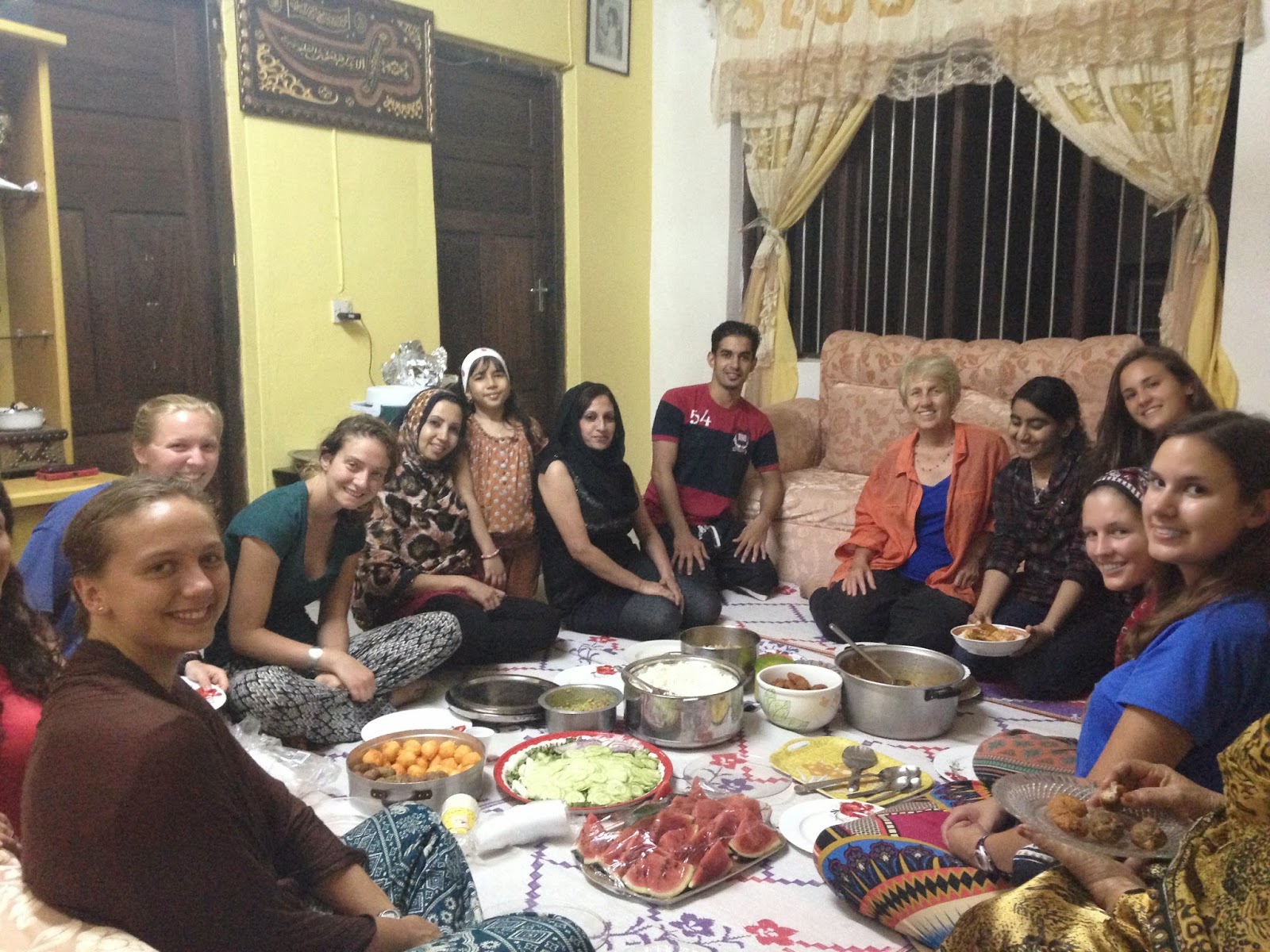
The food spread out before you is like nothing you’ve ever seen: breads, beans, some veggie things, something that looks like a fat pyramid, mounds and mounds of rice, potatoes (the potatoes here are incredibly sweet), fruits, and that one thing you know you love – chapatti.  Chapatti is a wonderful food, it’s a flat bread that’s buttery and flaky and I almost don’t want to know how it’s made because I know it’s going to be extremely unhealthy.  You do a second count of the people in the room and look at the amount of food for those people and think that there’s no way that double the amount of people could finish the meal in front of you.  Wrong again.

Those breads: chapatti, coconut bread, and boflo (bread loaves)
Beans: I hated beans before I came here, now I love them.  Still have no idea how to make them.
Veggies: peas in a curry coconut sauce, pilau which is a soup with potatoes, meats, peppers, onions, tomatoes, and whatever else you want basically
Fat Pyramids: they’re called samosas and they’re incredible.  They’re usually come in beef or veggie form, and they’re basically the meat and veggies wrapped up in filo dough, similar to what they use to make baklava in Greek recipes
Rice: a staple of a Zanzibari diet.

One of the first things I learned in Zanzibar was to always serve yourself, don’t let a Zanzibari do it because you will get your dinner plate covered in rice with the top of the mound rising about six inches off the plate (and that’s no exaggeration), and then you get pilau and other stuff on top of it.

Oh, and did I mention that Zanzibaris don’t use silverware?  It is common and accepted to eat with your hands.  It is both a cultural and religious belief – that Mungu (God) made us to eat with our hands and he gave our hands something that makes the food taste sweet that you lose if you use silverware.  My first time eating with my hands was an absolute disaster, there was rice everywhere but in my belly.  I’ve picked up on some of the techniques now though, and I can almost finish a plate like a Zanzibari.
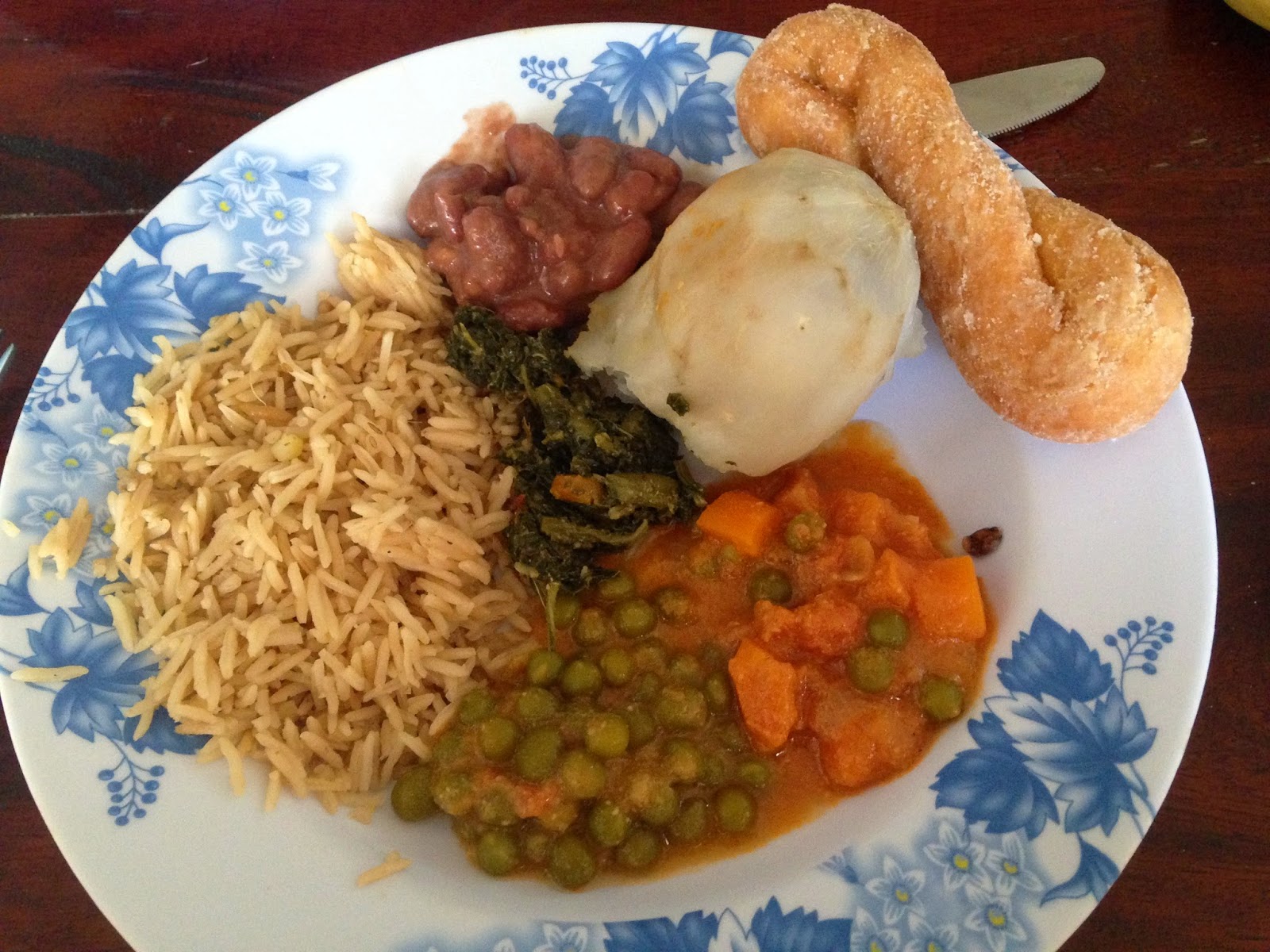
So you’ve been eating with your hands all these foods you’ve never seen before, and are ready to birth your food baby when your host grabs your plate and you think you’re finished.  Haha, NOPE.  An equally huge portion of rice, pilau, meats, and everything else gets piled back on your plate.  Your expression just drops as you realize that you might actually throw up if you keep eating.  A helpful phrase is “nimeshiba”, meaning “I am full”, but that actually means nothing to Zanzibaris and you have to eat more food anyway.  And once you’re actually done and there’s no more food to be piled on your plate, it’s time for chai!  Chai (communal name for all tea in Kiswahili) here is delicious and spicy and served extremely hot, which is great on super hot and humid days!

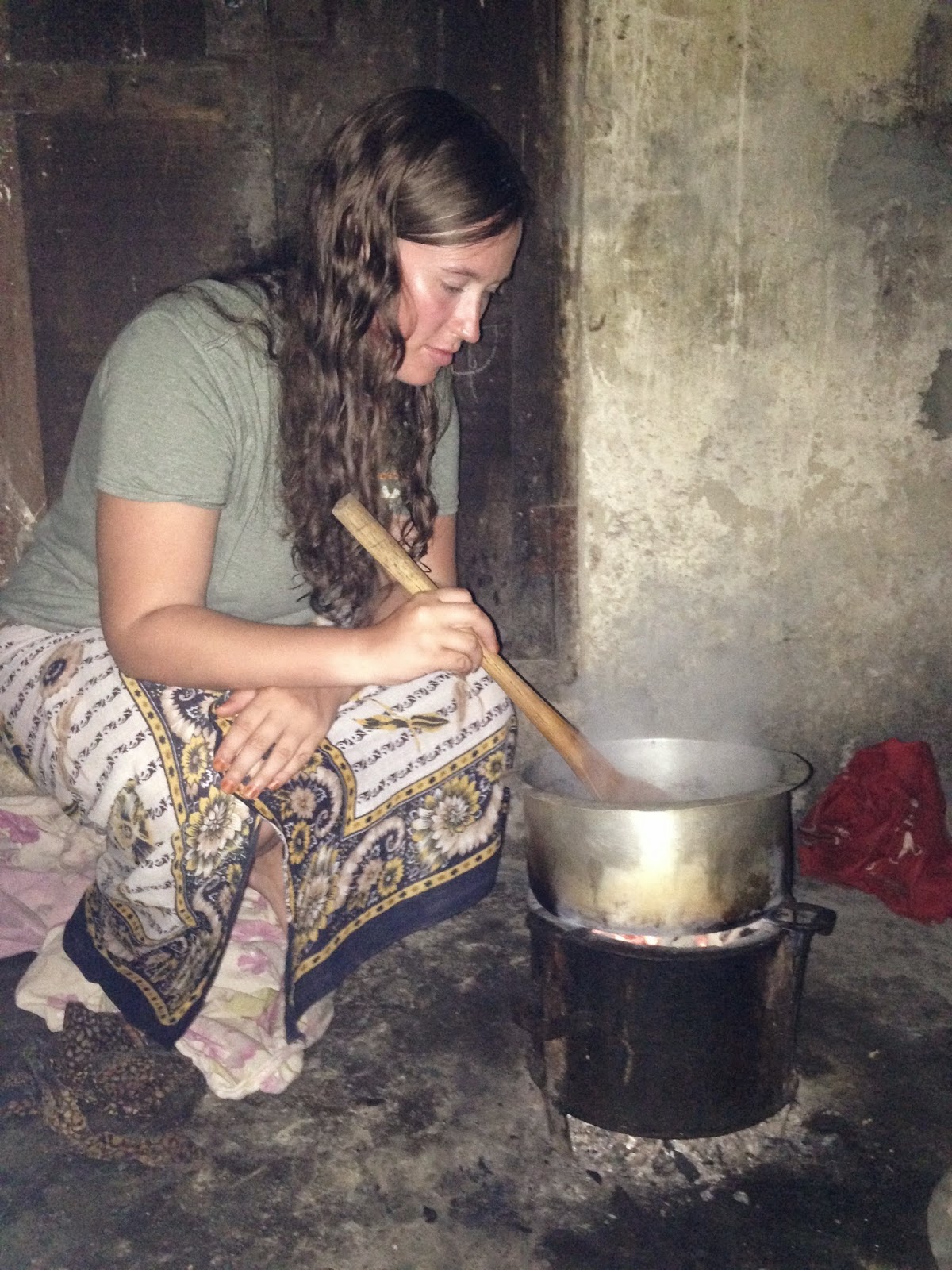
And by the way, cooking is done on the floor as well.  So hope your leg muscles are ready for a bunch of squats!
Anyway, once you’re finished with absolutely everything, it’s time to head back home, so you thank your host with goodbyes that are longer than the greetings, put your shoes back on, and pass out on your bed from all the food you ate.  Time to do it again tomorrow night!

Asante sana kwa kusoma!

Kim, DUSA Blogger
The Whole “Studying” Thing

So you know how approximately half of “studying abroad” includes the word “studying” right? Yes, family and friends, I am in a different country and it’s not a vacation. When you study abroad, you do actually have to learn things, maybe even attend class (read: go to class).

I love school. I always have loved school, and some of my favorite moments have been in the classroom with amazing professors studying something that I found absolutely riveting. Therefore, I was so excited for September 8 to arrive in France, because that’s when I started my classes. I imagined sitting in a European classroom (whatever that means) speaking eloquent French with other students from exotic locales, sharing our insights into historical events and current affairs.

Flash forward into reality, and I am sitting in a European classroom (which has a striking similarity to my American ones), speaking elementary French with other students from around the world, sharing my valiant attempt at completing my grammar exercises. Hardly the dream that I had built up in my head.

While I am learning a lot about the French language in my classes, and I have met some  really smart and interesting people, it is certainly not the picture I had painted in my head. Most of my classes are about learning the French language and learning about France, which means grammar, phonetics, communication (oral and written), geography, and literature. That doesn’t mean that I don’t have different types of classes too, as I get to take a gastronomy class where my “homework” was to find and eat three different types of pastries. Needless to say, I finished that assignment and passed with flying colors.

There are a lot of differences between school in the United States, and school around the world. Some of these differences I have found to be overwhelming and frustrating, while some of these differences seem to make a lot of sense. After the first three weeks, I have compiled a list of the things that I have found to be different about school in France.

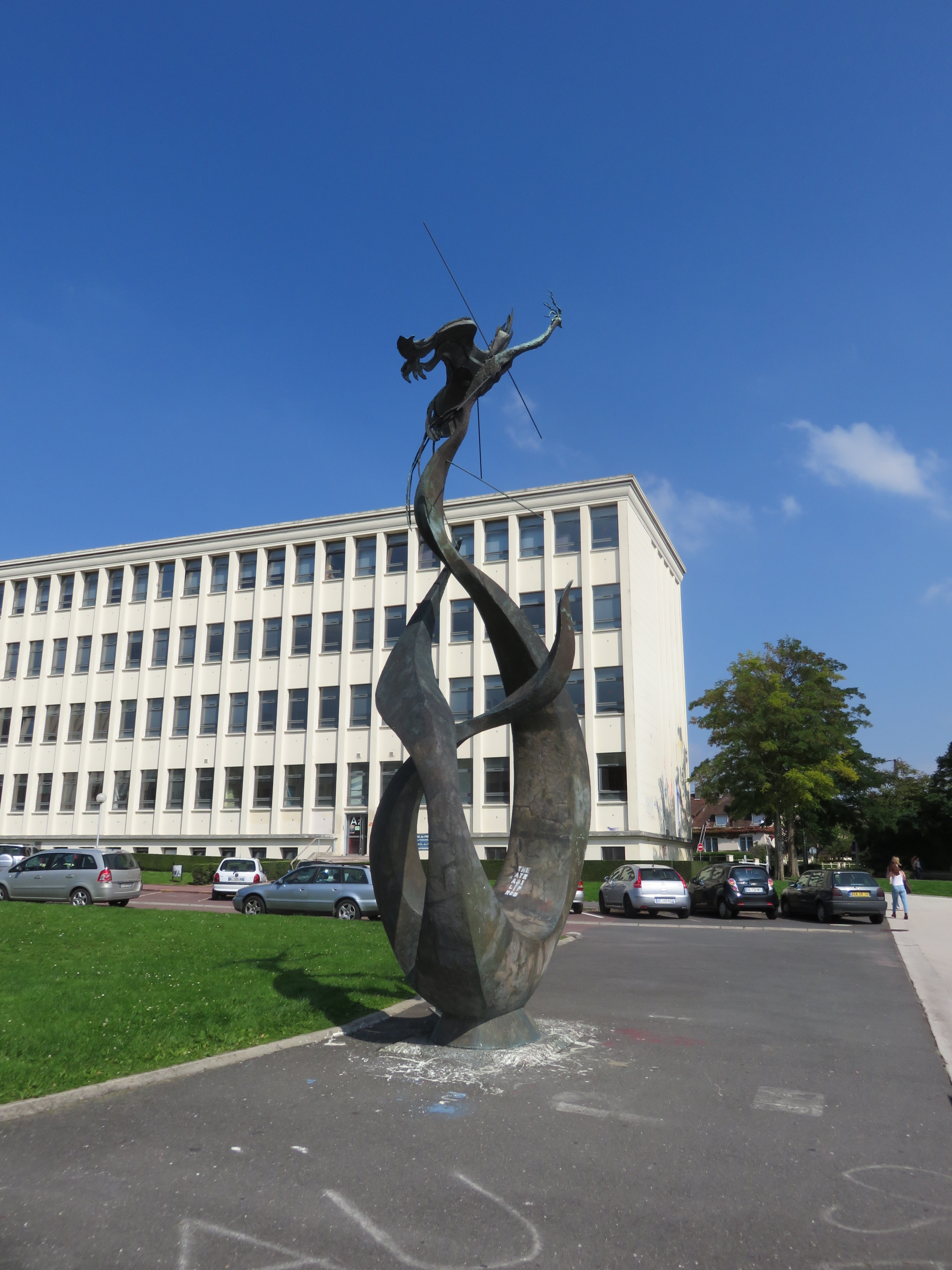
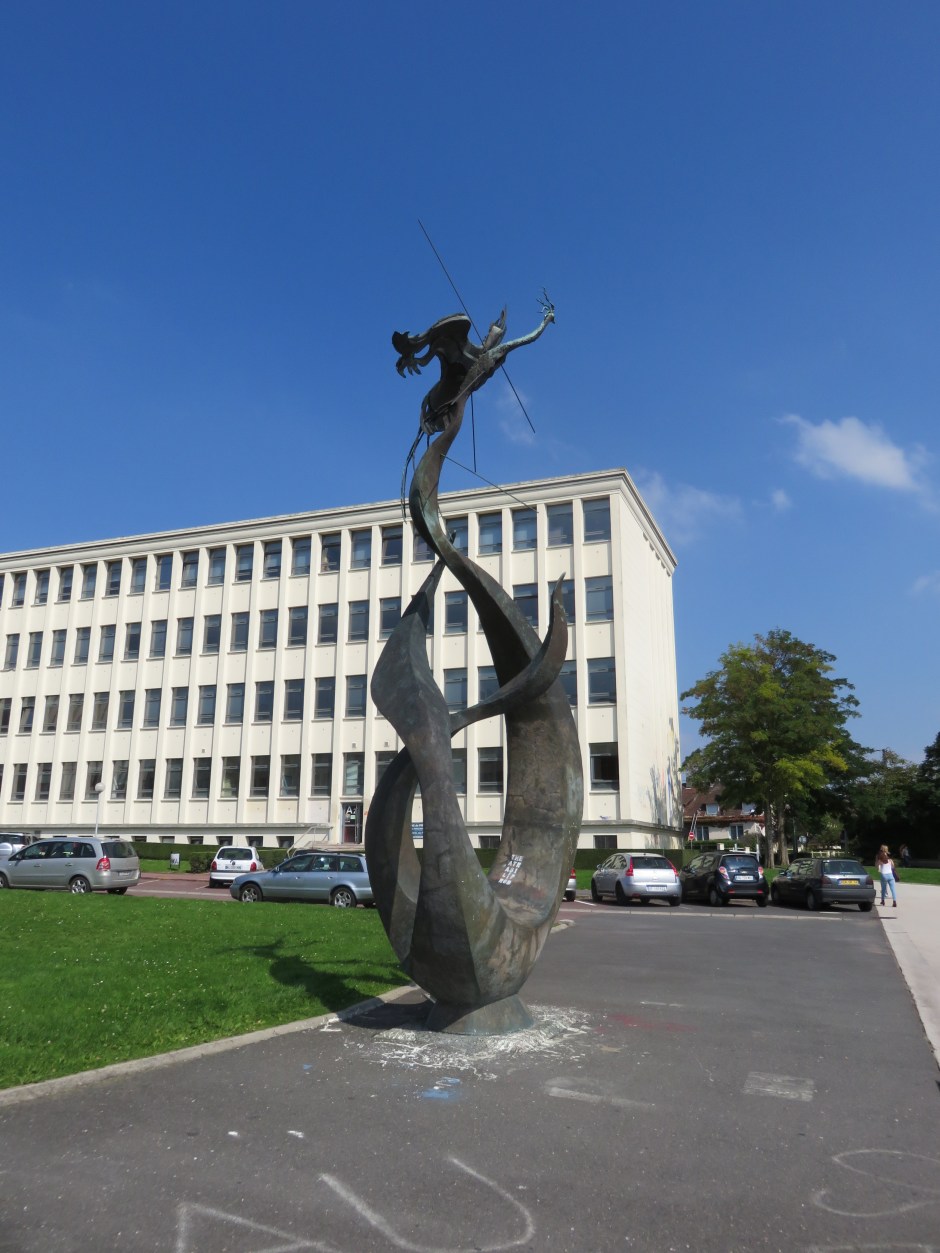
The statue on the main quad of the campus. It's a phoenix, as the university and the city of Caen have undergone several reincarnations over the last several hundred years.
The statue on the main quad of the campus. It’s a phoenix, as the university and the city of Caen have undergone several reincarnations over the last several hundred years.

1. Time is not a definitive entity. 

I’m the type of person that thinks that if you don’t show up 15 minutes early… you’re late. So when I thought I was going to be late for my 8:30 am literature class, I was panicking. When I arrived exactly at 8:31, the door to the classroom wasn’t even open yet. Most of my professors may roll into class 10 to 15 minutes later than the time printed on our schedules, and sometimes they let us out early.

I also tend to rely heavily on my syllabi throughout my quarter at DU, but when I tried to ask one of my professors for a syllabus, she just kind of laughed and asked me what it was. The closest thing to a syllabus that I have received in Caen is the dates for my exams… written on the whiteboard.

2. University is not “school,” nor is it “college.” 

In French, “l’école” translates to school, but is used to refer to elementary school. “College” is middle school, and “lycée” is high school. While in the US, I use the words “school” and “college” interchangeably to refer to my studies at the university, but whenever I say “l’école” or “college” to my host parents, they give me a quizzical look and clarify that I mean “université” or university.

3. Backpacks are for tourists.

Most of the students at the university use tote bags or messenger bags for class. For the most part, only men or international students use backpacks. This isn’t just for style (although according to one of my French friends… backpacks are not very stylish) it’s actually practical. Women typically use tote bags that have zippers on them because pickpockets target those who have open bags or backpacks, especially on the crowded public transportation, and it’s easier to hold a totebag in your lap on the tram or hold it close to your body.

4. I’m wrong. A lot.

I spend all day thinking, reading, writing, and speaking in French. All of my classes are in French, and all of my interactions with my host family are in French. It’s only natural that when I’m spending approximately 90% of my day doing everything in a different language that I say something wrong a few times. In my phonetics class, my professor has taken to calling the little things I have trouble with “les peculiarités de Zoé.” While at first this bothered me, and I would actively stop myself from answering questions in class out of fear of being wrong, I’ve realized that it’s actually okay and helpful, so now I can really work on those things I struggle with.

5. Who needs to be hydrated? 

I cannot find a reusable water bottle for the life of me. I have been to basically every grocery store, sporting goods store, and a few random home goods stores, and I cannot find a reusable water bottle. I have yet to find a definitive answer as to why that is… but for the most part I think it just because you don’t really eat or drink anything unless you are at a meal. Students don’t eat in class, and you only drink water in class, or coffee in the morning. We get an hour for lunch every day, and it is actually used for lunch. In the US, when I have lunch with my friends we consider it a date, but in France eating lunch with my friends is just something that we do, and it’s a sacred time. You will not find people finishing homework at the lunch table when they are with their friends and a baguette sandwich.

6. I’ve learned the most outside the classroom.

I have loved learning the language in class, and I have met some seriously awesome people from all over the world. However, I feel like a lot of the things I’ve learned about life and living in a different country haven’t been from my grammar class or trying to figure out the different ways to pronounce the letter “e.” I’ve learned about WWII from visiting museums and going to the actual beaches where the Invasion of Normandy actually happened. I’ve learned about William the Conquerer from walking through the castle that’s older than the United States of America (I just can’t get over that) and I’ve learned about different types of French cuisine from talking to vendors at the market. Instead of reading about all of these things in books, I am living them. To me, that is the most amazing difference, as well as the most overwhelming difference, of them all.

Adjusting to college life in a different country has been an adventure in its own right. I have definitely had my moments of sheer panic, where I didn’t understand anything that was being explained to me, and moments of extreme frustration, where it didn’t seem like anything was going to come together for me, but also moments of excitement, when I finally understood a concept that I had been struggling with (I literally gave myself a high-five in my grammar class the other day). However, I have adjusted and have found that learning in French, while more challenging, is also extremely rewarding.

– Zoe, DUSA Blogger