
Apparently, studying abroad is an amusement park.
According to the Office of Internationalization and just about any published resource on the topic, the emotions associated with study abroad is most like the Boomerang ride. You know, that U-shaped ride at amusement parks that straps you in, pulls you up to the highest point on the track, hands you and your queasy stomach over the cruel hands of gravity, and eventually cascades you back up to the other incline of the U. They call this the “Cultural Adaptation Curve.” But I like my rollercoaster analogy better.
PLEASE NOTE: I am fully aware that cultural adaptation and homesickness are technically two different things, but they also very intertwined in my mind.
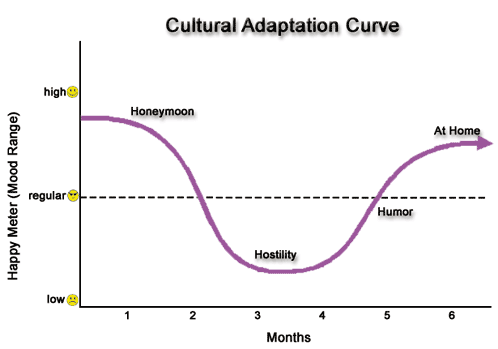
Let’s hope this is wrong, considering a semester abroad is only about 3.5 months long, which would mean we would all be blissfully ignorant for half the time, then come home in the gutter of hostility.
In my humble opinion, homesickness is more like a daily ride on the Six Flags’ Tower of Doom. This ride straps you into a 250 foot tall totem pole-looking tower and, once again, lets gravity toy with your stomach and self-respect for a never-ending amount of time. Disneyland has it’s own version of this, called the Twilight Zone Tower of Terror, if you’re more familiar with that. If you can’t tell from my description, this is consequentially my least favorite ride of them all.
I am about to hit the one-month mark of my arrival in Rome and homesickness tends to be a daily experience on the Tower of Doom for me, and it has been this way since the day I arrived. Thankfully, it only comes in small doses and I only feel these low, gut-wrenching emotions when I’m sitting around the apartment, doing nothing in particular, or when I’m at school without my friends.
I tend to struggle when it comes to making friends since I’m somewhat introverted. Thankfully, the housing director for ISA did an impeccable job in my apartment’s housing assignments as all of my roommates have become my best friends here, making my job of finding a niche much easier. However, when I’m left to fend for myself at school, I long for the days at DU where I can always greet someone I know as I walk through campus.
As for homesickness settling in when I’m doing nothing in my apartment, I realize I’m being rather hypocritical. In my last post, Il Dolce Far Niente, I described how I was “homesick for being lazy.” I take that back. I’ve reverted to my old ways where I need to be doing something productive in order to stay happy. Sitting around doing nothing in my apartment does terrible things for my psyche. My roommate, Julie and I discussed this yesterday and we seem to be in agreement that sitting on our laptops, refreshing our Facebook newsfeeds for hours does keep us feeling connected to home, but it also tends to be a waste of our time in a new country.
Therefore, I am left in a bit of a pickle. If I can’t be busy with extracurriculars all the time, in my attempt to learn how to relax, but must also find a way to keep myself from drowning in a sea of homesick blues, what’s a girl to do?
Here are my tips on combatting homesickness. I title them thus:
“An Overachiever’s Guide to Overcoming Homesickness”
1. Accept and embrace. I have a tendency to try to distract myself from my problems rather than facing them like a real woman. But inspiration against this came from “Eat Pray Love” by Elizabeth Gilbert (my bible) in one of my favorite literary passages:
“When I get lonely these days, I think: So be lonely, Liz. Learn your way around loneliness. Make a map of it. Sit with it, for once in your life. Welcome to the human experience.”
Distraction tends to lead to bottling, which leads to taking that pressure and frustration out on others who probably don’t deserve it. I would have to say that this one is particularly important if you are attempting a long-distance relationship such as I am. My boyfriend and I are much happier when we are being honest with each other about how much we miss each other and how miserable we are without each other, rather than stifling those emotions with the intention of not throwing more baggage on the other person. As I said, this only leads to bottling and inadvertent confusion.
2. You aren’t alone. Once you’ve managed to admit your homesickness to yourself, try admitting it to someone else. I guarantee you they are feeling the same thing or have felt it at one point in their life. When Julie asked me yesterday if I’m feeling homesick it was like a huge weight off my shoulders to know that she was feeling the exact same thing. We even made a vow to take each other out exploring in the future.
If you’re lonely, start being lonely with someone else. Maybe, just maybe, you’ll come to the realization…that you’re not actually lonely. *gasp*
2. Find a hobby. Mine? Taking pictures and eating. Not to be confused with eating out of boredom, I am on a determined hunt for the best and most affordable food in Italy. At home in Denver, my hobby tends to be filling up my schedule as much as humanly possible. As much as I’ve always loved photography and food, I haven’t had hardly any time to do these things in college. Now seems like the perfect time to dabble and revel in these two old loves of mine.
3. Go outside. Insert some scientific fact about how much sunlight improves your mood. On top of sunshine, exploring and observing also allows you to learn your way around your new city. Trust me, when you learn the lay of the land and how to get to things on your own, it will stop feeling “new” and start feeling like “home.”
4. Enjoy the little things. It’s very easy while living in another country to get bogged down by the seemingly negative differences between your host country and the place from whence you came. The best way to get past these moments is to turn it around and find the silver lining.
For example, I can’t express to you in words how much my roommates and I miss Target–one mega store where you can conveniently buy absolutely anything you could ever possibly need. Italy runs on many small specialty stores: frutterias (fruits and vegetables), formaggerias (dairy and cheeses), farmacias (pharmacy/personal hygiene), electronics stores, clothing stores, underwear stores, sunglasses stores, home decoration stores…I could go on forever. In one mindset, this is horribly inconvenient. But on the flip side, fruterias have the freshest and cheapest produce because they can afford to do so. If you’re into the whole anti-monopolizing corporations, they’re pretty much nonexistent under this business model as all of these little shops are family owned by the most friendly people. There’s ample good qualities if you look for them.
My favorite way of enjoying the little things is, of course, my focus on food during this trip. Every successful meal is a win in my book. I will shamelessly admit that a good meal or snack automatically makes any day better. Case in point: I started writing a blog post earlier this week about the less than successful trip to Assisi we took last weekend. Many things went wrong on that day but you know what didn’t?
This:
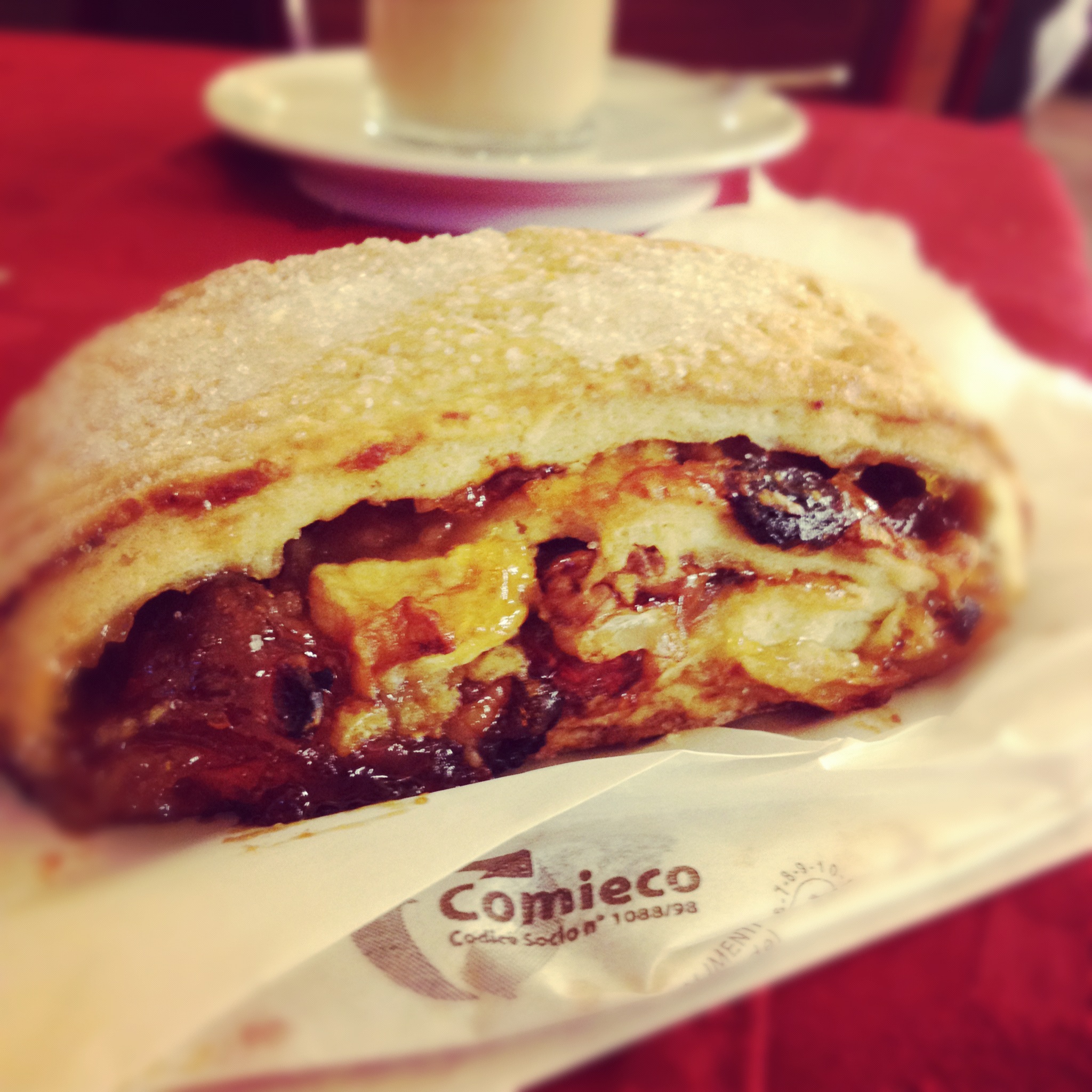
This is rocciata (roh-CHA-tah)–essentially, Italian apple strudel. Flaky, gooey, nutty, sugary, awesome-y rocciata. Perhaps instead of remembering the negative things, that day can live on the memory of this little piece confectionary heaven. It’s the little things that count.
“Chow” for now,
– Cheyenne Michaels, DUSA Blogger –

 DU Abroad