

Hamjambo!
Before I came to East Africa, I would have greeted you with “Jambo!” like in Mean Girls. Now I know better – Jambo is a tourist greeting and is not proper Kiswahili. The proper way is to say “Hujambo”, to which you respond “Sijambo”. Or if you are greeting multiple people at once, like now, you use “Hamjambo”. The more you know!
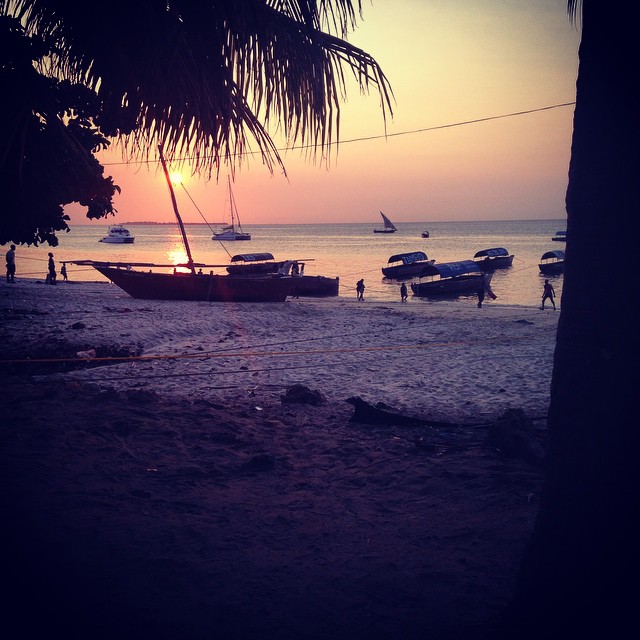
The view from the beach only a 5 minute walk from where I live
So I’ve been living in Zanzibar for some time now, and it is finally starting to sink in that I’m really here and will be here for the next four months. When it really sunk in though, was when I saw the stars. The night sky in Zanzibar is absolutely stunning and has almost brought me to tears on more than one occasion. I am living in a very dark part of the world, away from a lot of development, so the number of stars I can see is incredible since there’s very little light pollution. And being in the southern hemisphere, the night sky looks different than it does at home. When I finally had time to just look at the stars, that was when it really hit me that I’m actually in Africa and this beautiful island is mine to explore for four whole months.
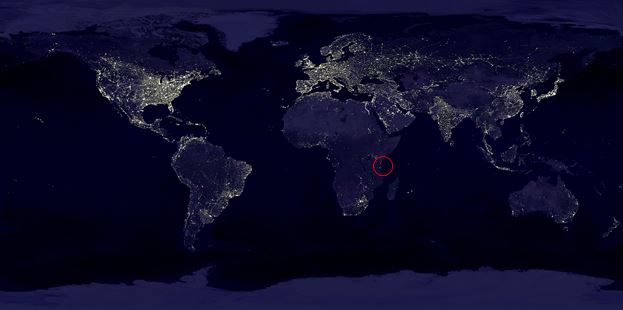

The moon (look really hard! Just left of the palm) in Paje
Since I arrived here my days have been packed with intensive Kiswahili instruction (4 hours a day plus homework!), special lectures about the culture and expectations of the program, and water time. After a few days in Stone Town, the main town on the west side of Zanzibar, we headed to Paje (pronounced pah-jay), a resort village on the east side of the island. This was when I realized how small Zanzibar actually is – the drive from one side to another only took 45 minutes. The beach at Paje is gorgeous and the tides are incredible. Low tide can have you walking out over a mile until you see the ocean, and at night, you can see bio luminescent plankton washed up during low tide.
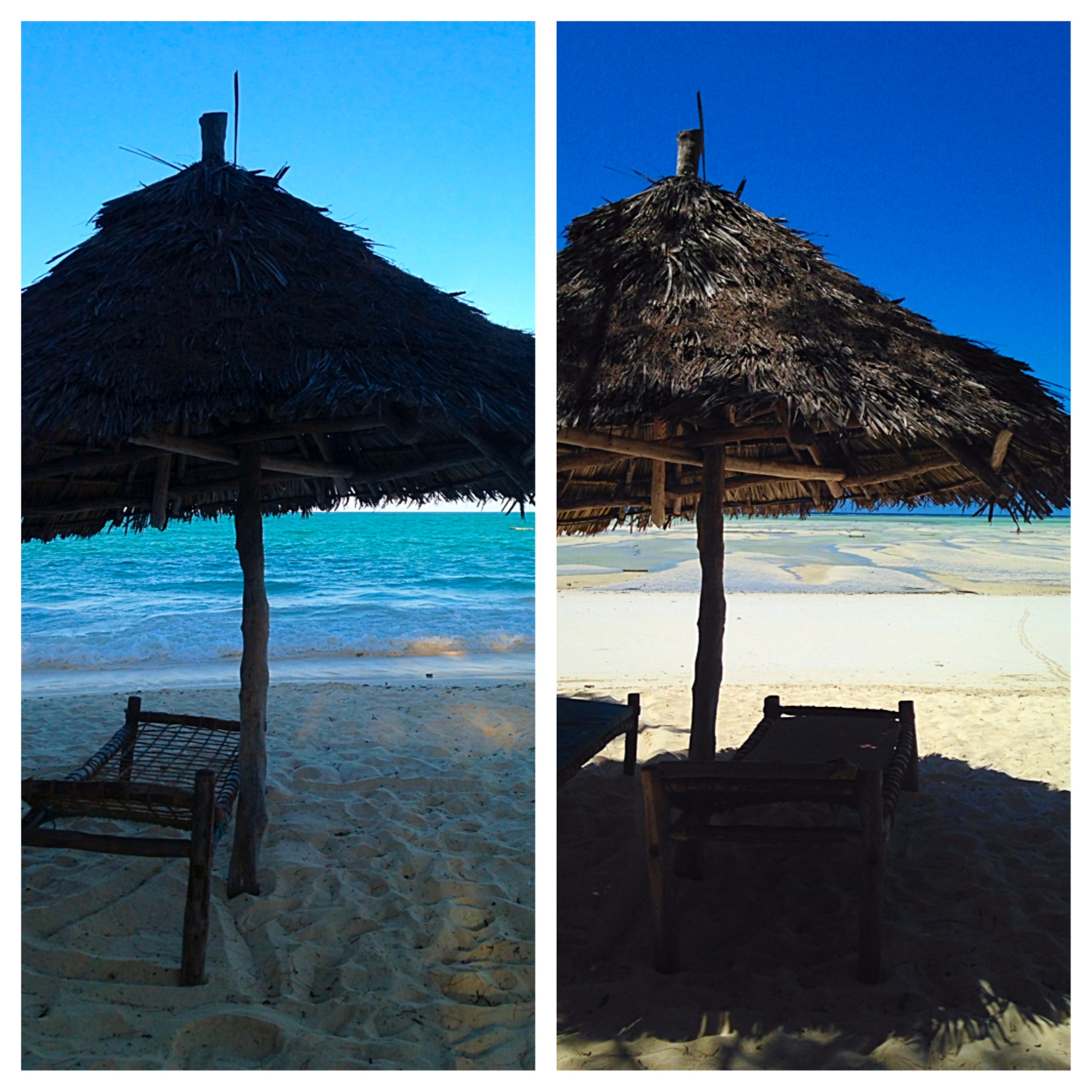
These photos were taken 6 hours apart at high and low tide
While in Paje, we were assigned to visit a local village, about a five minute walk from our hotel, and my group’s personal assignment was to learn about local employment opportunities the locals have. Using as much of the Kiswahili we had learned as possible, we walked right up to people and started asking. One conversation we had really made me rethink the entire tourism industry. We talked to a man not much older than us who worked for an excursion company (kitesurfing is very popular in Paje), and while he loves having tourists come and spend money, he isn’t the biggest fan of the new all-inclusive resorts that have been popping up on the island lately. These resorts make their money by keeping guests at the resort. The guests almost never leave and spend money in the community, and business has gone down in the past few years in the island. He also made a good point about visitors going back home saying that they went to Zanzibar but they never talked to the locals or learned about the culture or did anything but stay at their hotel so did they really see Zanzibar? All I know is, I’m going to think twice about booking an all-inclusive vacation in the future.
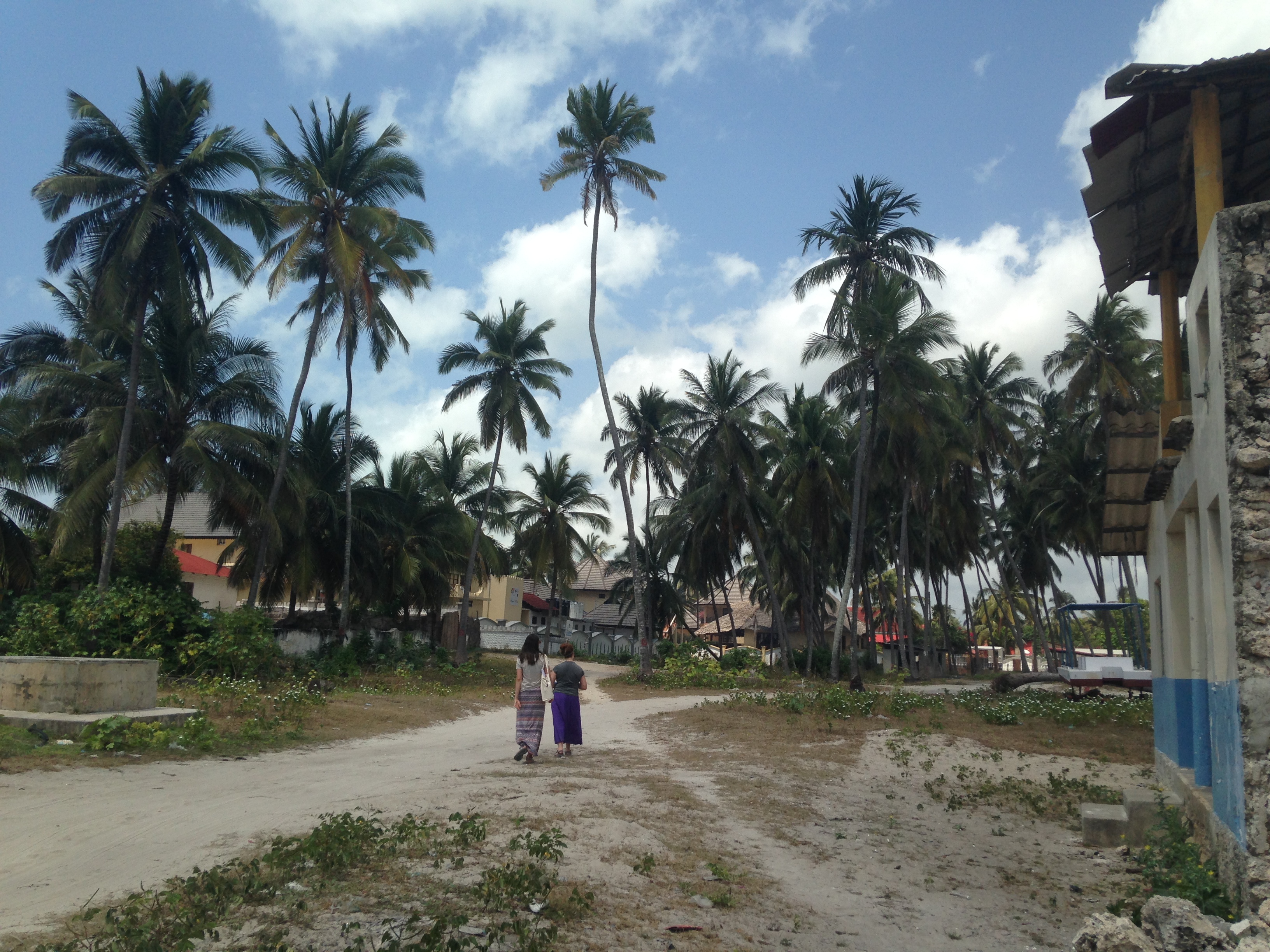
We were able to see the poorer side of Paje, just a few minutes walk from our hotel. It’s incredible the stark difference between the resorts surrounding this village.
On our last day in Paje, we rose before the sun to leave our hotel at 5:30am (which is 11:30 usiku in Swahili time) to head to Kizimkazi, about a 20 minute drive north. We arrived at the beach as the sun was rising and piled into two wooden boats so as not to harm the creatures we were following. As we headed to deeper water, we were told to be ready to jump in the water at any second in case there was a sighting so we all got our fins, mask, and snorkel ready (and in my case, my GoPro camera as well). We heard a “GO GO GO” and we rushed into the surprisingly warm water and I stuck my camera in front of me so I didn’t miss anything. After the bubbles cleared, I saw some dark figures swimming below me, so I followed their path, and before I knew it, I was swimming less than twenty feet away from a pod of bottlenose dolphins! It was incredible to get that close to a wild dolphin and they were so peaceful and strong and just beautiful. I didn’t even know that it was possible to swim with wild dolphins – I thought it was just a Discovery Cove thing. I took plenty of footage, which you can check out below!
This was absolutely incredible. The dolphins weren’t afraid of us, they were just hanging out with some small humans watching.
I had a truly African experience a few days ago. We had an assignment to take what’s called a daladala to different places in Zanzibar and our project was at some old Arabic ruins next to the ocean. Those were interesting and all, but the really interesting thing was the daladala ride. Daladalas are basically open-air buses you can take for 300/= (about $0.18) but they pack you in more than sardines, so good luck if you’re even the least bit claustrophobic. But people are more than happy to move over to accommodate someone else so they don’t have to crouch on the ground. We ended up sitting in each other’s laps (good thing there were four of us). Deciding to study Kiswahili on the daladala was actually a good idea because many of the people on the daladala wanted to help us out, especially when we were asked to pay twice. The kindness of the Zanzibaris is without end, and I’m grateful to each and every one that has helped me in my short time in Zanzibar so far, and I’m sure I will owe them big time by the end of my time here.
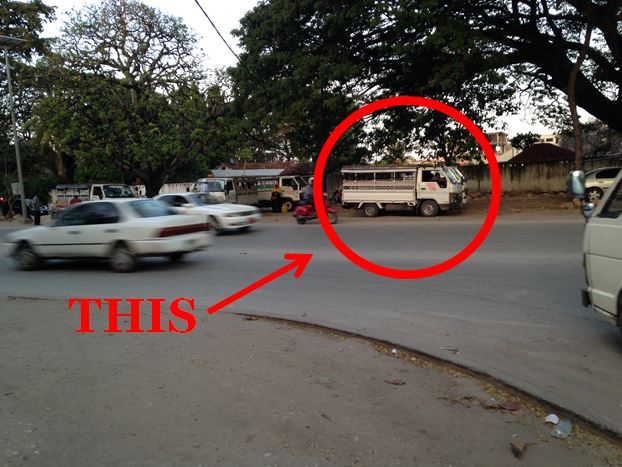
This is a daladala

The inside of the daladala. This was not even close to how packed we were on the way to the ruins.
And lastly, feel such a sense of belonging to this town and my group of sixteen. We are recognized walking on the streets of Stone Town and asked how our Kiswahili language class is going and if we’ve learned anything new since we last saw each other. And one specific experience was when I was at the site of the ruins. I finally learned how to tie my khanga (a single piece of fabric you tie around your waist and wear as a skirt), and when I walked up to the beach bar, one of the women working there told me “You tie your khanga just like a Zanzibari!” and that was the moment that I realized that I’m no longer a mzungu.
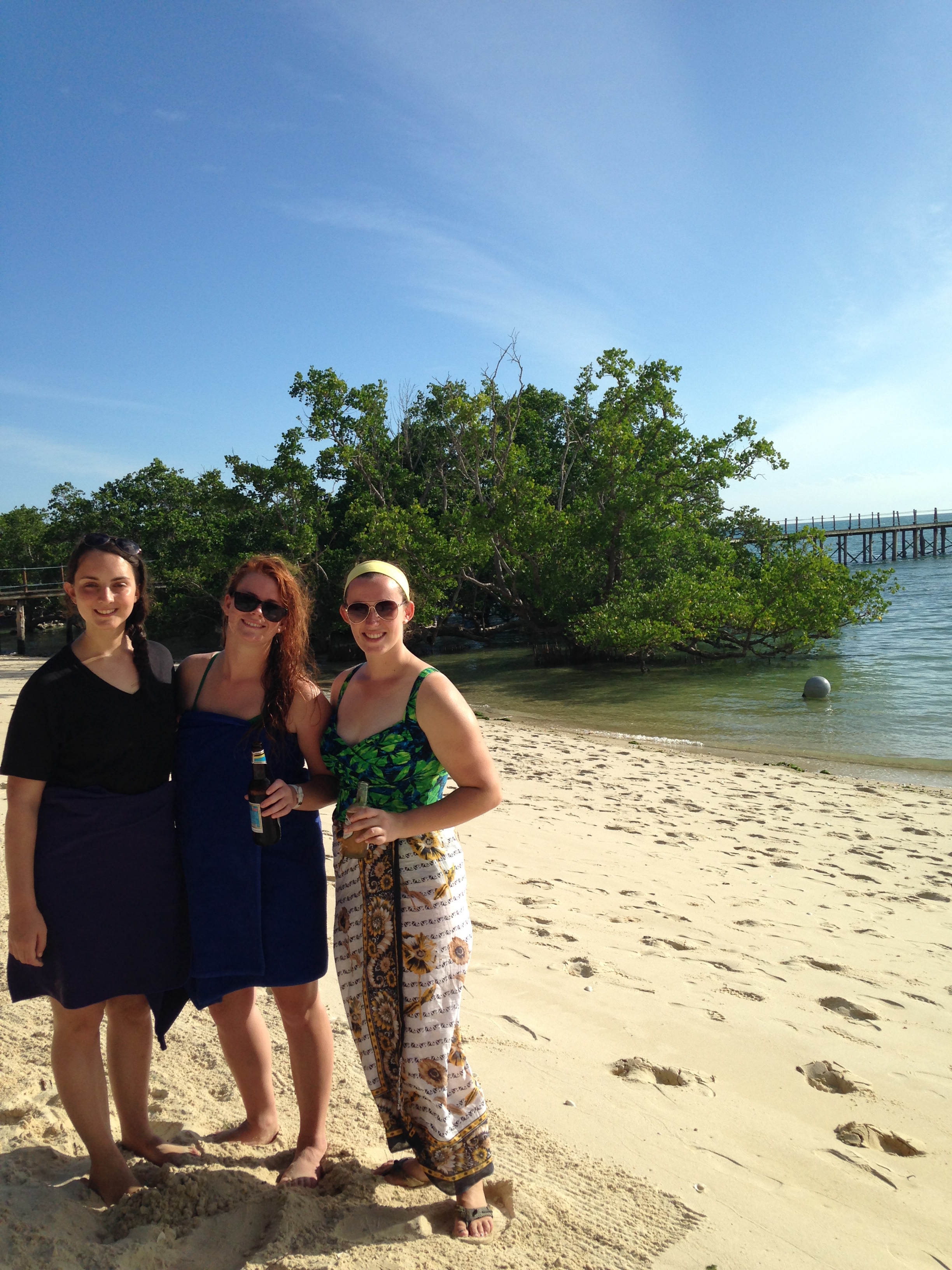
The long yellow skirt I’m wearing is a khanga
My first few weeks here have already been unforgettable, and I’m really coming to understand the meaning of “experiential learning”, and not just having lectures. Stone Town is beautiful and has so much history, which I will be posting updates about regularly.
As always, thanks for reading,
Baadaye! (until later)
Kim, DUSA Blogger


 DU Abroad