

Go to the International Orientation!

I am three weeks into my program at UOttawa and things are going mostly well. I am inundated with work and being an English major means the majority of my work is reading large portions of several books at a time. I am exhausted, but my body clock is adjusting to the two hour difference, which is nice. I am also settling into my dorm and getting to know my surroundings. I meant to write this post a few weeks ago, but I had to hit the ground running when my classes started. But now, I have some time, so let’s do this!

I attended my International Orientation for all incoming exchange students about two weeks ago. It was mandatory for me to sit through the five hour presentation; however, my time was rewarded with a UOttawa reusable bag and a Subway sandwich, which I was totally fine with! I was wondering why they scheduled the entire morning for this presentation. What exactly did we need to know that takes five hours to describe? Well, it’s actually more than a few things. In fact, the International Office talked to us about a ton of things.

Before the presentation started, all of the incoming exchange students (including myself) packed into a 200, maybe 250, seat lecture room. The diversity of exchange students around the room was impressive, more than I had seen at DU. There were students from all over Europe, Asia, Africa, and Australia. Sweden, Germany, Japan, China, South Africa, Ghana, Ivory Coast . . so many countries that are so different from the States. It was so cool to see! The International Office introduced themselves and gave us their contact information since they are all of our lifelines while we’re here. They talked about the school, gave us a campus map, and discussed registration details. We then had special speakers come in and talk about the Writing Center, Health Services, and the Fitness Center. It was nice that they showed us all these resources from the get-go.

Finally, they discussed the importance of plagiarism prevention and student-professor relationships, which was interesting to me that they purposely discussed these things. In terms of the plagiarism, I am not certain if other universities around the world do not emphasize citing sources or if they do it at all, because they showed us everything from how to cite sources and how to determine if sources need to be cited. Maybe some students needed a reminder to cite their sources in their work or maybe some students were learning for the first time. It’s interesting that the International Office emphasized a whole section of their presentation to academic fraud, but unfortunately they did say that at least one incoming exchange student is accused of academic fraud per year at UOttawa. DU makes a big deal of academic fraud and citing sources, so it was nothing new to me.

The other fascinating topic was student-professor relationships. The speaker, whose name escapes me right now, was saying that the American, Canadian, and Australian university systems are fairly similar and that students from these specifics countries would have little difficulty assimilating to the academic schematics of the lectures, discussion groups, etc., of UOttawa. Though, students from other countries, such as the Netherlands, may have some difficulty with the “new” look of academics in Canada. The speaker went on to say that here the professor isn’t viewed as “a god” (her words) and that the student-professor relationship is still formal in nature, but way less so than in countries where professors are viewed with higher authority. While this isn’t a problem, Swedish or Danish students may have trouble with the casual nature of the lectures and discussions. They may not realize that they are actually allowed to ask questions or go to  office hours to have a conversation with their prof. It is most definitely a cultural shift for those students. In my case, the concepts of office hours, lectures, and discussions aren’t as dramatic to me because DU operates in the exact same fashion. I am grateful in that sense that the adjustment to the academic system in Canada hasn’t been a hassle. Knowing how college classes operate here already allows me to dive into my work a lot faster than I would if I went something completely exotic. But if you’re up for that challenge, by all means do it!

Although the presentation was a little long for me, I’m ultimately glad I went. The speakers cleared up some concerns I had about various things and I became more confident in my new surroundings. The International Office said to email them if we had any questions at all, even if they didn’t pertain to International Office issues. For example, I emailed them about how to ship items back to my home and they helped me right away. There is a certain amount of autonomy that comes with this program and it certainly isn’t for people that aren’t confident being independent or doing things on their own.

But, the International Office will help if you ask them, which is a tip for anyone studying abroad anywhere: asking for help never hurts. Till next time!
 

“Why Ottawa Again?”-Debunking the Comments I’ve Heard Since the Beginning of this Journey

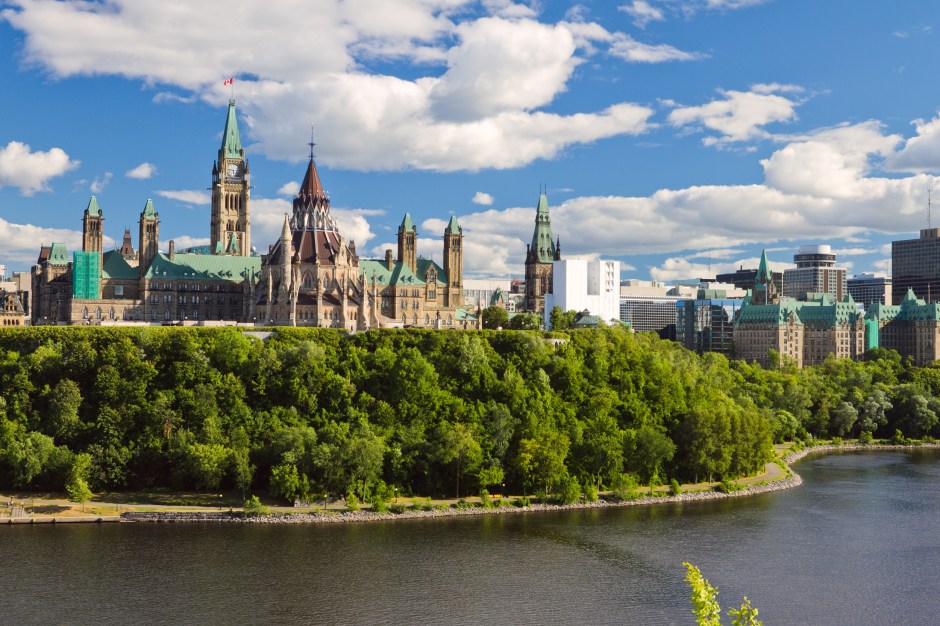
A lot of people (I’m not exaggerating when I say a lot) have said things that were similar, if not identical, to me about my decision to go Ottawa. I will be honest, Ottawa may seem pretty vanilla compared to other places I could’ve gone. In fact, I’m the first student from DU to go to the University of Ottawa (UOttawa). It hasn’t been a popular choice for a long time, mostly because it doesn’t fit the stereotype of “studying abroad”. A place such as Canada, doesn’t scream “adventure”,  “exotic”, or “diverse”. Often times, people will want to study abroad in places that offer all the above and beyond. Or, at least, that is what the stereotype of the studying abroad calls for.  Ottawa, nor any Canadian city is featured in any of the multiple videos that DU shows to prospective and freshmen students about the their study abroad options. People ask me “Why Canada?” and give me confused looks. In this post, I will address some comments I’ve received and offer explanations toward why they aren’t necessarily fair and viable.

“You’re not really going that far.”

No, I’m not going that far. In fact, the only bodies of water I will cross are the Great Lakes. Part of me is happy that I’m not crossing any oceans. My tickets weren’t terribly expensive and the flight isn’t too long either. What I like about Ottawa is that it offers a completely different dynamic than America, in terms of politics, languages, climate, and other factors as well. I realize that politics are a risky and touchy subject for some, but there is no denial that the politics of Prime Minister Trudeau juxtaposed to that of President Trump are radically different. Living in an environment sans Trump will be interesting, but I can only imagine I’ll be reminded of it on a daily basis. Ottawa is also officially bilingual and every thing on the UOttawa campus is bilingual. I would actually recommend students who consider Ottawa to take one or even two French classes. Some students on campus only speak French and it’s helpful to have some basic French in your pocket. Finally, in terms of climate, the warm, summer days of Denver will come to an end when I leave on September 2nd: temperatures will be in the low 60’s and 70’s and it will be rainy when I arrive. Moreover, on my first day of class, I will need to break out my jacket because low temperatures will be in the 40’s! It’s definitely a different climate to experience compared to the sporadic weather patterns of Colorado. Those are a few of the big changes I will experience, even though Canada is only north of the United States.

“Why not go somewhere exotic? This is a once in a lifetime opportunity!”

I can understand the perspective of this comment. Some people never had the opportunity to study abroad. Perhaps, everything in the media about students studying abroad shows them going everywhere around the world and has set the stereotype that all students should go to “exotic” locations. The truth is that just doesn’t happen for all students. It takes a special type of disposition and personality for students to feel comfortable in those “exotic” locations. I have Generalized Anxiety Disorder and I am not an adventurous and outgoing person. Going to Ottawa and living there by myself pushes me enough out of my comfort zone. I’m also prefer to focus on my studies instead of adventuring in and around Canada. Again, trekking through downtown Ottawa and all it’s trendy neighborhoods is good enough for me. It should be noted that I’ve never been to Canada before. Thus, Ottawa is indeed an exotic location for me!

“It’s just like America, you wouldn’t need to adapt to anything.”

Canada is not America 2.0. It is indeed a different country! Just because Canada is above the United States does not make it completely “American”. Parts of Canada are indeed “Americanized,” however, Ottawa itself is not at all “American”. Actually, it is more identical to France and any French-speaking European country than it is America. It’s worth mentioning that my experience with registering and communicating with UOttawa resembled that of a French university instead of an American one, like DU. Some quick differences between Canada and the USA:

  • Canada has Canadian dollars (CAD) and America has American dollars (USD).
  • Canada has it’s own dialect of English and French, whereas America has only one official and de facto language: English.
  • Canadians write their dates with the number date first, followed by the month (an example is 29/08 for August 29th), but Americans write theirs in the opposite fashion (08/29 for August 29th)
  • Canada’s government is a parliamentary democracy and America’s government is a federal presidential constitutional republic.
  • Canada does not have a president, but the USA does.
  • Canada’s current prime minister is Justin Trudeau. America does not have a prime minister.
  • Canada has a monarch, Queen Elizabeth II. America has not had a monarch since 1776.
  • Canada operates on the metric and Celsius measurement and temperature systems, respectively. The USA operates on a customary measurement system and the fahrenheit system for temperatures.
  • And finally: Both the USA and Canada recognize red and white as their official colors, but add blue to the mix for the USA.

While the differences seem small, it is the combination of such tiny factors that create completely different societies all around the world.

People are allowed to have their opinions. I don’t have a problem with that. What is most important is that when you choose a study abroad location, make sure it’s where YOU want to go to and not one that you think with satisfy everyone else. You will indeed be the person living there, you might as well choose somewhere you want to go. Even after virtually everyone said those things to me, I still kept my program and stuck true to how I wanted to pursue this experience. That is truly the most important thing to remember.

In four days, I will finally be in the home of the Beaver (their national animal), singing God Bless the Queen instead of the Star Spangled Banner. That’s unbelievable! Until next time!

Sources for Facts: http://www.diffen.com/difference/Canada_vs_United_States