
Maletas, Mochilas y Mala Suerte: A Ryanair Survival Guide

Ryanair plane in Dublin, Ireland.

For those of you who may be unacquainted, this is Ryan. Ryanair. Full name: Ryan F*&#%@g Air. If you have studied abroad in Europe, there is a 99% chance you know Ryan about as well as Spaniards know ham and fútbol, and that is pretty damn well.

To give you an idea of what Ryanair is, it is essentially to airline companies what taco bell is to restaurants: bottom of the barrel, unfathomably cheap, usually involves only a very quick visit and usually doesn’t leave any lingering side effects or mental/physical problems in the days following use. Usually.

An Irish company founded in 1985, Ryanair was one of the first airline companies to use the “low-cost” business model, centered around the idea that they would offer no frills, dirt-cheap transportation all around Europe. While some would call it glorified aviation hitchhiking, this model has become wildly popular and successful around the continent and has evolved into a study abroad student’s dream transportation option.

However, they haven’t garnered the nickname “Ryanscare” by providing complimentary chocolates and foot massages. No frills means just that; you get a whole lot of zip, zilch and nada, and if you’re not careful, a wallet lighter than MC Hammer’s was in 1996.

Here are a few tips and tricks to help you avoid the surprise fees, stress and occasional fear that can come when boarding one of those iconic, blue and gold sardine cans. In the event of an emergency, individual oxygen masks will drop down from the panel overhead. JK, that won’t happen. You should probably just go to a hospital.

Print Yo S&#!

This is the number one rookie mistake made by virgin Ryanair flyers. If you don’t print your boarding pass before arriving at the airport (or four hours prior to departure as their website specifies) you’ll get charged 50 euro with no sympathy and no questions asked. The easiest solution to this problem: Print your boarding pass, ya knucklehead! Also, they send you an e-mail upon booking with the subject line, “DON’T FORGET TO PRINT OFF YOUR BOARDING PASS,” so if you don’t see that, well, sorry I’m not sorry.

Backpacks 4 Life

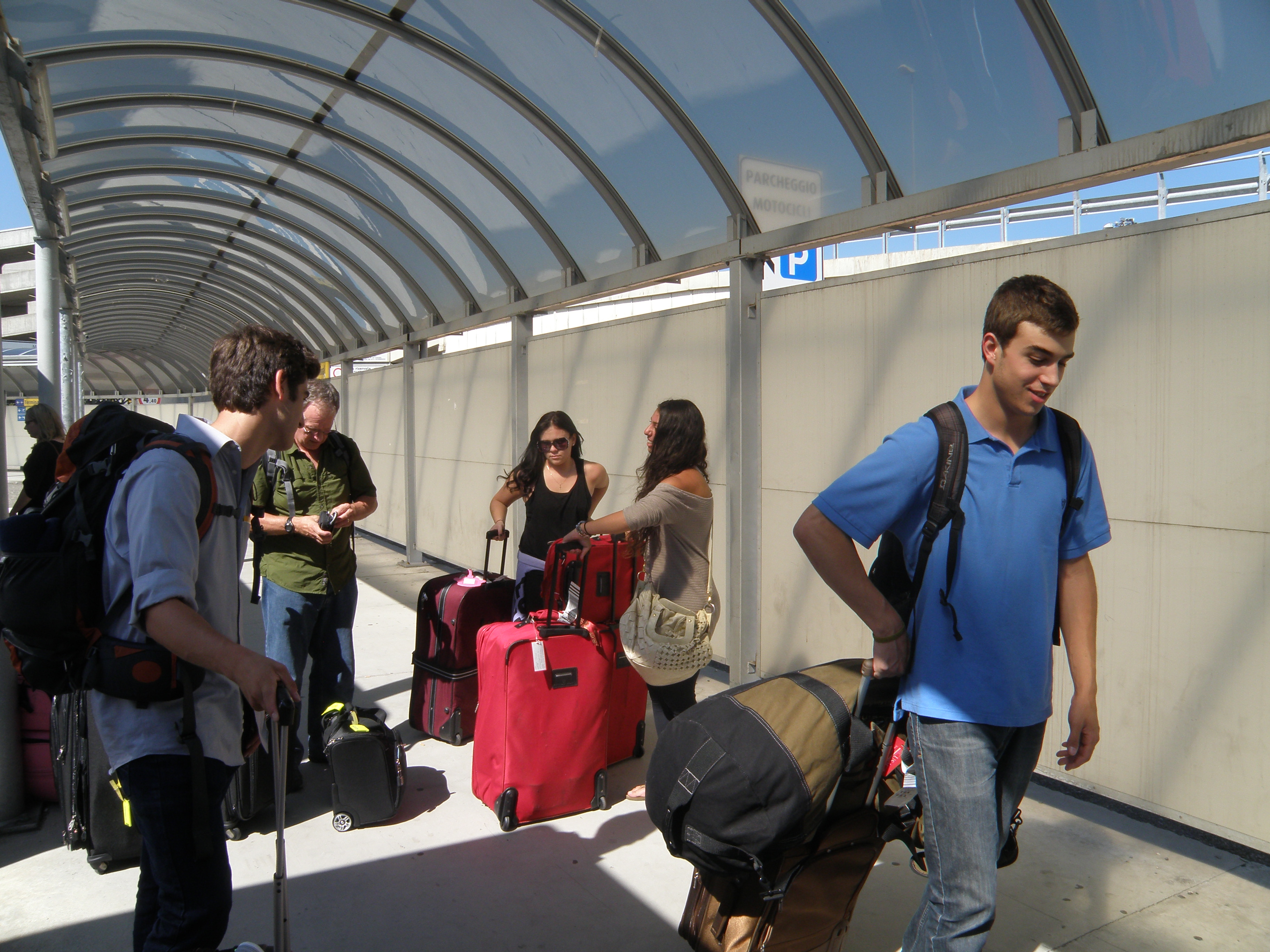
The second most common hiccup first-time RyanAir passengers tend to encounter is the baggage issue. The company is notorious for nitpicking the size and weight of bags, (although I don’t think I’ve ever seen them weigh a bag come to think of it) laying out stringent regulations on their website. They say no bag can exceed 10 kg in weight or 55cm x 40cm x 20cm in size, and they have flight attendants waiting right before boarding with the box of death and the blue grate of Mordor to check your baggage size, promptly slapping you with a 50 euro fine if it does not fit. But hey, here’s a little two-syllable secret: Back. Pack. I’m not talking a Bear Grills, #EverestOrBust pack, just a simple book bag – Jansports in my opinion tend to offer the most room. I’ve used a regular pack like that on the half a dozen trips I’ve taken with the evil empire and have never once been stopped, questioned or really even looked in the eye when the time has come to measure bags. Pack light, keep your back facing away from any visible flight attendants and you’re golden.

Know You’re Probably Not Even Going To Your Destination

Wait, what’s up? Sadly it is true. In order to cut landing costs, the company targets smaller, more remote airports sometimes over an hour from the “city” you thought you were going to. So, it’s not London it’s London-Stansted. It’s not Brussels it’s Brussels-Charleroi. It’s not Dusseldorf it’s Dusseldorf-Weeze. All of these are a solid 45 minutes to an hour outside of the city center, which is at least another 20 euro in shuttle rides, so factor that into your “budget” airline ticket. To their credit, the secondary name is on your ticket, so for example it does say “London-Stanstead,” the danger is just seeing London and assuming you’ll be landing at the foot of Big Ben. Going on Google Maps for five minutes can be a life saver.

Their Website Is Terrible

Apart from the fact that they try to sell you every kind of insurance, rental car plan and hard shell suitcase in the western world, just about every time I’ve used it I’ve gotten an error message in the midst of the final step saying, “Warning: session locked.” There aren’t many things more frustrating/terrifying than submitting your credit card information to a notoriously sketchy company and having an error message pop up, not knowing if it went through or not. Basically, the rule of thumb seems to be unless you get an email with your boarding pass link, it didn’t go through. I swear they do it on purpose just to make us squirm.

Stamp It Up

Yet another curveball they like to throw at us non-Europeans is that anyone from outside the EU must go to the “Visa Check Desk” to have their crinkled, home-printed, paper boarding pass stamped approximately 5,000 times. I swear the people at those desks just go H.A.M. on those passes, completely tatting them up with the blue, runny-inked Ryanair emblem. This step is usually not much of a problem as the vast majority of the travelers are in fact from the EU, many times actually giving non-EU citizens shorter lines, depending on the airport.

DON’T Get To The Airport Early

I know most people will think this is a total bozo move, but here is my reasoning: Ryanair has a first-come, first-serve boarding policy, which causes people to line up in the terminal literally hours before take off. Chances are you will never get there early enough to get prime enough real estate to make standing on your feet for 2-4 hours in an airport worth it. If you do, God bless ya. But basically, I always end up sitting next to some sort of Brobdingnagian anyway, so why not save your legs a few hours of strain and pull up the caboose? Worse comes to worse you have to put your bag on the ground by your feet during the flight as overhead room is almost imposible to find, especially when you’re rocking a fraying, bulging Jansport knapsack from 2003.

In The Very Unlikely Event Of An Emergency, Put Your Head Between Your Knees And Kiss Your Bum Goodbye

Honestly, I’ve just been waiting to drop that line since 2000.

Well, that’s that.  With this new wealth of knowledge you’ll be a Ryanair pro in no time, scooting through the skies like a regular Ryan Bingham, just probably not quite as good-looking and don’t be surprised if you encounter a bump in the road or two along the way.

*As a quick caveat, and to make up for all the jabs taken in this post, I will say that for what it is, Ryanair is perhaps THE best travel option for students studying in Europe and one that should be taken complete advantage of. As long as you do your research, read the fine print and are prepared going in to it, you’ll be happily taking selfies at the Sagrada Familia/Buckingham Palace/Manneken Pis in no time.

— Quincy Snowdon, DUSA Student Blogger

Cuba Libre

Studying abroad causes many to become infected with the proverbial “travel bug.” As a result, many decide to travel after their program is finished, extending their stay to do more domestic travel or visit other neighboring countries. This is a decision I made, delaying my departure two weeks to travel to Havana, Cuba.

I was fortunate enough to study abroad in Kingston, Jamaica. Living on an island leaves one with two options in regards to additional travel, either you explore more of the island or you leave the country. Jamaica is relatively big and has an extensive tourist infrastructure, so there are plenty of opportunities to do domestic travel. My program did a great job of exposing us to multiple parts of the island, so I did not have an urge to do more travel within the country. When it comes to international travel, there are various islands that are relatively easy to visit (Cayman Islands, British Virgin Islands, etc..). However, you are more or less going to get a similar experience; comparable language, food and lifestyle. As a result, another student and I decided that we must expand our search.

Photo: www.tropicanacruises.com
Photo: http://www.tropicanacruises.com

Cuba represented a logical choice for us; I thought it would be a once in a lifetime opportunity and my companion had family on the island, so we had a place to stay once there. While planning we had to first figure out how to get there. There were weekly flights to Cuba from Kingston, so that was not a problem. The only downside is one airline had a monopoly on the service, Air Jamaica, making the 60 minute flight very expensive. Second, we had to figure out if it was even possible to visit Cuba on American passports. The short answer is that it is possible, but somewhat difficult. The country issues tourist cards for American citizens, giving immigration something else to stamp other than your passport.  However, at that time there were heavier restrictions on travel than there are now, making travel to the island more difficult and increasing our risk. Lastly, we had to research how money exchange works on the island. Since there is an embargo and were heavy restrictions regarding U.S. currency, we discovered that credit cards and travelers checks did not work.  We found that we would have to exchange our money into different currencies and make sure to plan out exactly how much we were going to spend. This last point made me more nervous than anything else because I feared that we might run out or lose our money. Once we solved these issues, we reserved our trip and made the necessary arraignments. Needless to say, we had an amazing experience that was furthered by the fact that we had just finished an intense study abroad program and were going to a place that was ideologically and socially very different than anything we had previously experienced.

Photo: washingtonnote.com

Traveling after your program is finished will force you to prioritize. In my case I had to determine if:  (1) It was even possible, (2) what are the ways to do it and (3) does it fit into my budget and if so, what monetary considerations do I need to make. Many of you will have the same dilemma. I recommend that if you are determined to do something you make it happen. Otherwise, you will always be wondering, what if?

Pablo Hester, DU Abroad Peer Advisor