You just arrived in a brand new country with nothing but whatever could fit in your suitcases. It’s likely you’ve never been the one in charge of feeding yourself, previously dependent on your parents or the DU dining hall. It’s weird, it’s overwhelming, and it’s one of the first big challenges of study abroad. I’m here to help guide you through it.
Here’s a rundown of my usage of the stores I’ve been to the most:
The best place to go on your first shopping expedition is the Tesco Superstore (not the Tesco Express, which only carries food). It’s a one-stop shop for all kinds of things, the perfect place to get what you need and couldn’t bring with you from home (I got towels, soap, a trash can, cleaning supplies, etc from there). Tesco is also the best place for groceries if you prioritize variety (and often quality) over cheap prices.
Lidl is the best place to get lower cost food. I’ve gone there every grocery shopping expedition after the first one. It doesn’t have the variety of Tesco, but it’s decent enough and better for saving money. Just be careful or you’ll end up like me: with armpits stained from the Lidl shopping bag (beware of dye transfer).
Normal is a good place for any personal products. It has a huge variety of soaps, shampoos, shaving equipment, makeup – anything to do with taking care of yourself, and at a pretty good price.
Dealz and and Mr Price are both good for affordable household goods. Mr Price has more food options than Dealz and Dealz has more clothing items than Mr Price.
Centras are everywhere and there will almost definitely be one next to where you’re staying. They’re very good for ready meals and things you need quickly, but they’re overpriced. I use my local Centra when I need to, but I do all of my primary shopping elsewhere.
You will probably be shopping a lot, since you get very little fridge space to store perishable items in the student accommodations. That being said, Cork is super walkable; I can get to basically any of the stores I listed in a 20-30 minute walk, and a very pleasant walk at that (Cork city is awesome for pedestrians).
I realized that I am spending most of my time writing posts about the highlights of my experiences while in Sweden. This is rather easy, as I have loved almost every moment here. However, there is a gap within the ‘almost’ that implies a few precise moments where I haven’t loved everything. During the two and a half months I’ve been here, I have compiled a short list of the things that I have undeniably gotten wrong. Most of these are things that I now find funny, so while this post goes to show that there are moments when I am forced to confront my own mistakes and flaws, I also hope that it is an enjoyable read. Onto my Swedish Fails:
#1- Shrinking My Sweater Vest
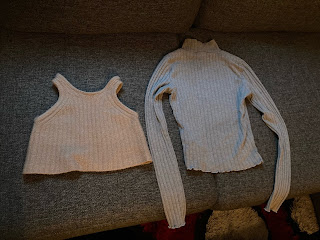
My first Swedish fail, that may just be a young adult fail, was shrinking a super cute sweater vest in the wash the day after I bought it. I purposely brought less clothes to Sweden than I would have liked so that I could purchase more items during my time here that fit within the Swedish style (essentially anything black and 5X more formal than Colorado). So during my first week, I went to a thrift store and found some cute shirts and sweaters. One was the cream colored sweater vest shown, though it fit me in the store. I threw everything into the washing machine the first day, and when I pulled it out, the sweater vest was shrunk. I didn’t even put it in the dryer, which is what I thought was the issue with shrinking clothes. I attempted to follow the ‘soaking it in lukewarm conditioner water’ steps I found online to re-stretch it, but to no avail. It is now officially not a “tried and true” method. I’m planning on doing some DIY to the vest at some point and cut it into a cute crop top (because that’s all it is now). But I learned my lesson about washing machines and unknown fibers! I now am extra careful with my thrift store purchases.
#2- Falling Off My Bike (in front of two Swedes)
The second major fail came during my second week in town, when I had just been riding my bike for 6 days. In Lund, almost everyone has a bike. There is an amazing bus system throughout the town, but Sweden truly is a biker’s country and I quickly realized that it was a bandwagon I needed to hop on. So during my first week, I found a rickety secondhand bike for $80. I love this bike and it is not at all the reason why I crashed in such an embarrassing manner less than a week after I purchased it. Very few young adult Swedes wear helmets (which is strange lack of safety coming from the country that developed seatbelts), yet I am not used to riding a bike all the time and always have mine on. This was very lucky for me when I attempted to get up onto a cobblestone curb at a very low angle. As I am sure anyone who actually rides bikes can imagine, the wheels continued to run straight with the curb while all of my weight and force went right, causing me to topple over the right side of the handlebars. I skidded into the cobblestone, resulting in the small patches of road-rash on my elbow and knee covered in this photo. More so than being in pain, I was filled with embarrassment as two Swedish girls rushed over to me to ask if I was okay. They had been walking 5 feet away and watched the silly American fall off her bike in an easily avoidable manner. I kept apologizing to them for falling in front of them, which I think concerned them more than my bleeding knee. Thankfully, I was able to get up and back onto the bike quickly to finish my ride home. This was a moment when I realized that I should not have the confidence of a Swede on a bike, as I was not raised biking the cobblestone streets. I do hope that overtime, I will gain more skill and eventually be able to partake in this part of their culture with confidence and ease. Until then, I will keep biking slowly, wearing my helmet, and getting onto curbs at 90º angles.
#3- Trying to Use Cash from the 90s
My third fail is one that I find to be quite strange within Swedish society. Before I left for Sweden, my dad gave me a ziplock baggie with about $8 worth of Swedish kroner in it. This was money he had leftover from his trip up to Sweden during his study abroad in the early 90s. Now, if someone gave you cash from the US in the 90s, you would first consider if the coin/bill was rare and therefore worth more. If, after simply looking at the normal cash, you decide that it isn’t special, you would shove it in your wallet to use the next time you need to (or want to) pay in cash. When the opportunity arises, you will hand the cashier the cash, and they will take it without a second glance before sending you on your way with your newly-purchased item. That’s a pretty simple scenario that you would expect to happen around the world. If that is your expectation, like it was mine, then you are wrong.
Sweden, which prides itself on being the most cashless society in the world, has one situation where cash is a necessity (unless you are Swedish and can make a Swish account). This is at street markets, with all of the small, locally owned booths selling produce and nicknacks. A few weeks ago, I went to the Applemarket Festival in Kivik with some friends. While the little bit of cash from my dad wasn’t enough to buy what I wanted, I left it in my wallet with the new cash that I got at an ATM. When I was purchasing a Danish donut, I pulled out two bills and handed them to the guy. He accepted one and then handed me back one and said “this is old money. I can’t accept it.” I pulled out a crisp new bill and still got my donut, but felt embarrassed that he acted like I was giving him Monopoly money. Which is weird, because old money is still money, right? Confused, I looked into it. Apparently, Sweden phased out their old banknotes for ones with a new design from 2016 through 2017. The banknote I tried to use was officially phased out June 1st, 2016. However, you can still redeem old banknotes at Riksbanken for an administration fee of 200sek (about $20). It’s not really worth it for my $8, but I guess I now know a lot more about money and banking in Sweden. I also know that if I have extra cash from my study abroad, I need to come back to Europe to spend that money within the next 20 years (or I can hold onto it and give it to my future child so that they too will learn about banknotes in their host country).
#4- Buying Hair Conditioner that I’m Allergic to?
When I arrived in Sweden, I had only brought small travel shampoo and conditioner with me, as full-sized bottles are a lot of weight. When those ran out, I spent an hour at a grocery store trying to find the best (meaning the cheapest per amount) conditioner and shampoo that I could. I ended up landing on two different brands for my shampoo and conditioner. Both were in Swedish (as expected), and I normally don’t have huge issues with my shampoo and conditioner back home, so I assumed all was fine. After two hair-wash days, though, I noticed a pattern. I would shampoo and feel fine, but as soon as put on the conditioner, my neck and ears would get itchy. As I washed out the conditioner, the rest of my skin started to feel itchy and I would need to take a Benadryl after getting out of the shower. For the next hour, my scalp would constantly itch. I don’t know which ingredient in this conditioner doesn’t get along with me, but I give this brand a 0/5 stars. I ended up buying an American brand conditioner that I know I’ve used before even though it’s American and more expensive. I am more than happy to try new things and push my comfort zone until outside my comfort zone makes me itch.