New Kid at a New School
I never had a scary first day of school. I went to the same school from the fourth grade through senior year because it was a K-12 institution. And in the fourth grade your first day of school is not that scary. I was a social kid so making friends was not very intimidating. Going to a new school your freshman year of high school is intimidating. Transferring schools in middle school is intimidating but going to the same school for nine years with the same people, the same teachers, the same building, and the same environment, is not by any means intimidating. I remember being a little nervous at the start of each year but it was more excitement to see all my favorite teachers and my peers that I grew up with. Going to college was scary. Going to college in another country was scarier. At least in America, I knew exactly what to expect in classes. I had taken college courses all through high school so I knew what to expect about the coursework, about the professors, about the structure of the class, about the technology software used, about all of it. In Scotland, I had to relearn everything. It was similar enough to where I was not completely lost, but different enough to where it took effort to learn and many observations to catch on. The following are some of the most notable observations:
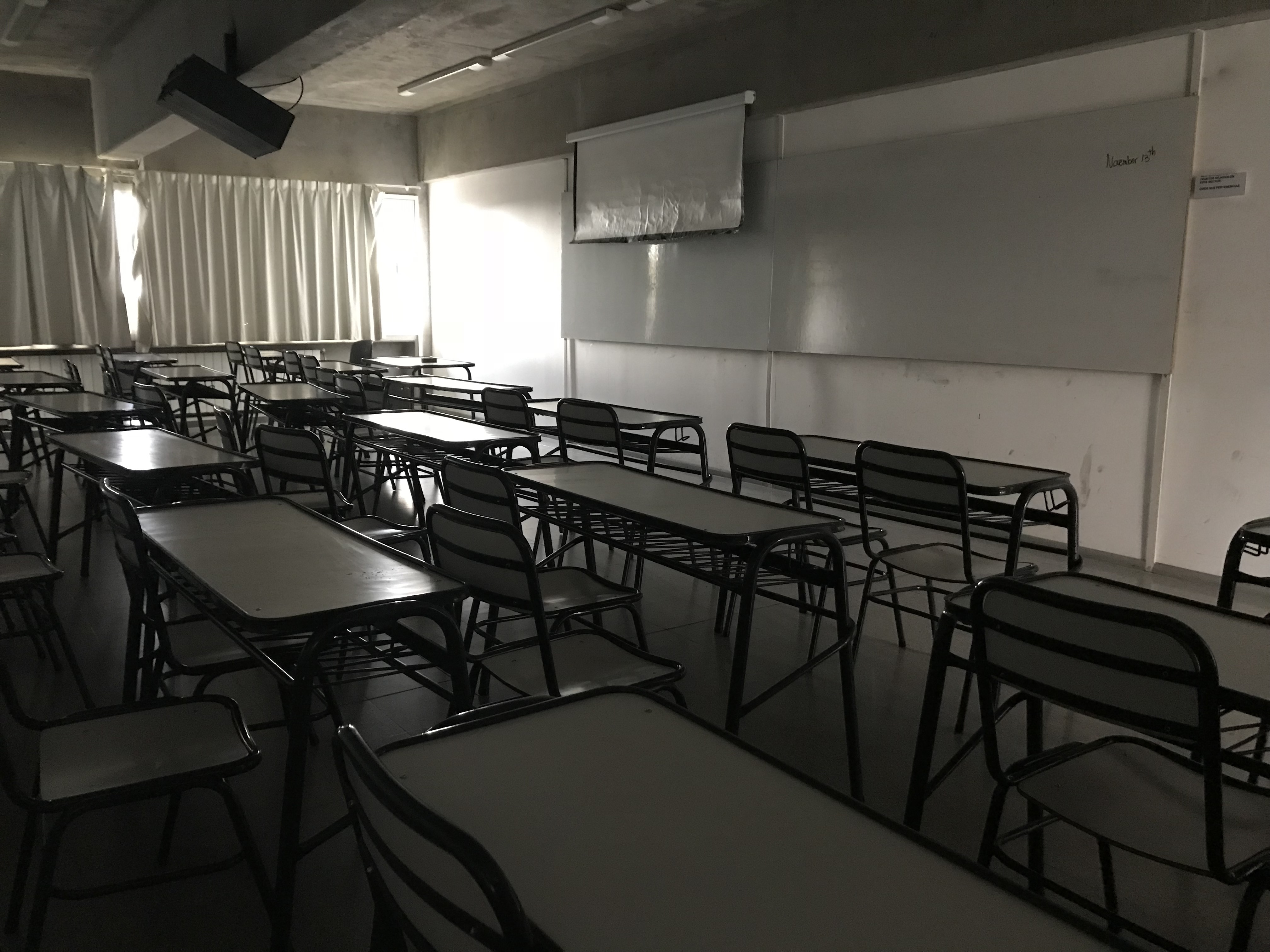
- Timetables and registration: I always knew timetables to mean the multiplication charts we were tested on in elementary school, but here you don’t use the word schedule, it’s a time table. This doesn’t just go for school, there’s bus timetables, appointment timetables, etc. My timetable consisted of two public policy classes and a law class. All classes were worth 20 credits which translates to 4 DU credits, but the schedule…sorry…timetable is complicated. For both public policy classes they are once a week for two hours. This is different from DU’s classes being twice a week for two hours. From what I’ve gathered school in the UK is most reliant on self-teaching, so they have less classes to give students time to read and learn the assigned material on their own. The students are expected to complete all out of class preparation materials and readings, which I thought was so interesting. In America, we do not trust that students will do their work on their own so we have participation grades and small quizzes to hold them accountable. That doesn’t happen here. My law class is where things get tricky. I have the class for one hour on Wednesday and then on Fridays from 9am to 10 am and then back again from 12pm to 1pm. It is so odd having a two hour break between the same class and I’m sure it is difficult for students to plan their classes in between a spread out timetable like that. However, they wouldn’t know because they don’t make their schedules. At DU, when registration opens you sign up for your classes and it’s a free for all while everyone enrolls in the classes they need to take. But, in Glasgow the registration department makes your timetable, so all you have to do is submit the classes you want to take with your first choice at the top of the list and hope you get a good schedule. This is probably very nice for the students here that are used to submitting the classes they like and receiving their schedule a couple weeks before class, but for me it was scary. It was scary to wait all Summer with no control over my enrollment, not knowing the classes I was taking and at what times. Another twist is tutorials. My law course has an additional class six Mondays out of the semester where a small group of the large 80 person class meets to discuss a problem solving activity. The problems are given to us in advance and we meet to compare our answers with a tutor (Glasgow’s equivalent to a Teacher’s Assistant). Other classes are sometimes specified as seminars and lectures where seminars are just discussions and lectures are a mix of discussions and teaching, however tutorials are the most interesting aspect of the timetable and class setup.
- Professors: The teachers at University of Glasgow are incredibly nice. Each teacher genuinely wants to make sure the students understand and even the more strict teachers are never rude or shut down students ideas. They also do not assert their own political opinions into debates or discussions as much as American professors do. It is not uncommon to have multiple professors for a class here. In my public policy class we will have a total of five professors alternating the weekly lectures. So, one professor may teach weeks 1-3 and week 7. Another professor may only teach weeks 4 and 5 and so on. I wasn’t sure about this system at first but I have to say I actually think it is a brilliant idea. Different teachers have different teaching styles which not only helps keep students engaged because they don’t entirely know what to expect from each professor but they also help if a student is struggling to be receptive to one professor they will still have a chance to connect with the others.
- Secondary to Tertiary Education: The transition and roles of High School and college is very different in Scotland. In America, common curriculum is taught all through High School and at the beginning of college. However, in Scotland, students begin specializing in certain education areas in high school, so by the time they reach college they are already set in a major and take just a couple common curriculum classes. This means people rarely switch their major and commonly take gap years so that they are absolutely sure of what they want to get their degree in. Law school is the most interesting course of education in the UK because instead of going to high school and then getting an undergraduate degree and then going to law school for three years, students graduate high school, study law in their undergraduate and then graduate with the ability to practice law. Thus, they receive the equivalent of a bachelors degree and a juris doctor degree in just four years of university. I am taking a contract law class while abroad which has been very insightful to the setup of law school in the UK. When talking to Glasgow students about the Law School setup versus American Law School, it seemed like we did not understand each other. It took a long conversation for us to figure out how the opposite systems worked.


Trip to Edinburgh
For my birthday abroad my best friend and I took a trip to Edinburgh, Scotland. It is a city just an hour away from Glasgow and is the Scotland capital. The city is bigger, more expensive, and definitely more ‘touristy’. We took the train to Edinburgh which was interesting for us. In America, I rarely use public transportation. My freshman year at DU, I took the light rail to get downtown, but once I brought my car to school, the light rail was hardly ever a form of transportation for me, However, in Glasgow, public transportation is widely used and heavily preferred. Edinburgh was the same distance from Glasgow as Colorado Springs is from Denver, yet I could never imagine taking a train to Colorado Springs, I would just drive. Not having a vehicle has forced us to use public transportation which was scary at first but easy to master and understand after a couple weeks. Train are also unreliable in Glasgow due to strikes. This may just be a current problem that is not typical for Glasgow but it seems strikes are everywhere causing cancellations and delays. It is not just with train systems either. Strikes have taken place with the post offices, garbage collector companies, airlines, and even the campus gym. To say the least, it has been hard to adjust to relying solely on public transportation, but very insightful after living in a place my whole life that relies little on buses and subway systems.
Regardless, my friend and I took the train to Edinburgh and spent the day exploring. We saw the Scot Monument and the Edinburgh Castle which are two of the most amazing structures in Scotland. Edinburgh was also the birthplace of Harry Potter so there are many historic places that J.K. Rowling either wrote her books at or inspired places/things in the Harry Potter world. There were more American fast food places like Burger King, Five Guys, and Wingstop in Edinburgh which was intriguing for us. We had afternoon tea at a cozy tea room near the Royal Mile. We ordered a ‘high tea’ experience which consisted of a pot of tea as well as an assortment of pastries and snacks. The scones were one of the most incredible pastries I have ever eaten.
We finished our adventure by eating at an Italian Restaurant that had amazing reviews. The waiters were so much fun. They were fascinated that we were from America and had lots of fun teasing us and asking about study abroad. When they found out it was my birthday they gave me a free dessert with a candle and sang me happy birthday in Italian. In America, I used to feel so awkward and embarrassed when restaurants would sing me happy birthday, but for some reason I felt to comfortable and truly grateful to the restaurant staff for making me feel special. The best part of our dinner was when we tipped the waiter. We tipped him 10 pounds on a 50 pound check, so the standard American 20% tip, and the man was appalled. He gasped at the money and with wide eyes tried to not accept the tip. I explained to the man that in America we tip well especially when we receive good service. I told him about my serving experience and he finally understood and took the money. He promised to split the money with his coworkers which I thought was awfully kind and with gratitude he escorted us to the door and gave a happy goodbye. It’s the little things that make me happy, so even though it is amazing that I can say I turned 20 in Edinburgh, Scotland exploring monuments, castles, old shops, and tea rooms, my favorite part of the day was making the waiter’s night with just a 10 pound bill.