
TIA, if you could do anything, what would you do?

TIA. This is Africa. The phrase first surfaced in my life during the beginning of my application process to UKZN. I was required to list potential courses I would take abroad. The problem was, I couldn’t open the handbook online to search for module offerings. Upon complaining to someone from the school, the response was, “TIA, it probably won’t get fixed.”

The joy of my experience here is that it did get fixed, (actually, I was just looking in the wrong place) and my classes are my personality in a class schedule. I have a class that lets me work with sick children, a class that allows me to have deep talks about humans and the way we work, and a class that allows me to express my theatrical side and write. The only thing I’m missing is a math class, which I am happy to take a break from. While the workload is hard, I’ve never had a class schedule fit my personality so well in the states, but TIA. (I might have used the acronym wrong here)

It doesn’t matter if you’re the boy who hates the phrase because it credits life’s adventures to a continent, if you’re the girl who loves it so much she entitled a Facebook photo album in honor of it, or if you’re the local who uses the phrase like American’s use the phrase YOLO, you have to recognize and accept that TIA is an acronym that is used daily.

TIA is used for many reasons on this continent. I think it was intended to be form of YOLO (You Only Live Once), but it’s used for many different things now. Some of the most memorable are:

-Having a washer and dryer and a toilet in the same room, with no light, toilet paper, or soap. BYOE (Bring your own everything).

-Having someone walk in on you using said toilet and start doing their laundry, striking up a conversation, while you’re on the pot.

-Spending all of your money to a point of almost starvation because experiences are more important than eating.

-Having a teacher tell you to skip class as often as possible to travel because you’re an international student and that it’s expected of you.

-Having a holiday where you get school off that’s entitled “Women’s Day” -Participating in a poetry slam despite the fear.

-Going to church continuously, even though you hate church and religion.

-Horseback riding even though you’re allergic to horses.

-Driving around for two hours, continuously changing plans, until you reached a destination that was only five minutes away from where you began.

-Doing things you’d never try at home. (like paragliding)

-Waiting around for an hour when you were told to meet someone at the gate, “Just now.”

-Seeing a little boy walking around holding a dead bird whose mother is completely aware and okay with it.
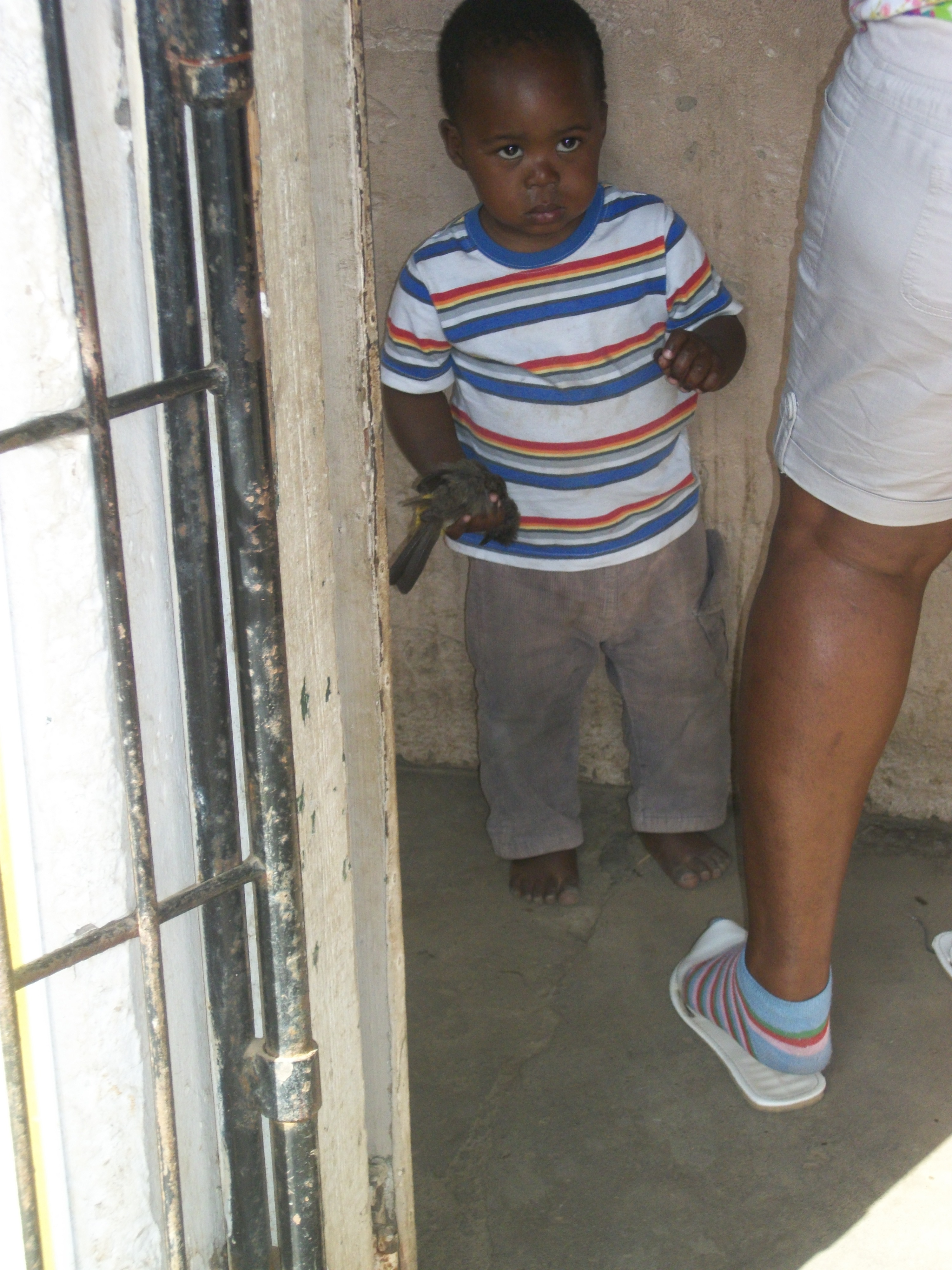
All of these stories when explained or asked for the reason, the response was TIA. (Note, many of these weren’t experienced by me personally).

So, if you went to a different country where everything that was thought of as weird, irresponsible, scary, exciting, or frustrating was passed off as TIA, what would you do? It’s interesting to see how the group of internationals here have adapted to the term. Personally, I’ve seen myself lighten up. Typically I live a life style where I plan everything. I have thousands of lists and I write down time schedules for the day. I never follow them perfectly, but I always make them. Here I’ve learned to just live life. I don’t need to have plans because things will happen. I’m still getting everything done that I need to get done, but I’m not as stressed by it. In the beginning, when the unorganized free flowing life of the South Africans was stressing me out, a friend just kept saying, “TIA, calm down.” Eventually I did and it’s a much happier way to live. One that might not work in the States, but for here, it’s nice.

Sarah Caulkins, DUSA Blogger

The Trill of it All

Teva-deva, teva-deva, teva-deva, teva-deva”

I am sitting in my room repeating these nonsense words in quick succession.

“I edited it. I edited it. I edited it. I edited it.”

Along with that sentence.

“TdZzzzzzzz…”

Sadly, that is the only sound I can produce.

I am trying to learn how to trill my r’s.

The trilled “r” sound is pertinent to properly spoken Spanish. That doesn’t mean it comes naturally to every Spanish speaker on the planet. It is, in fact, the last sound that Spanish-speaking children can successfully produce. Apparently, some adults never master the trilled “r”. They are labeled as having an official articulation disorder. I am afraid that I may be of that number.

As I’ve mentioned before, growing up in Texas means that you are exposed to many nuances of Spanish language and culture when you are young. In grade school, kids would run around the playground rolling their r’s extravagantly in exotic words such as “maracas” or “rojo”. Try as I might, I could never join in. “It’s easy!” they’d say. It was impossible.

While my classmates were happily trilling away like helicopters or purring cats, I was tackling a speech impediment. Each week, I would visit the school’s speech therapist, who helped me learn how to pronounce “th”, “ch”, “sh”, and “j”. It took me years of practice, and I still have trouble pronouncing these sounds, especially when I am tired. If I am not careful, I can easily slip into a lisp (not that this would be a problem in Spain). I wonder if my inability to pronounce these sounds when I was younger, and my inability to roll my r’s now, are one in the same problem.

A few days ago, my host father, Juan, told me I needed to practice trilling my r’s. He taught me this tongue-twister, which Spanish children use to practice their r sounds:

El perro de san Roque no tiene rabo,

porque Ramón Ramirez se lo ha robado.

In English, it means:

The dog of san Roque has no tail,

because Ramón Ramirez stole it.

The excess of r sounds in this sentence is meant to help one learn how to place the trilled r in everyday speech.

Yesterday in class, my professors taught us this same sentence. They also stressed the importance of learning how to properly place the trilled r. Apparently, there are only two times when one trills the r. Either when:

1)   It is the first letter, like in Roque or rabo

2)   There is a double r in the middle of a word, like in guitarra or churro

It is a good idea to repeat tricky sentences like El perro de san Roque until you are use to using the trilled r whenever you speak. That is, if you can trill your r’s in the first place.

Welcome to rudimentary Spanish pronunciation 101, where we learn to roll our r’s.

As I’ve said, I can’t roll an r to save my life. Yesterday, when my classmates, once again, were trilling away with ease, I tried to imitate them. It didn’t go very well. While we were walking down the street after class, my friends looked on with worried glances as I continued to try to make the appropriate sound

“I don’t know how to describe how to do it,” they said. In their attempts to help, they looked at me with intent faces and pointed at their mouths while they trilled. I tried to do the same, but ended up just blowing raspberries or hissing. I think a few Spaniards on the street were a bit worried at that point, too.

This morning, over café con leche, I told my host mother, Maria, that I was having trouble pronouncing my r’s correctly. She too said that she wasn’t sure how to describe how to do it, and also pointed at her mouth while she demonstrated how to trill: “perro”. In turn, I demonstrated my inaptitude at the process.

She told me that it was alright, a lot of Spanish-speaking children take years to perfect the “r”. I asked her if there are any adults that can’t trill their r’s.

“Some,” she said, “I know some people who can’t. But there aren’t many, because children learn when they are young”.

“Is it a problem?” I asked her.

“A little bit, because there is a difference between pero and perro, you see, but usually they can be understood”.

I told her I would be practicing my pronunciation, so if she heard me making strange noises around the house, that would be the reason why.

So, I went to my trusty advisor, the internet, and googled “how to roll your r’s”.

The first thing the websites tell you to do is to relax your tongue. Hence, the nonsense words I mentioned earlier. Basically, repeat anything that makes you tap the tip of your tongue against the space between your two front teeth and the roof of your mouth. This should loosen up the muscles in your tongue necessary for trilling and position your tongue in the right spot at the same time.

Once your tongue is nice and loose, float the tip of your tongue in the space between your two front teeth and the roof of your mouth. Apparently, this is called the alveolar ridge, for those who want to know. Next, attempt to pronounce a “dr” or “tr” sound with your tongue in this position. The added “d” or “t” should help, because English speakers naturally pronounce d’s and t’s with their tongues in the appropriate position for trilled r’s. Thus, the “d” and “t” sounds make it easier to roll onto the r sound.

I’ve been practicing all morning, and I’ve gotten it so I can roll onto the “r” from the “d” or “t”, but only for a moment before I lose it and have to repeat my tongue twisters again.

Maria comes to my door and checks on my progress. I try to demonstrate my limited newfound ability, but I don’t think she can tell the difference. We agree that I need more practice.

There is a rumor that some people simply can’t roll their r’s because of a genetic defect. I’ve read that if you can’t fold your tongue vertically, this is a sign that you will never be able to trill. Apparently Spanish-speakers also recognize a defect called Ankyloglossia, or “Tounge-tie”, which means that frenulum (the tissue that connects your tongue to base of your mouth) is too short. If you have “tongue-tie”, you cannot roll your r’s. People with “tongue-tie” have this defect surgically corrected as children. I don’t know if I have any of these problems (and I am not going under the knife in order to roll my r’s anytime soon), but maybe I am one of those who simply can’t trill.

Then again, I’ve also heard that the “genetic defect” rumor is complete nonsense as well. Here’s hoping.

Sites to help you learn how to pronounce the trilled r sound:

Tongue twister: http://www.tebytib.com/gest_web/proto_Seccion.pl?rfID=7&arefid=1647

Consonants: http://www.rocketlanguages.com/spanish/resources/pronunciation_spanish_consonants.php

A step-by-step guide: http://www.spanish-only.com/2008/03/how-to-roll-your-r/

More methods: http://www.wikihow.com/Roll-Your-%22R%22s

A linguist’s advice: http://linguistlist.org/issues/12/12-57.html

How to roll your R’s: http://wander-argentina.org/2011/06/how-to-roll-your-rs/

What if you can’t trill?: http://wander-argentina.org/2011/07/what-if-you-cant-trill-your-r/

— Emily Bowman, DUSA Student Blogger