Why Books Make Travel Better: Spain

“I want to experience the culture, and I feel like that’s something you have to do for yourself by interacting with the locals. You can’t get that from a book.”

Valid point.

“I don’t want some author telling me what I should think about a country and it’s people. I want to find out for myself.”

Alright, I hear you.

But I disagree. Books are important. Yes, a book cannot take the place of immersing yourself in a foreign culture. However, I will argue that books make travel better.

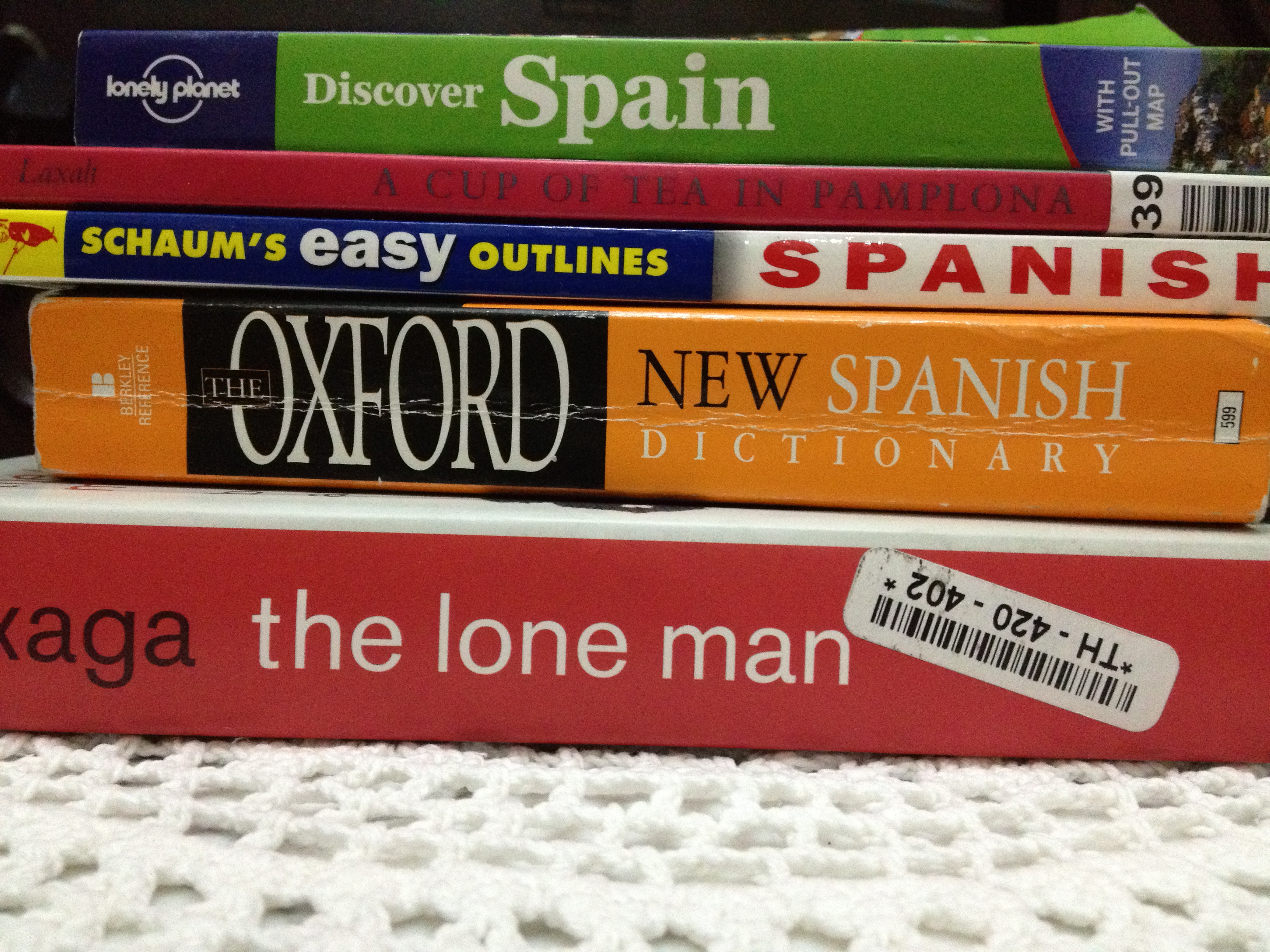
Sure, there’s a lot to do before setting off for life abroad, besides the trivial formalities of paperwork. Personally, I like to read. I’ve got the typical traveler’s stack of lonelyplanets, an English-to-Spanish pocket dictionary, a Crash Course in Spanish Grammar, and 1,000 Places to See Before You Die. These are for reference. I believe, to really know a culture, you must approach it with an understanding of its stories. What better place to turn for a story than a book?

First of all, books can explain the cultural significance of things that you might not even realize are important, or at least culturally relevant, to the country and its people.

Secondly, books give you a story to relate to a location, engaging your imagination in its people, history, and landscape.

And third, a country’s literature is integral to its culture. For instance, can you imagine Spain without Don Quixote?

Since Bilbao is considered the capital of Basque country and culture, I have developed a special interest in Basque literature. I’ve already devoured one novel, Guernica, titled after the town where the horrific bombing took place in 1936 that Picasso famously painted. I’ve ordered three more books, each focused on a different piece of the Basque story. Obabakoak explores life in a traditional Basque village during the Spanish Civil WarA Cup of Tea in Pamplona follows the exploits of Basque smugglers who transport goods between Basque communities across the French and Spanish border. Finally, The Lone Man examines the life of an ex-ETA member and his attempt to escape the violence of the nationalist movement.

A List of Books I Like:

The Classic: Don Quixote by Miguel de Cervantes

The Pop Non-Fiction: Ghosts of Spain by Giles Tremlett

The (Other) Classic: For Whom the Bell Tolls by Ernest Hemingway

The “Historical” Fiction: Tales of the Alhambra by Washington Irving

Where to Find More: 

Books about Spain

Classic Fiction from Spain in English Translation

20th Century Spanish (Spain) Literature 

The Spanish Civil War’s Dirty Dozen

Camino de Santiago 

Madrid: Exploring Spanish culture in the structure of its central city 

Emily Bowman, DUSA Student Blogger
Big(ish) Person, Small(er) Spain

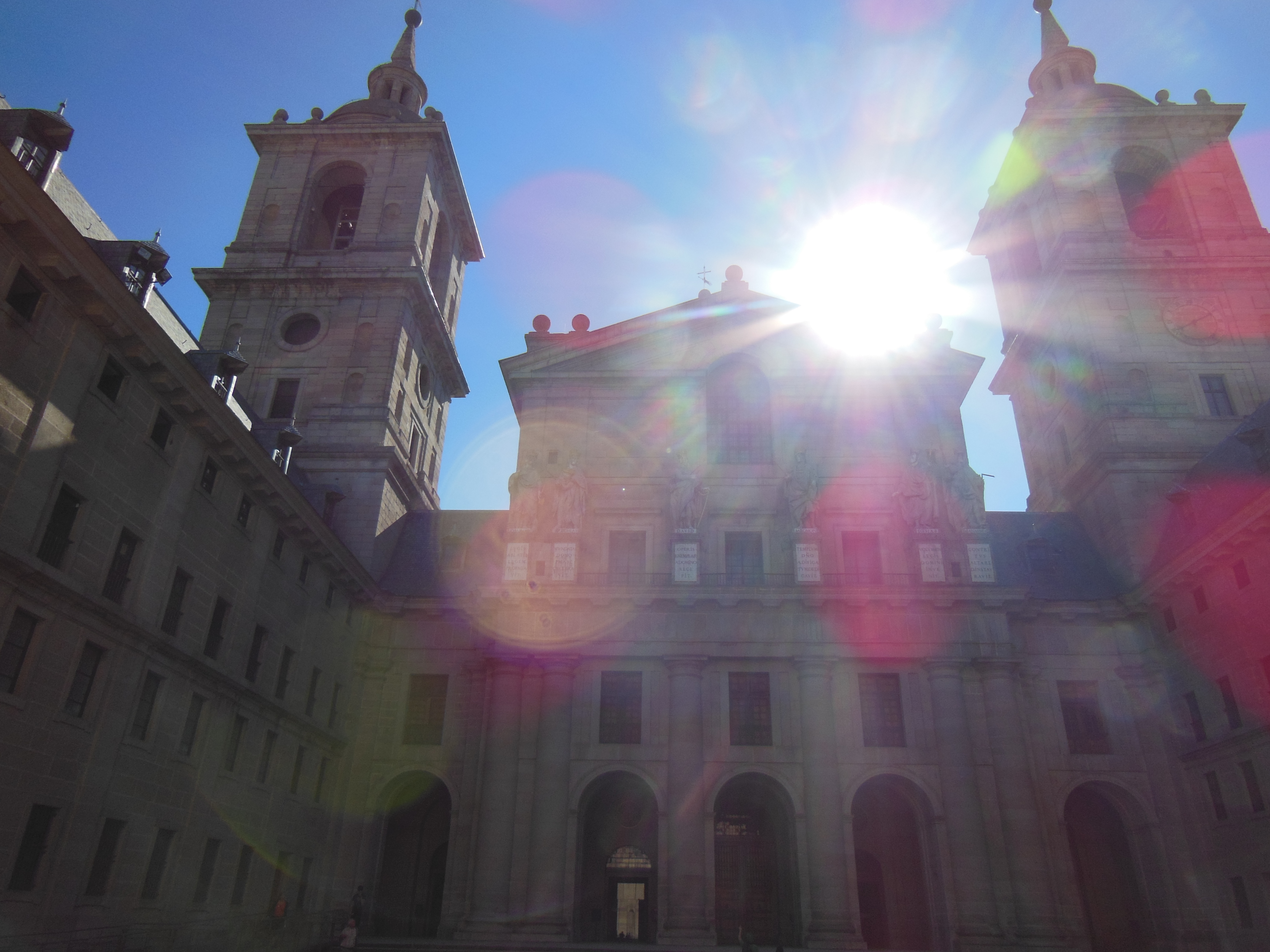
I guess I first realized it at El Escorial in Toledo. To most people, the 16th century monastery/palace is a grand and awesome display of Golden Age architecture, brimming with culture and reverence. For me, it was a maze of lethally low doorways and staircases that I probably would have been better prepared for by watching the classic montage from “Dodgeball” rather than the historical pep talk our group received from the tour guide.

El Escorial

I remember thinking, “Man these doorways are really low, but then again, it was built in the 1500’s – people were way shorter then. I’m sure Spaniards have accounted for evolution and the overall growth of the human body.” Well, it seems that wave of science hasn’t quite made it over here yet – that or there is something in the water in America, because everything in this country seems to be just 3-5 inches too short/small/cramped for my lanky 6’5 frame.

I realize I’m not exactly a skyscraper by American standards, but to Spanish eyes I seem to come off as this uncannily large person and someone with dimensions there simply has never been a need to accommodate for.

I have had to do some serious adjusting in the way I carry myself, my posture and even the way I wake up in the morning. To name a few particularly problematic structures:

1.)        Doorways. – This one is probably the most obvious, but also one of the most injury-inducing. All of the doorways in my homestay have been pleasant greetings for my forehead on many a morning. These greetings are often accompanied by a cackle from my host-mother and a semi-concerned, semi-sarcastic “Hombre, Cuídate!”

2.)        Desks. – Freshmen year at DU I put three bricks under each corner of my desk in halls in order to elevate it and try to fit the stilts that are my legs. I don’t know how practical it would be to carry around a bag of bricks with me at all times, but I am seriously considering it. The desk in my bedroom is all but unusable and everything at the university is essentially the same. Although, at school I don’t have a choice so I end up kind of swinging my legs to the side, or, if I get agitated, just putting them to their normal, natural height, causing the desk to come off the ground 2-3 inches. I have gotten some puzzled, freightened looks, but it just feels so right.

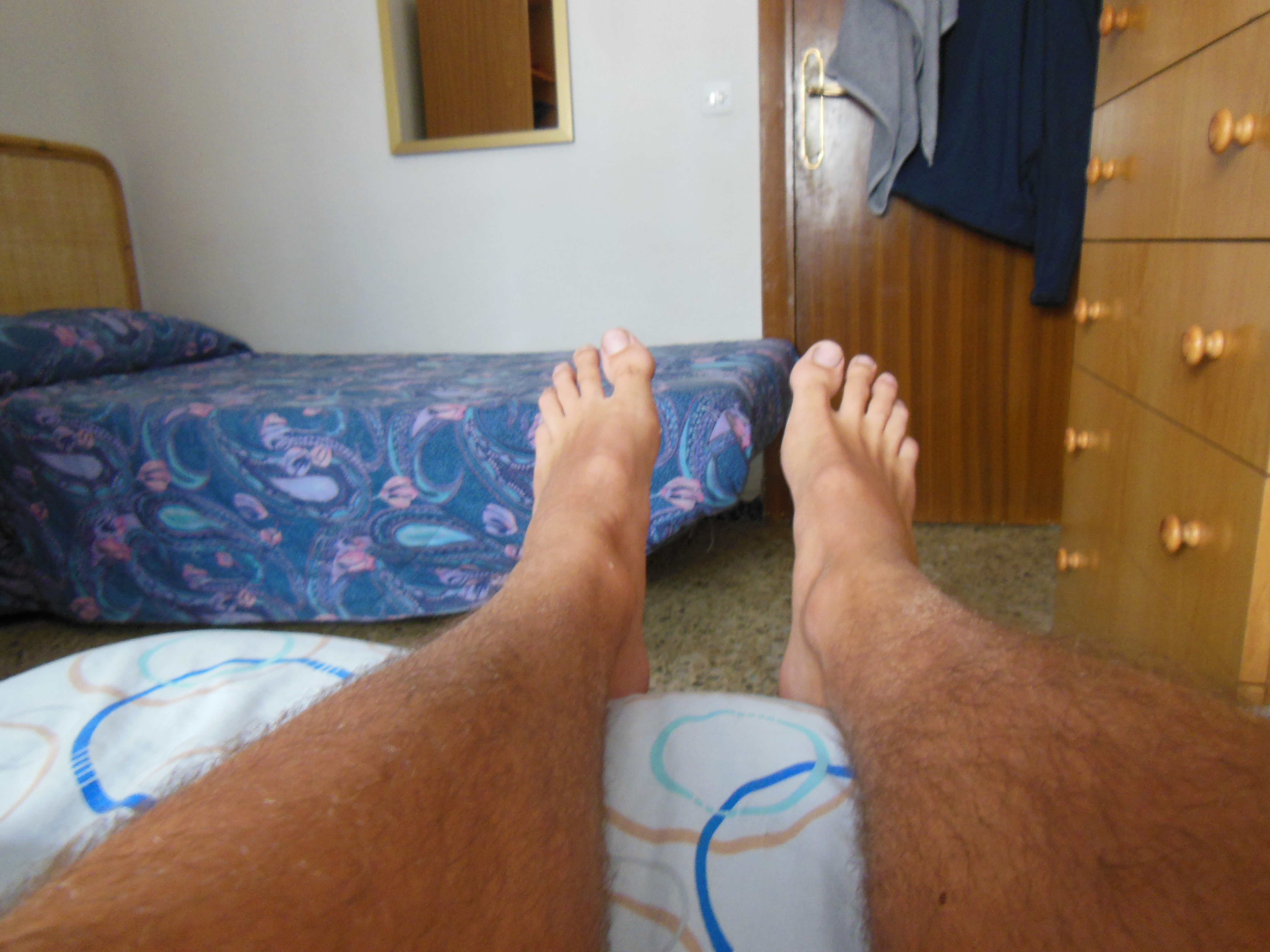
3.)        Beds. – I have a twin bed in my homestay. Here is what it looks like when I lay down with my head as far back as possible. ‘nuf said.

4.)        Lights. – The soul source of light in my bedroom is a jerry-rigged lamp hung at an uncomfortably low level, so that when I wake up I either hit it, or end up wearing it like a hat. Although it looks extremely fashionable, it isn’t exactly an ideal wakeup routine.

One more example that is not really a structure but more of an item is that I had the naive impression I would be able to buy shoes here once I arrived, after I lost a pair at the melee that was Tomatina. To my chagrin, my requests for a size 50, or just anything larger than a 45, were met with puzzled stares and a few mutterings of “hombre…no,” which in this case can be translated to, “’Da heck you mean you looking for a size 50? You crazy?” The most comical factor of this in my mind was that nobody even apologized or offered to check the back room, it was as if they had simply never heard of a company manufacturing such an absurdly unnecessary size.

Please don’t get me wrong, I am not trying to complain and vent about my femur frustrations. I realize that in the scheme of things, a few bruises is a small price to pay for the dream life I am able to live here – I mean the idea that I am allowed to galavant around Europe for a year is almost too awesome to be true, but it is and I am. I am simply pointing out the, often comical, differences in size appropriation between America and Spain. If anything, my bruised noggin has in fact taught me something, that being that while you are abroad, you can’t change the culture of the country you are in, but the country certainly can and probably will change you. So while I may not be the biggest fan of having to walk around my house like Quassi Moto, I’ve gotten used to it and adapted to the situation and culture around me. I think that is the entire point of studying in a foreign country, so although I may have had to endure a few welts on the forehead, I’m slowly but surely letting Spanish culture sink into every aspect of my life, and that feels pretty awesome.

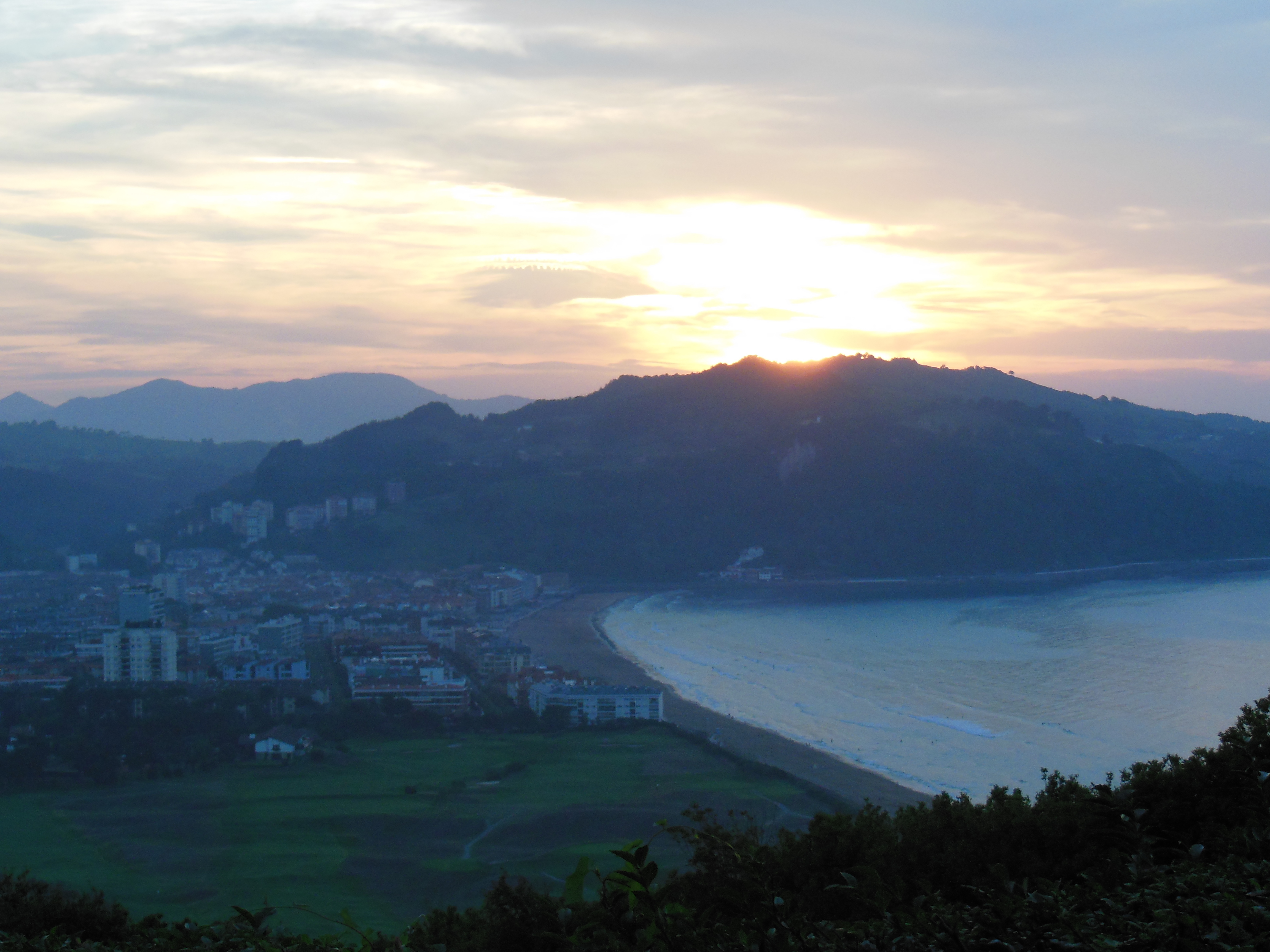
Also, I’ll gladly  endure hitting my head and scrunching my legs for the rest of my life if I can continue seeing things like this:

Zarautz, Spain

— Quincy Snowdon, DUSA Blogger