
Driving down a long, flat stretch of highway off the coast of Spain, the earth was a burnt-sienna on either side of the road, with rows and rows of orange trees, all the way to the horizon. Where distant layers of hills met the sea, and sat in fog and mist, still not burnt off by the mid-to-late afternoon sun, we left Catalonia behind and crossed into Valencia. Known for oranges, and beaches, it truly lived up to its name.
The past two weekends I was able to explore Girona for a day trip, Valencia for the weekend, and Peñiscola for the afternoon, with my program ISA. I have to say, Peñiscola stood out to me the most, and was my favorite by far. It had a certain speciality to it. Despite having visited various small, costal and even medieval towns in Europe, this small, historic city had a very unique feel. Peñiscola is exactly as you would expect from it’s name, a peninsula, surrounded by azure ocean, thanks to the white sand and beaches of the Valencian region. A small, fortified sea port, perched on a high, cliffy peninsula. Across the bay, hugging hills holding the Sierra de Irta natural park. It was a truly spectacular sight. The town, if you could even call it that, is nestled in the fortified walls, and is mainly composed of a large, yet simple fortress castle, and its grounds. My friend and I, along with the trudging 45 American ISA students, all bought a 3.50 Euro ticket to get into the castle atop the town (by far best value I have ever spent to enter into any attraction in Europe).
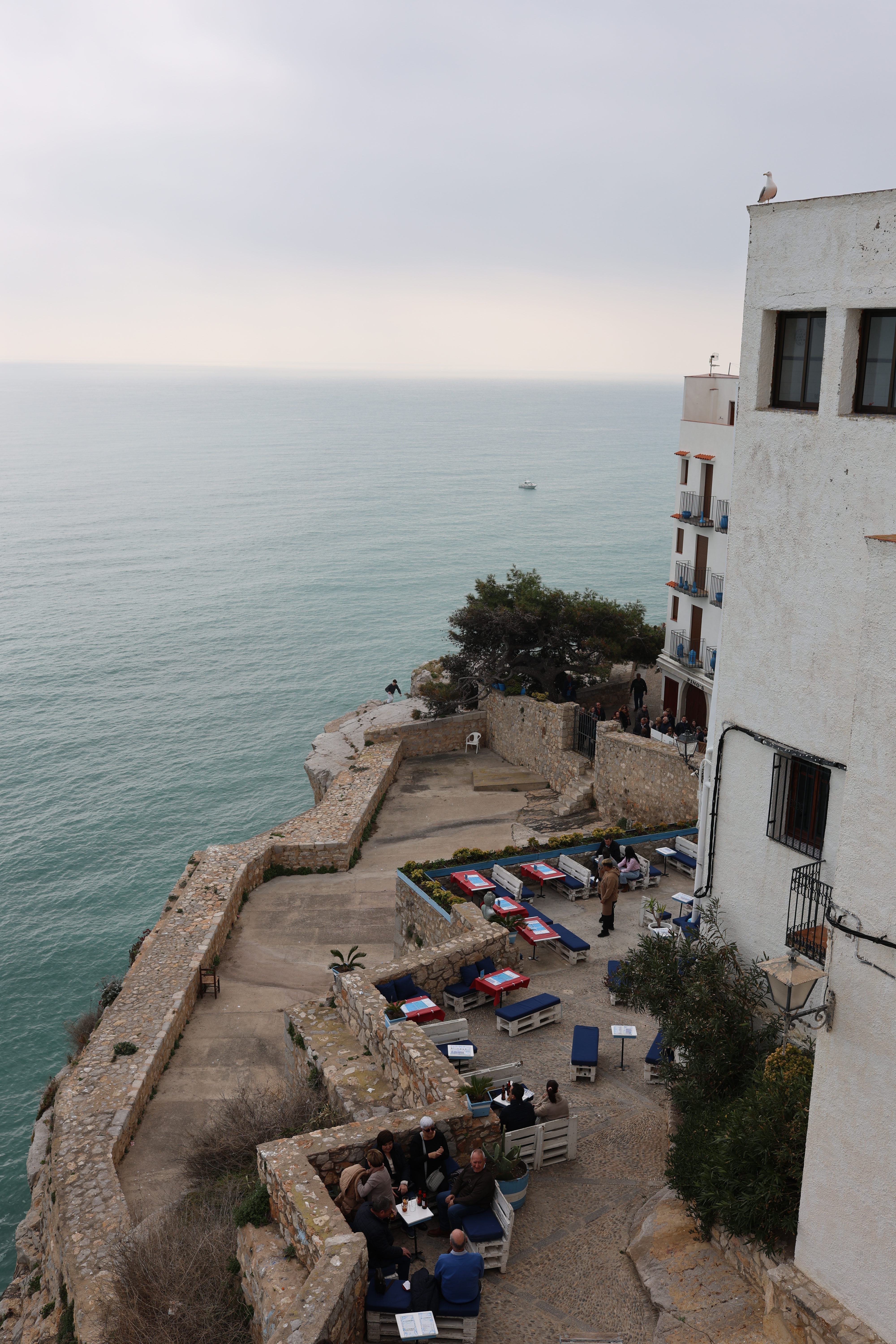
The cliffs that the castle was built on, was tall enough to make you step back and wonder if they should raise the stone wall overlooking them. Very impressive, to say the least, with how to town (and castle) was incorporated into the tall, rocky cliff of the peninsula island. The castle had the most wonderful views, with so many stone rooftops and narrow stone staircases offering a full 360 of the coast. It had been a completely cloudy, gusty day so far, but finally, when walking around the castle, the sun peaked out for a while. This transformed the water from a beautiful and deep teal, to an absolutely glowing aqua. If the sun had fully come out, I just know the entire ocean view would have been even more breath-taking and luminescent. Let’s just say that day, I thought I was going to fill up my SD card with the amount of photos I was taking.
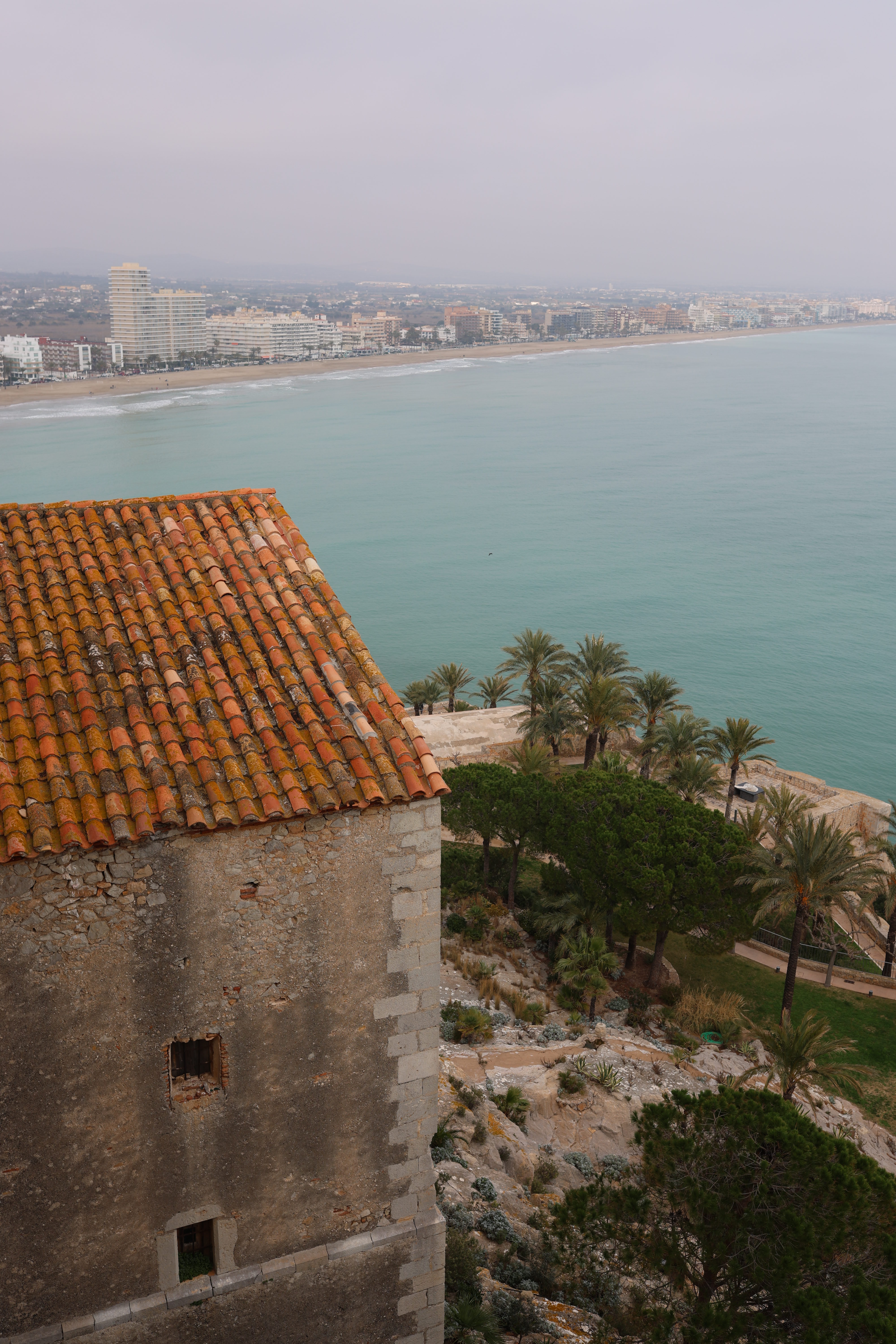
You could exit the castle and walk around to the castle gardens and grounds bellow, included in your ticket. That is when the sun came out again and the water showed off and shone. This vantage point from the garden was stunning, looking up at the castle, as well as across and up the cliffs. It also had a wonderful view across the bay, and the ribbon of the white sand beach, stretching all the way down the coast. There was a small city consisting of some high rises, solely lining the beach, and so many houses and buildings packed into the hills beyond. It looked like the Palisades… and the hills stayed moody and misty the whole time, with a low line of clouds laying lazily at top of the hills, among the houses.
The town itself was the quaintest, cutest costal town, down to every detail. From the white painted buildings, blue and teal doors, down to the flowered tiles that made all the balconies. The streets mainly consisted of wide, rocky cobblestone steps. Most all of the streets were lined with large potted plants, a lot of them in beautiful ceramic pots. Everywhere you looked was just so special, with so much care and details shown in little ways, building up a beautiful, costal town that looked straight out of a postcard.
The whole style and feel was very Grecian and so picture-perfect quintessential. One house was even entirely covered with sea shells, incorporated right into the white plaster of the house! It had a freshly painted teal door (matching the color of the ocean) and a matching sign which read ‘La Casa de las Conchas’, so it was quite literally ‘The House of the Shells’. I later researched and discovered that it was made around the ’60’s during the Spanish economic downturn, by a woman who was searching for a way to provide for her family. She set out to learn everything about the town, and sell her tips to tourists who were just starting to discover the town. She then turned this into a career, and became the first tour guide in the area. Her and her family built the three story house with the facade of shells, and opened a little gift shop. She adorned it in shells to show her love for Peñiscola and the ocean. It’s little stories like this that is the best part of traveling, and seeing the beauty and love put into special places like the Casa de Conchas.
The approximate three hours allotted to explore Peñiscola flew by, and even though I was so drawn to this seaside town, with artistic touches and history everywhere you looked, it was time to run back to the buses. There are only really a few entrances into the fortified town, I accidentally headed in a dead end direction. But this walk brought me into the quaintest, yet grand courtyard, with the Peñiscola style buildings, shutters, and plants, with the immense grandeur of the medieval wall looming above. Worth the accidental detour. All 95 of us American students poured back into the buses, and started our drive back to Barcelona.
The drive back to Barcelona after Peñiscola was like the PCH of Europe. Waves progressively rolling and crashing into the rugged coast, white and foaming, along the eroded rocky coast. The costal road winding above the rocky cliff, with nice standalone homes in the hills, facing the Mediterranean. We passed Sitges along the way, another well known costal town of the area. Small day trips like these are truly spectacular, and the Spanish Mediterranean is truly something special.
See my photos and get a good feel of the ISA weekend trip here! https://www.instagram.com/p/DGOMhm-OhONYvQ45d1Vbz_V-oCQrtKSFV1OEkA0/?utm_source=ig_web_copy_link&igsh=MzRlODBiNWFlZA==
 DU Abroad