
If you’re reading this then you already know that traveling to new destinations can have a thrilling factor on your life. Its self-discovery, on top of feeding into one’s curiosity. While there are many sources out there to help you travel on a budget such as student discounts, military discounts and lastly, stay alternatives such as hostels, it never really seems to be enough of a discount to convince yourself to leap into this trip. We are always being told that sometimes you have to sacrifice comfort for these experiences and while true I am here to tell you that safety is not one of them.
So far, during my study abroad experience I have been fortunate enough to have had the chance to travel to a couple of countries with some friends that also cared for economic alternatives. And this past weekend it was my turn to embark on a solo trip to Paris, France. It just so happened that everyone else already had their own travels booked and or had family plans. While I did not yet feel it, traveling alone this time was about to affect a little more than I thought it would, don’t get me wrong. I have traveled alone before, but it has always been to familiar destinations where I would be staying with people I knew. Of course, the difference with this time was that up until that point I had only traveled with friends to these unknown places. Spoiler alert- everything went amazing and below I will breakdown how I made this trip happen while on a budget and alone while prioritizing safety.
- Research Your Destination Thoroughly
Okay, of course I knew I wanted to go to Paris and because the city is expensive as it is I knew a hotel was out of the question and unfortunately an Airbnb was booked for the weekend that I was playing on leaving. So hostel it was, because safety is important to me I specifically found a hostel that had an all-women’s dorm which is an option for a lot of countries by the way, I specifically used Expedia for this because if you are a member you can get extra discounts by simply creating an account with no fees, but I’m sure if you use hostel.com you can find similar results. Next, the airport of Charles was about an hour away from my hostel but fear not because through the French app called IDF Mobilites I got all the train tickets I needed. Now I recommend that whenever you go and whatever transportation you use, always get a day or a weekend pass because it’s way less expensive. If you take away anything from this is to always use your student statues. I signed up on the app and got a day pass for $10 instead of 20 because of the student discount.
2. Share Your Itinerary with Friends and Family
This is completely optional, but I shared my itinerary with our program advisor as well as two other friends. It never hurts for others to know your whereabouts, it’s a message your future self will thank you for.
3. Pack Light but Smart
Finding an economical flight will more times than not be equivalent to limiting you to a personal item. I suggest talking about a travel backpack, any backpack is the most recommended item because trust me you will get sick of a duffle bag. I got mine for e18 in Primark and I have gone to three countries with it and it’s still good as new. The difference between a travel backpack and a normal backpack is that a travel bag is water resistant, it has zippers that go all the way down the bag, it has a shoe compartment underneath, a tech pocket, and most importantly two buckles to secure the sides and help compress it down. Pro tip: wear your heaviest items.
4. Blend In and Avoid Flashy Valuables
This goes for short travels in general, I always recommend simply wearing your everyday essentials but if our everyday pieces are a bit flashy it’s always best to leave that behind because it’s better safe than sorry.
5. Trust Your Instincts
This goes for many occasions but from a Europe perspective, don’t fall for signature petitions on metro exits, don’t take anything a stranger gives you, and most importantly don’t have anything in your pockets. For both men and women, it’s always best to carry a fanny pack or cross body bag because those are the ones closest to your torso instead of on the side of your body. When it comes to following your instincts, always re-assist your surroundings and with that comes with never leaving your belongings alone for no one is liable but yourself.
6. Meet People Wisely
I have had my fair encounters of strangers starting conversations and while a good majority have been wonderful and insightful, don’t feel bad if you feel like you have to walk away from one if you sense it becoming ingenuine or suspicious.
7. Stay Present and Enjoy the Moment
To channel this I personally prefer to walk around to my destinations while enjoying the scenery, reflecting on sights and perhaps journaling about them. Trying local foods instead of chains is always a good idea. Overall, the biggest advice I have is to not only focus on the main sights that Instagram or TikTok will give you but to find some of your own and build a new experience for those are the memories that last forever and good stories surface.
Ciao!

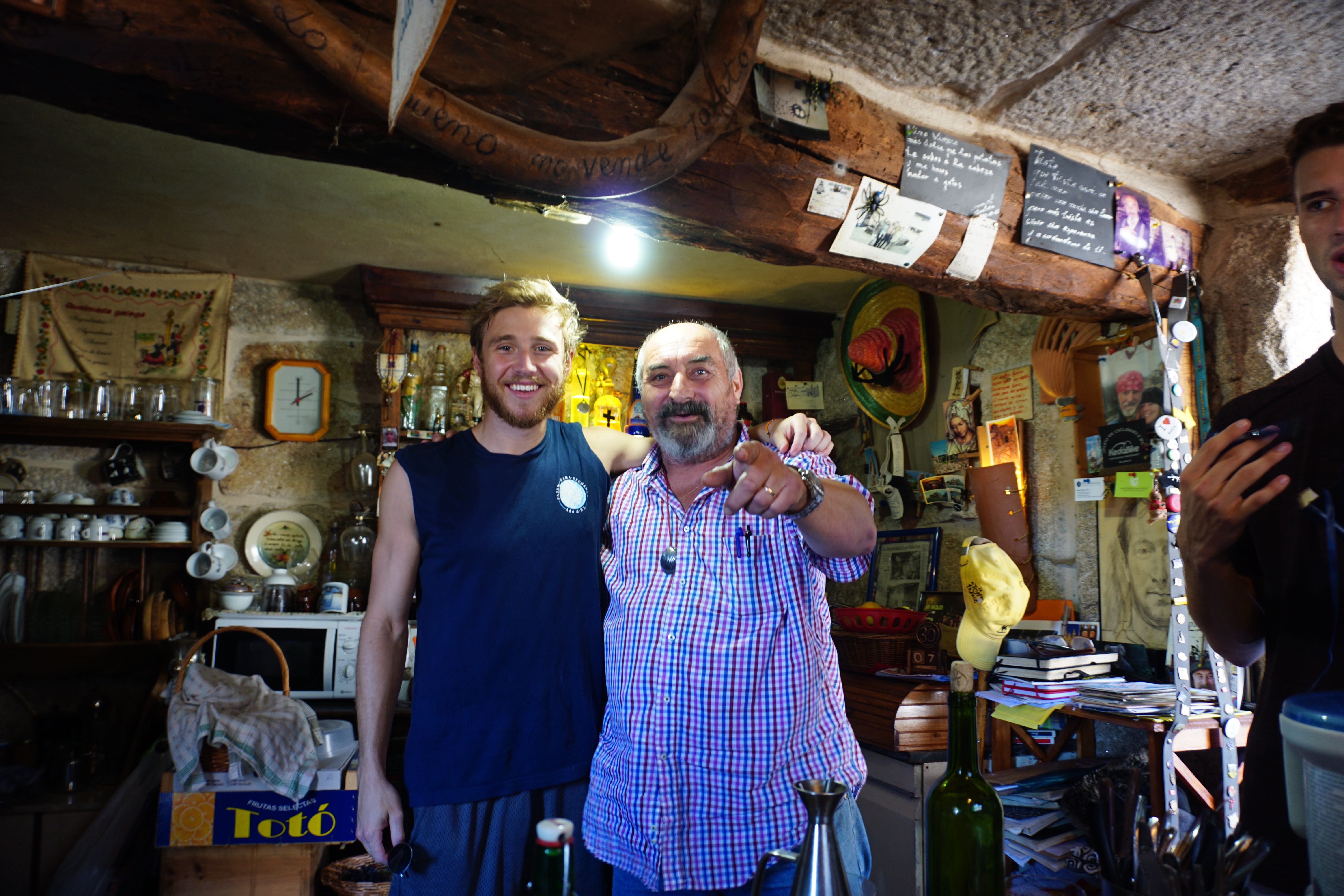 After leaving Caesar’s we continued walking to our destination for the day: Dozón, which was roughly 28 kilometers of walking for day one. In Dozón, we stayed in a small hostel where we met many other individuals from around the world who were also walking the Camino. We hand washed our one change of clothes, hung them up to dry outside, ate some dinner, and passed out in our room of bunk beds.
 DU Abroad