
Hejhej! People always say that study abroad is about pushing yourself outside you comfort zone and trying new things. I have found that being open to new experiences has been one of the best ways for me to not only learn more about the world, but also meet more people. Sweden is a known to be a very homogenous society. However, Lund, the university town in a southern corner of Sweden, draws in a large international population. This is mainly connected to the fact that the university hires many international professors as well as offering many degree programs and exchange opportunities for international students. During my first month in Sweden, Lund was hosting a large Kulturnatten festival. This was a day of Lund celebrating and showcasing cultures around the world through various lessons, performances, and foods. A friend invited me to go to some Latin dance lessons being put on by a community center, and I found that I loved getting to try all of the different dances we learned. One of the busiest ones was salsa, and they told us that we could sign up for lessons that happen every week for 10 weeks. Me and a couple of friends decided to just go for it and join the lessons. As we just had our final lesson last night, I have begun reflecting on what this experience has meant for me. It turns out that this has ended up being one of the best decisions I’ve made during my time abroad.
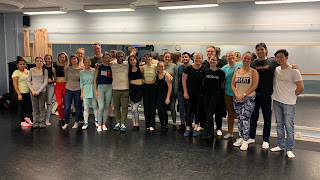
The salsa lessons happen for two hours each Wednesday evening, and are open to anyone in the community. The teacher is an amazingly kind and funny man from Cuba. Each week, 15 to 20 members of the Lund community cram into a ballet room to learn how to step, spin, and shake to Latin music. Not only have I learned that I am capable of learning something I had never thought of before (I have historically been known to have two left feet), but I gained something even better. I have met and bonded with people from all walks of life. My fellow salsa students range from high schoolers to young adults returning to Lund after attending university to married couples. Most interestingly, perhaps, is that my history professor is actually in the class as well. It’s been a treat getting to see her as my teacher and as my peer (in vastly different subjects). Most people are Latin American and enjoy the chance to speak in Spanish, but some (like me) are just wanting to try something new. I’ve met people from all over the world as well as befriended locals. The key is that we are all bonding over something that isn’t necessarily related to any of our cultures. I always leave that class full of laughter, stories, and maybe even some rhythm.
As I bond with these individuals over knotting our arms and losing our steps, I realize that after three months, I am already finding a small community here in Sweden. It certainly wasn’t the community I expected. I mean, who thinks of learning salsa and practicing Spanish when Sweden is mentioned? But that doesn’t mean it’s any less of the community I need. This salsa class is the welcoming group I had the honor of finding because I was willing to step outside the norm and try something I was uncomfortable with. It’s been one of the best ways to get outside of the ‘American bubble’ and meet people from around the world. It’s also allowed me to get to know Lund community members. Instead of just meeting students, I’ve chatted with people who grew up in the town. This is something very special to me, as I grew up in a small college town on the Western slope of Colorado. Getting to embrace the community, not just the university, has reminded me of home in all the best ways.
While I would encourage people to try anything new that interests them, I can also acknowledge that part of the magic of the random activity I joined was the fact that it’s salsa. Dance connects people. And choosing to take a dance lesson from another culture typically means that you are wanting to learn and a bit more open minded. The people I dance with are friendly and welcoming. And they want to share their newfound love for salsa with others. So instead of dancing once a week at my lessons and then going back to my rigid lifestyle, I find myself with weekly invites to various salsa events. Some of these are larger cultural events being hosted by community centers. Some are larger events taking place in Malmö (the larger city 15 minutes away). Some are club nights being hosted by the Lund university groups. Some are small parties being put on by my classmates. The variety in the events focused around salsa means that I am meeting even more people in the community and getting to share the wonderful dance with them. At each of these events, I learn. I learn more intricate dance moves, more stories, a little bit more Swedish (and Spanish), and more about myself. It is scary to put myself in a position where I can mess up and embarrass myself. It’s scary to dance with someone who is a lot better than you and wants to chat in another language. But it is extremely rewarding to connect with other people over this one common interest. I can only hope that when I leave Sweden at the end of the year, I bring home these connections, my new appreciation for salsa, and the desire to keep pushing myself outside my comfort zone.

