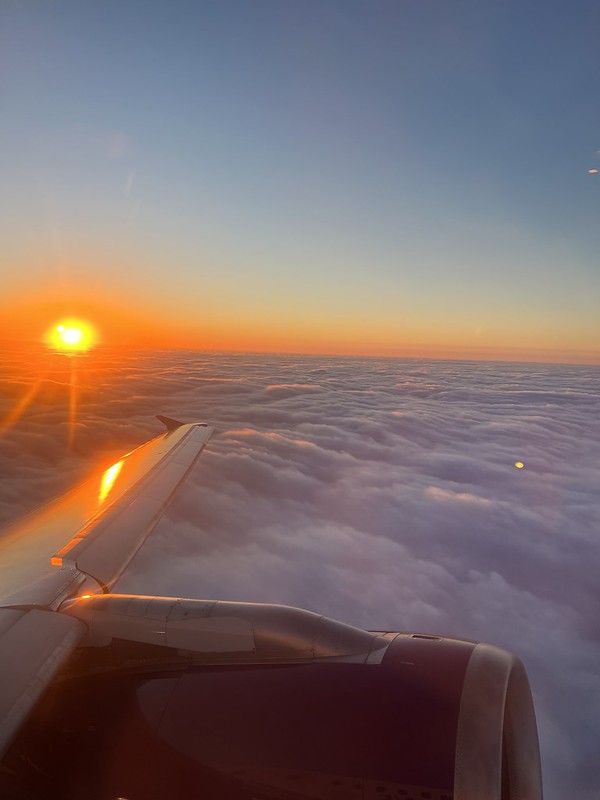
Traveling in Europe can be a tricky process. Trains seem to be the most reliable to avoid delays and save money, however due to constant strikes it is always a gamble if the trains will shut down when you are planning to travel. Buses take so long but are cheap. Planes are efficient and fairly affordable however you can count on delays every time you fly. In summary, traveling in Europe is risky, so how much are you willing to bet? Last weekend we seemed to take gamble after gamble.
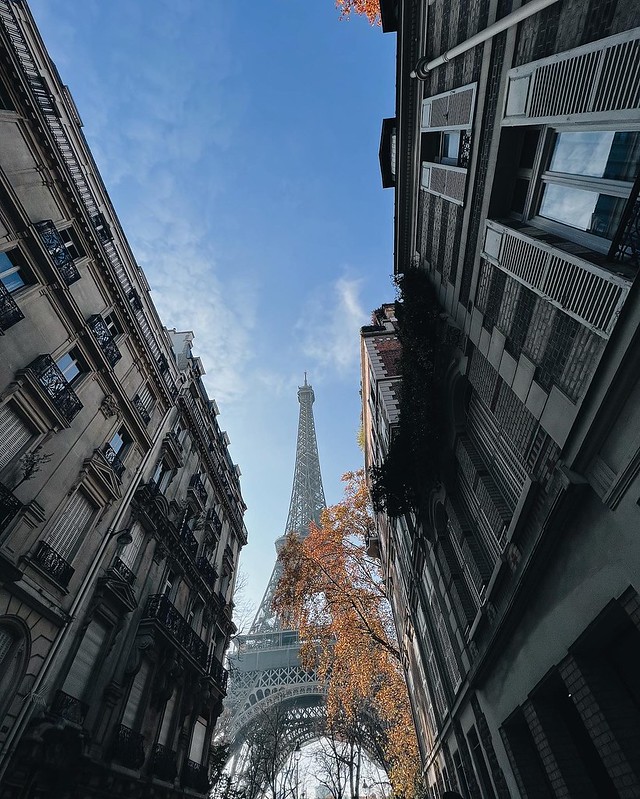
December in Paris is beautiful. The cold air was so refreshing in the fashion capital of the world. My best friend and I decided Paris would be our last trip before we prepared for our departure back to the United States. We thought it would be nice to do some Christmas shopping in a city known for its intense shopping scene and amazing sights. We had both seen the Eiffel tower before, but it was just as incredible seeing it for a second time. We took a stroll down the Champs-Élysées and stopped to marvel at the Arc de Triomphe. It is hard to describe the beauty of Paris. It looks similar to the buildings in London and Italy but different at the same time. The sights are just as incredible as Buckingham Palace or the Pantheon, but they also have a uniqueness to them I cannot understand. The whole city sparks certain emotions, making me understand why it is nicknamed the city of love. I tried French Onion Soup for the first time and walked across the many bridges near the Eiffel Tower. We ate a nice dinner at a seafood restaurant near our hotel and it was some of the most amazing food I have ever eaten. We didn’t stay out too late because two girls walking around Paris at night by themselves was not a risk I was willing to take. We never had any issues, but I was not willing to push my luck. We actually felt pretty safe in Paris. I travelled to the city in March of 2019 with my High School. There were fifty 16 to 18 year olds traveling on the trip and we had multiple encounters of pickpocketing, street scammers, suspicious figures, etc. I noticed a few red flags on our journey last weekend, but it was easily manageable. For instance, when we were leaving the airport, there were men in street clothes asking if we needed a taxi. Although this may seem normal, I had a bad feeling so my friend and I ignored their offerings and got an Uber to our hotel. We saw a few street performers doing the trick where they hid balls under cups and make the audience try to guess which cup they are under. Again, seems normal but I didn’t trust there weren’t hustlers or pickpockets in the crowd taking advantage of the distraction. The trip was a huge success, until our flight back to Glasgow.

We flew from Glasgow to London, and then London to Paris when arriving in the city. On the way back we followed the same route, flying from Paris to London, having a short layover and then flying from London to Glasgow. When we left Paris the plane was delayed due to heavy fog in London. Fog is very dangerous for flights because it diminishes visibility causing safety hazards when landing. The flight was not delayed too long and eventually we were on our way to London. The issues began when we landed at Heathrow airport. When we got to London, the fog delay made complete sense, we could barely see the ground and after getting off the plane we looked outside and could only see 50 yards in front of us. We received notifications from British airways saying our flight from London to Glasgow had been delayed. Then we got a notification it was cancelled and we were going to be flying from London Heathrow Airport to Edinburgh. it was a slight hiccup because now we would have to take a bus from Edinburgh to Glasgow but the airlines would cover the cost and we would still be home that day. After a short while our flight changed again. Now, we were flying from London City Airport (About an hour and a half from London Heathrow Airport) to Edinburgh at 8pm that night. It was 10am at the time. The customer service representative assured us that was our best flight option and sent us on our way. He said British Airways would cover food expenses and transportation expenses from the airports. Sitting at the airport for 10 hours did not seem ideal so after some quick search on apple maps we found that my best friend’s boyfriend lived fairly close to London City Airport. We took a train to his flat and were able to turn the delay into a nice day in London. We went to the London City airport that night, but by that point it had started snowing. Snow was nowhere on the forecast, but London pulled a page from the Colorado book and decided to give us a winter weather surprise. Our flight was cancelled.
Standing in the customer service line I was so exhausted, I couldn’t even be mad. I also knew it was not the faults of the British Airways workers, so I hoped no one would get upset with them. To my surprise, no one was really angry. Some people were more irritated than others but in America there would be furious people shouting, making scenes, and demanding fixes. The only man visibly upset was a short ways behind us in line. He was yelling on the phone and it seemed he was talking to a British Airways representative. After he hung up he began pushing his way up the line. He heard my friend and I talking about our flights and he asked if we were going to Edinburgh because he was as well. We offered our support the best way we could by just listening to him rant about how the delays have ruined his whole trip. Before he opened his mouth I already knew where he was from: America. He ranted for a good twenty minutes. I especially enjoyed him talking about how the trains in London are terrible because you have to press a button to open them. In Chicago they open automatically. He seemed very upset by this. I do feel for the guy. We have traveled so much in so many different places that even though I was exhausted from the delays and stressed about going home I knew we would figure it out. I wasn’t scared or angry. I was just tired. But, if I had never been to Europe before or even had only been there a couple times, I could understand the fear, worry, and frustration. The couple next to us began listening to the man as well. They were also going to Edinburgh and had now joined the conversation. I told the group my honest opinions saying “European transportation is a gamble.” My friend looked at me like I was crazy, saying something like that in front of Scottish people. I was a little worried too that I was going to offend the couple, but I sighed in relief when the man just smiled and said “you get used to it.”
This whole fiasco is something I will remember for the rest of my life for multiple reasons. 1. The stark differences in how Scots handle delays and customer service encounters compared to how Americans handle it. 2. European travel is tricky 3. European travel is tricky but my friend and I not only survived but thrived under the pressure. If you had told me a year ago I would be stuck in London at two different airports on a flight home from Paris I would have said you were crazy and then I would have freaked out. I remember sitting on the train after our last cancellation thinking this is a test. This is a test of what we have learned about ourselves and traveling since being abroad and I have to say I think I passed.
We were supposed to fly back to Glasgow on December 11th and after being cancelled due to snow we were put on a flight the morning of December 13th. I had to work on my finals at the hotel and thankfully my friend’s boyfriend let us use his kitchen to make dinner instead of going out to eat. The airlines was covering our hotel, transportation, and food, but we had to book our own hotel and the food allowance was minimal. We made it back to Glasgow at noon on December 13th after two nights in London. Recounting all the details I feel stressed, but in the moment when it seemed we were going to be stuck in London forever, I was perfectly calm, exhausted, but calm. I can’t tell you what made me change or become this person who stays cool as a cucumber when stranded in a foreign country with nothing but the clothes on our backs, and just some extra pants and toiletries in my backpack, but I did it. I did it because I studied abroad in Scotland for three months. I’m not going to give you a sappy piece about how my whole life has changed, but it’s important to take a moment to appreciate the person you’ve become and note how you got there. It’s those moments I will gamble for every time.