
In Denver, one of my favorite things to do is go discover new coffee shops. I’ll order a mocha or a latte and sit down, planning something or other and just observing. It’s a tame form of exploration. I know there’s a good chance of the menu being on a blackboard, the payment being via Square, and the tables being just the right size for a laptop and a notebook. The only unknowns are the baristas, the menu specifics, the decor, and my fellow patrons, and I can manage these unknowns.
I moved to Denver in 2016. Until then, my hometown of 3,000 was my whole world, and it took me until the middle of my sophomore year at DU to feel comfortable crossing the streets. With Denver’s multi-lane streets and its population that seemed to take ignoring each other on the streets to an art form, cafés were one of the few things that made sense there. The culture shock took weeks to wear off.
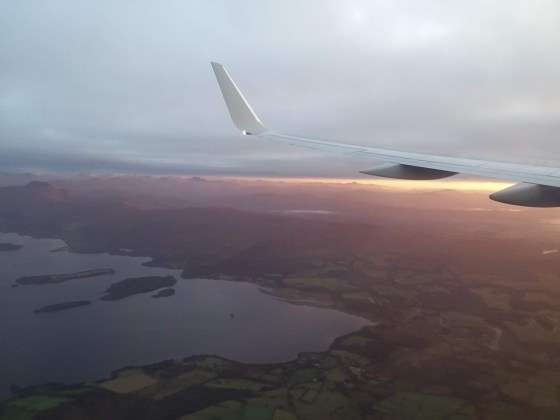
I caught my first glimpse of Scotland on Wednesday at 6:30 a.m. British Summer Time. Our plane descended through the clouds into the greenest hills I’ve ever seen and took us over the edge of Glasgow. From the air, it seemed picturesque. I could see myself spending the next four months picking up nuggets of culture and storing them in my travel treasure chest.
The plane deposited me onto an alien planet.
Once I stood on the pavement, the picturesque city became entirely too much. They drive on the left side of the street. Sidewalks are asphalt or cobblestone and irregular. The speed limit signs say “twenty’s plenty.” People say “cheers” as they walk out of shops, which line the streets instead of sitting in their own tidy buildings. The phrase “Scottish water” is everywhere from trucks to teabags. There is moss everywhere. The aforementioned shops sit directly under three or four stories of apartment buildings – flats – which all look very old. Every safety poster tells me to have a separate chopping board for meats. Cafés offer lower prices for “take away” items.
I expected that I would find much of Glasgow uncomfortable and unfamiliar, but I did not expect the immediate paucity of familiar things. For the last four days, the things I held on to during my transition to Denver simply have not existed. From the moment I stepped off the airplane, I have been in what the OIE’s Canvas module “Culture Shock” describes as “cultural confrontation.” For my own purposes, I renamed it “EVERYTHING IS WEIRD AND I WANT A NAP.”
This is a normal stage of adjustment, one I saw in international students at DU and see in my fellow adventurers at UofG. They all seem unflappable and are acquiring UK SIM cards and frying pans with great capability. All of the advice I remembered about culture shock was that you should throw yourself into activities and meet people. They all seem to be doing that very well. I am not – I am very much flapped and 90% of my brain is off yelling about pound coins.
My sane remainder realized that I’m suffering from simple overwhelm. I found a notepad and made a grocery list, then dragged my butt out of my comfortable flat to a nearby coffee shop. I ordered a latte (£2.70 and the change came in the form of two coins, a ten pence and a twenty pence) and sat down to watch the cars go by on the wrong side of the street.
Alice Major
SCOTLAND – UNIVERSITY OF GLASGOW, 2018 FALL
Alice Major is studying at the University of Glasgow in Glasgow, Scotland. She is a double major, focusing mostly on music and adding history because history is cool. Study abroad is Alice’s first time out of the country, and she hopes to come home in one piece and with a wicked Scottish accent.


